REAL ID vs Standard California Driver License matters more than ever now that TSA enforcement is real. One gets you through airport security without drama. The other? Not so much. And the choice ties straight into how the California DMV handles your data behind the scenes.
Here’s the deal in plain terms. Both cards let you drive legally in California and most places. But only the REAL ID version works for boarding domestic flights or stepping into certain federal buildings after full enforcement hit. The standard version now carries “Federal Limits Apply” and won’t cut it at TSA checkpoints without extra hassle.
Quick Overview: REAL ID vs Standard California Driver License
- REAL ID: Federally compliant card marked with a golden bear and star in the upper right corner. Required for air travel and secure federal facilities.
- Standard License/ID: Non-compliant option with “Federal Limits Apply” printed on it. Fine for driving, buying alcohol, or everyday state business.
- Key Trigger: Since May 2025, you need a REAL ID-compliant card (or passport/other approved ID) to fly domestically. Starting February 2026, skipping it means paying a $45 TSA ConfirmID fee plus extra screening.
- Data Angle: Getting a REAL ID often pulls you into stricter verification, including links to California DMV data sharing with AAMVA REAL ID compliance for cross-state checks.
- Cost: Same base fees—around $45 for a driver license, $39 for an ID card—whether you go REAL ID or not.
Pick wrong and you risk last-minute airport stress. Pick right and life stays simple.
Side-by-Side Comparison: REAL ID vs Standard California Driver License
| Feature | REAL ID Compliant | Standard (“Federal Limits Apply”) | What It Means for You |
|---|---|---|---|
| Federal Use | Yes – Domestic flights, federal buildings | No – Triggers extra steps or denial | REAL ID avoids $45 TSA fee and delays |
| Marking on Card | Golden bear with star (upper right) | “Federal Limits Apply” text | Easy visual check at security |
| Document Requirements | Strict: Proof of identity, legal presence, SSN, 2 CA residency proofs | Easier for some applicants | REAL ID demands originals and more time |
| Data Verification | Includes AAMVA S2S checks for duplicates | Limited checks | Ties into California DMV data sharing with AAMVA REAL ID compliance |
| Driving Privilege | Full – Same as standard | Full – Same as REAL ID | No difference for California roads |
| New Card Design (2025/26) | Nature theme (redwoods, poppies, coastline) + digital security signature, no mag stripe | Same new design | Enhanced anti-counterfeit features |
| Best For | Frequent flyers, federal workers | Local drivers who carry passport | Depends on your travel habits |
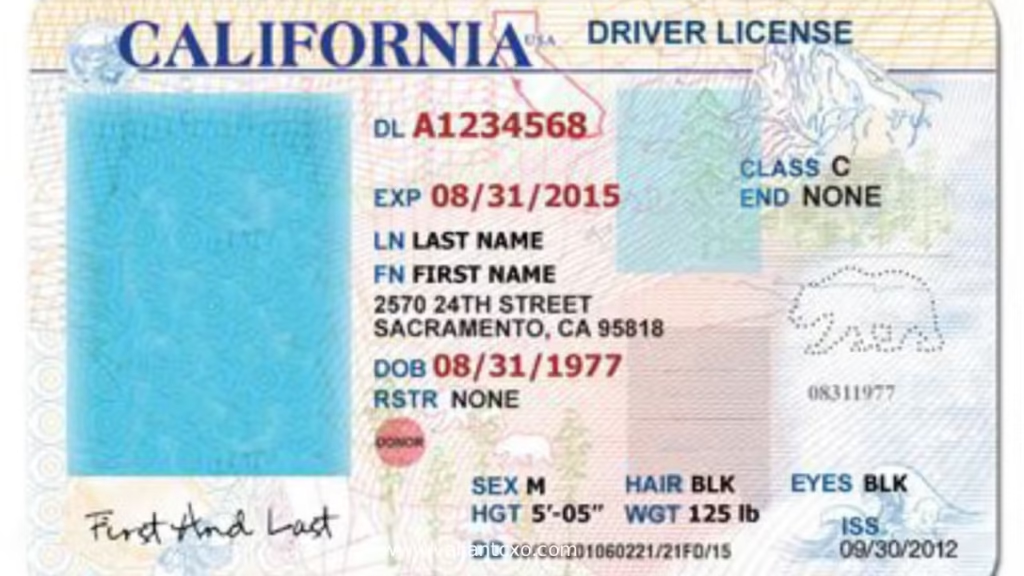
The physical cards look similar now with California’s fresh 2025 redesign featuring state scenery. The real difference hides in that bear-and-star symbol and the verification process underneath.
Why the Distinction Exists
Congress passed the REAL ID Act after 9/11 to set minimum security standards for state IDs used at federal checkpoints. California started issuing compliant cards in 2018. Full TSA enforcement kicked in May 7, 2025, and by early 2026 the agency added teeth: pay $45 or show a REAL ID (or passport).
Standard licenses still work great for driving, renting cars in-state, or showing age. They just won’t fly at the airport without alternatives. That’s the practical split.
In my experience, most people underestimate how often they need federal ID until they’re standing in a security line with the wrong card. The kicker is that upgrading later costs the same fee and another trip.
Step-by-Step: Deciding and Getting the Right Card
- Assess your needs. Fly domestically even once a year? Work at or visit federal sites? Go REAL ID. Purely drive locally and keep a passport handy? Standard might suffice.
- Check your current card. Look at the upper right corner. Bear + star = you’re good. “Federal Limits Apply” = upgrade if you fly.
- Gather documents. For REAL ID: One primary identity document (birth certificate, passport, etc.), SSN proof, and two California residency proofs (utility bill, bank statement, lease). Originals or certified copies only. Standard requires less.
- Book an appointment. Walk-ins drag. Use the California DMV online system. Upload docs ahead if possible to speed things up.
- Apply. Tell them you want REAL ID. They’ll verify everything, including potential cross-checks.
- What I’d do if I were you: Start with the official DMV REAL ID checklist. Don’t assume your old docs still work—names, addresses, and statuses change. If you’re renewing soon, combine it with the upgrade.
Rhetorical question: Why jump through extra hoops for a REAL ID if you rarely fly? Because one surprise trip or job requirement can turn a minor errand into a major headache.
Common Mistakes People Make
They show up with photocopies. DMV rejects them instantly. Or they bring one residency proof instead of two for REAL ID. Delays guaranteed.
Another frequent slip: Thinking the new scenic card design automatically makes it REAL ID. Nope. Only the bear and star confirm compliance.
Immigration or name change issues trip people too. Mismatched data flags the application. Fix: Bring court documents or updated status proofs right away.
Privacy concerns stop some from applying. Here’s the thing—REAL ID applications often connect to broader systems. If that worries you, read up on California DMV data sharing with AAMVA REAL ID compliance first. It explains how states verify you don’t hold multiple licenses nationwide.
How REAL ID Connects to Data Sharing
Choosing REAL ID doesn’t just change your card. It often means your records participate more fully in national verification networks. This supports the “one person, one REAL ID” rule through AAMVA’s State-to-State (S2S) system.
California continues integrating its DMV data to meet 2027 S2S deadlines. That effort helps prevent duplicates but raises questions about scope, especially for certain license holders. Understanding this link helps you weigh convenience against data flow.
For federal rules, check the DHS REAL ID page. For California’s process, visit the official California DMV REAL ID section.
Key Takeaways
- REAL ID vs Standard California Driver License boils down to federal access versus everyday driving.
- REAL ID features the golden bear and star; standard says “Federal Limits Apply.”
- As of 2026, flying without REAL ID risks a $45 TSA fee and extra screening.
- REAL ID requires stricter documents and ties into California DMV data sharing with AAMVA REAL ID compliance.
- Both cards let you drive legally—the difference shows up at airports and federal gates.
- New card designs add security features like digital signatures for everyone.
- Plan ahead: Gather originals and book appointments to avoid frustration.
- Match the card to your actual travel and federal needs.
Stop guessing at the DMV counter. Figure out REAL ID vs Standard California Driver License based on how you actually live and travel. Head to the California DMV website today, run their checklist, and decide. Getting it right now beats scrambling later when you’re already late for a flight.
FAQs
Can I use a standard California driver license to fly domestically in 2026?
No, not without alternatives. You’ll need a REAL ID, passport, or pay the $45 TSA ConfirmID fee plus additional screening starting February 2026.
Does choosing REAL ID automatically involve California DMV data sharing with AAMVA REAL ID compliance?
REAL ID issuance often includes verification steps that connect to AAMVA systems for duplicate checks. Full state compliance efforts expand data sharing across participating states by 2027.
Is the new 2025/2026 California driver license design different for REAL ID vs standard?
No. Both use the updated scenic design with redwoods, poppies, and coastline plus enhanced security features. The only reliable indicator remains the bear and star marking for REAL ID.