California DMV data sharing with AAMVA REAL ID compliance is California’s push to connect its driver license and ID records to the American Association of Motor Vehicle Administrators’ State-to-State (S2S) verification system and SPEXS platform. This move helps the state meet federal REAL ID standards so its licenses remain acceptable at airports and federal facilities after full enforcement kicked in.
Here’s what it boils down to in 2026:
- California DMV plans to upload key data elements from driver licenses and state IDs to AAMVA’s national system to prevent duplicate credentials across states.
- The effort supports the REAL ID Act of 2005 requirement for states to provide electronic access to motor vehicle database information for verification.
- Recent developments include sharing details on roughly 1 million unauthorized immigrant driver license holders to keep California’s cards compliant.
- California’s S2S compliance target sits at February 16, 2027, with the DMV requesting over $55 million in funding for system integration.
- Access stays limited to authorized DMV staff and contractors—no bulk searches, and federal agencies don’t get direct database access through this channel.
Why does this matter? Without it, your shiny California REAL ID might not cut it at TSA checkpoints or federal buildings. The system acts like a cross-state handshake: when you apply for a new license, California checks if you’re already holding one elsewhere. Simple in theory. Messy in practice when privacy, immigration status, and old software glitches collide.
What California DMV Data Sharing with AAMVA REAL ID Compliance Actually Involves
The REAL ID Act demands minimum security standards for state-issued IDs used for “official purposes” like domestic air travel. One core piece requires states to let other states electronically verify applicant data to enforce the “one person, one REAL ID” rule.
AAMVA, a nonprofit run by DMV officials from across the country, built the tools: State-to-State Verification Service (S2S) and the State Pointer Exchange Services (SPEXS) platform. These let states query each other in real time or near real time during applications.
California DMV data sharing with AAMVA REAL ID compliance means feeding specific data elements—names, dates of birth, license numbers, partial SSNs—into this network. In return, California can check other states’ records before issuing or renewing credentials.
The kicker? California has issued driver licenses to unauthorized immigrants under its own laws while promising to limit data sharing. Recent moves to upload broader records, including for those holders, sparked backlash as a shift from past privacy commitments.
What gets shared? Typically pointers and verification flags rather than full dossiers, though the system supports history exchanges and duplicate detection. Authorized users query with specific details like name + DOB. No open fishing expeditions allowed under current rules.
Why California Is Moving on AAMVA Integration Now
Full REAL ID enforcement for air travel began May 7, 2025. States that drag their feet risk having their licenses rejected by TSA. California wants its cards accepted nationwide.
The DMV’s budget request spells it out: interface core systems with AAMVA’s electronic verification and history exchange by the February 2027 deadline. This isn’t optional if the state wants full compliance.
In my experience working with DMV processes over the years, these integrations rarely go smoothly the first time. Legacy systems from the early 2000s clash with modern APIs. California’s recent notification to 325,000 REAL ID holders—about 1.5% of total—due to a software glitch matching expiration dates to immigration status shows exactly how brittle things can get.
The system also helps fight identity fraud and duplicate licenses, which improves highway safety and cuts down on administrative headaches.
REAL ID Compliance vs. Standard Licenses: Quick Comparison
| Aspect | REAL ID Compliant | Standard California License/ID | Impact of AAMVA/S2S Sharing |
|---|---|---|---|
| Federal Acceptance | Yes (airports, federal buildings) | No after full enforcement | Enables verification to maintain acceptance |
| Data Sharing | Requires S2S checks | Limited or none | Full participation needed for compliance |
| Document Requirements | Strict (birth cert, SSN proof, etc.) | Easier for some applicants | Cross-state checks add verification layer |
| Expiration Tie-in | Must align with legal status | More flexible in CA for some | Glitches trigger mass reissues |
| Cost to Applicant | Same base fee; reissues may waive | Standard fees | Potential delays during system rollout |
This table cuts through the noise. REAL ID cards carry the golden bear/star marking. Without proper AAMVA integration, even those could lose federal trust.
Step-by-Step Action Plan for Beginners Getting or Renewing Your REAL ID
- Check if you need one. Domestic flights or entering federal facilities? Yes. Purely state use like driving? Standard license works fine.
- Gather documents. Use the official DMV REAL ID checklist: proof of identity, legal presence, SSN, and two proofs of California residency. Bring originals.
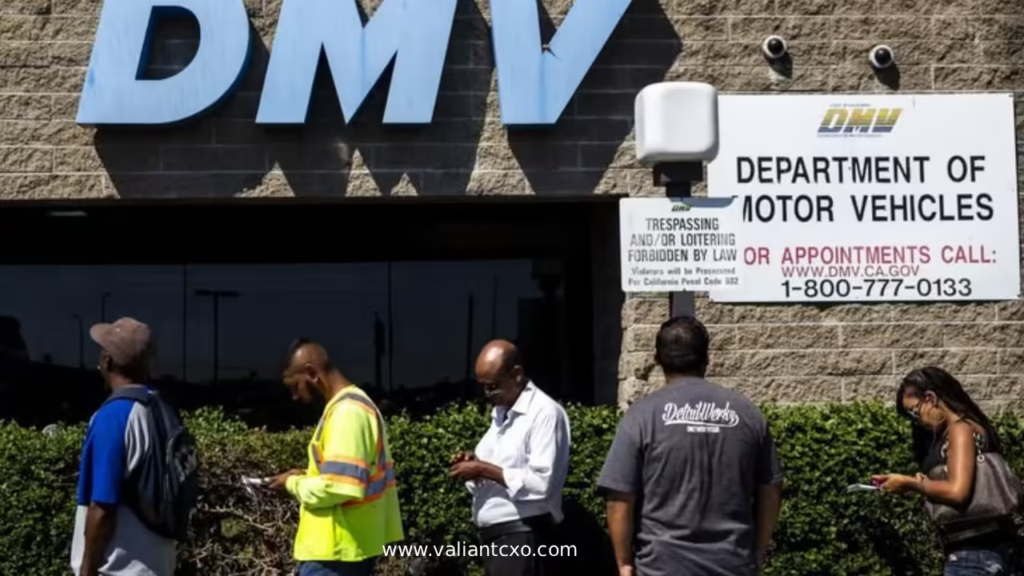
- Make an appointment. Walk-ins are tough. Book online via the California DMV site and arrive early.
- Apply or renew. At the office, staff will verify your info. The system now performs background checks, including potential AAMVA queries as integration ramps up.
- Wait for processing. New issues or reissues take time. Track status online if available.
- What I’d do if I were you: Double-check your current card’s expiration and any mail from DMV. If you received a notice about updates, act fast—DMV waived fees for the 325,000 affected in recent glitches.
What happens if your info doesn’t match across states? Expect delays or requests for additional proof. Plan extra buffer time.
Common Mistakes & How to Fix Them
People trip over the basics. They show up with photocopies instead of originals. Or they assume their old license automatically upgrades— it doesn’t.
Another big one: ignoring residency proofs. Utility bills, bank statements, or lease agreements work, but they must be recent and show your name plus California address.
Immigration-related issues create extra friction. If your legal status changed, bring updated documents. The recent software fixes highlighted how mismatched expiration dates force reissues.
Fix: Review the DMV’s own REAL ID page before you go. Print the checklist. Call 1-800-777-0133 if you get a notice and don’t understand it.
During AAMVA-linked checks, discrepancies in name spelling or DOB across states can flag your application. Bring court documents for legal name changes.
Privacy worriers sometimes skip applying altogether. Here’s the thing: S2S access is restricted to authorized personnel with specific queries. Still, understand that your data now participates in a larger verification network.
Privacy, Immigration Data, and Recent Developments in California DMV Data Sharing with AAMVA REAL ID Compliance
Privacy remains the hottest flashpoint. California long limited sharing for certain license holders. The shift to broader uploads—including data on unauthorized immigrant drivers—aims to satisfy federal requirements so the entire state’s licenses stay valid federally.
AAMVA stresses that states own and govern the S2S system. Federal agencies don’t get direct bulk access, per funding restrictions. Queries need concrete details, and bulk searches aren’t standard.
Yet critics point out this creates a de facto national pointer system. Once California’s records integrate fully by 2027, cross-checks become routine.
One fresh analogy: Think of it like credit bureaus for your driving record. Each state reports to the collective, and lenders (here, other DMVs or TSA) pull targeted reports instead of guessing.
Rhetorical question: If your license works fine for driving around LA or San Francisco, why should national sharing matter? Because the feds control the airports and many buildings you might need to enter.
For more on AAMVA’s role, see their State-to-State Verification Service overview. And check the DHS REAL ID resources for federal rules.
Key Takeaways
- California DMV data sharing with AAMVA REAL ID compliance centers on S2S integration to enable cross-state verification and meet the February 2027 deadline.
- Full participation keeps California-issued REAL IDs acceptable for air travel and federal access.
- Expect tighter checks during applications, with potential delays as systems connect.
- Recent data uploads involving immigrant driver records mark a policy shift for compliance.
- Most drivers won’t notice day-to-day changes, but applicants should prepare stronger documentation.
- Glitches like the 2025-2026 reissue wave show why accurate data matching matters.
- Privacy protections exist through query limits, but your records join a wider network.
- Act early if you receive any DMV notice about your REAL ID status.
Bottom line: Getting ahead of California DMV data sharing with AAMVA REAL ID compliance saves headaches later. Your next step? Visit the official California DMV REAL ID page, review your documents today, and book an appointment if your card expires soon or you need one for travel. Don’t wait until you’re stuck at the airport.
FAQs
Does California DMV data sharing with AAMVA REAL ID compliance affect my standard (non-REAL ID) driver’s license?
It primarily impacts REAL ID issuance and verification. Standard licenses face fewer cross-state checks, but broader system integration could still pull basic records for duplicate detection during renewals.
Will my personal information be visible to other states through California DMV data sharing with AAMVA REAL ID compliance?
Only through authorized, specific queries by other DMVs or contractors. Full profiles aren’t broadcast—it’s designed as targeted verification to confirm you don’t hold multiple credentials.
How does the 2027 S2S deadline change things for someone applying for a REAL ID in California?
Applications will include automated checks against AAMVA’s network. Prepare for slightly longer processing if discrepancies appear. By 2027, full integration should smooth routine verifications but demand cleaner initial data.