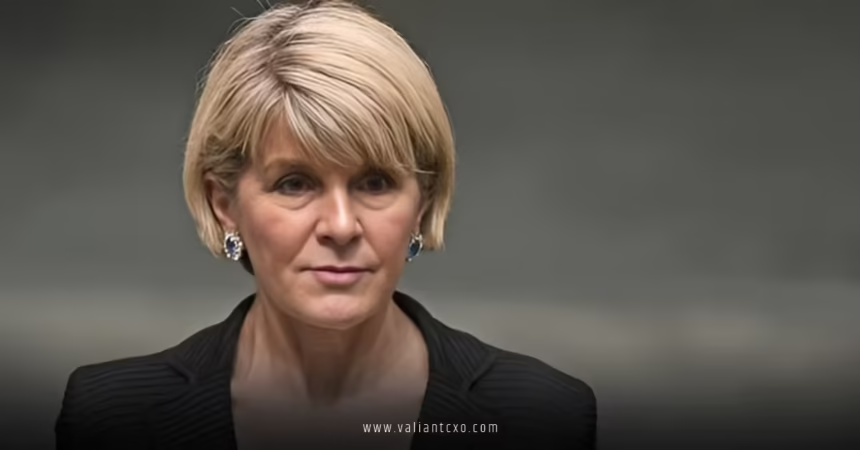
ANU Leadership Changes 2026 hit like a thunderclap across Australian higher education. With Julie Bishop’s sudden resignation as chancellor in May 2026, the university enters yet another chapter of upheaval. Pro-chancellor Dr. Larry Marshall steps in temporarily while a more independent process selects the next leader.
- The big shift: Bishop stepped down immediately on May 7-8, 2026 — seven months early — citing regulator interference.
- Why now: Months of financial pressure, staff cuts, bullying claims, and governance scrutiny finally boiled over.
- What’s different this time: TEQSA, the higher education regulator, has taken a direct role in the next chancellor appointment, bypassing normal council powers.
- Current leadership: Interim arrangements in place for both chancellor and vice-chancellor roles as ANU tries to steady the ship.
- For US readers: Picture an Ivy League school losing its board chair and president in quick succession amid donor unease and congressional questions. That’s the vibe.
This isn’t random turnover. It’s the latest domino in a sustained leadership crisis.
What Sparked the 2026 ANU Leadership Shakeup
The troubles didn’t start in 2026. They built over years of post-pandemic budget squeezes, ambitious restructuring, and eroding trust.
Key trigger events:
- Massive cost-cutting under the “Renew ANU” plan led to hundreds of job losses and course review rumors.
- Vice-Chancellor Genevieve Bell’s abrupt exit in September 2025 after deans withdrew support.
- Persistent allegations of bullying, poor culture, and inadequate responses to staff concerns.
- Senate inquiries and union pressure that kept the heat on top leaders.
Here’s the thing: When a high-profile chancellor like Julie Bishop walks away citing “unprecedented” external meddling, it signals the council had lost the regulator’s confidence. That rarely happens quietly.
Full Timeline of ANU Leadership Changes 2026 and Before
| Period | Key Event | Outcome |
|---|---|---|
| 2020 | Julie Bishop appointed Chancellor | High-profile start |
| 2023 | Term extended to Dec 2026 | Assumed stability |
| 2024–2025 | Renew ANU restructure & job cuts | Staff unrest grows |
| Sep 2025 | VC Genevieve Bell resigns | Rebekah Brown interim VC |
| Late 2025–Early 2026 | TEQSA intervenes on governance | Council sidelined for appointments |
| May 8, 2026 | Julie Bishop resigns (see Julie Bishop ANU resignation May 2026) | Larry Marshall acting Chancellor |
| Ongoing 2026 | Search for permanent leaders | Independent panel process |
This table shows the pattern. One change rarely fixes everything when the issues run deep.
Current State: Who’s Running ANU Right Now?
Dr. Larry Marshall serves as acting chancellor. On the executive side, Provost Rebekah Brown continues as interim vice-chancellor.
The regulator has mandated an independent panel — chaired by experienced former regulator Peter Coaldrake — to handle the next chancellor selection. This breaks from tradition and reflects serious concerns about the council’s ability to manage senior appointments independently.
Rhetorical question: Can an institution rebuild trust while its top roles sit in “acting” mode for months?

Why These ANU Leadership Changes Matter
Prestige alone doesn’t pay the bills or retain top researchers. ANU’s brand took hits from the turmoil. Prospective students, international partners, and funding bodies notice when headlines focus on drama instead of discoveries.
In my experience, prolonged uncertainty does three things: good people leave, donors pause, and regulators tighten the screws. The good news? A clean leadership reset can become the foundation for genuine cultural repair—if executed well.
I’d advise watching two things closely: how quickly they fill the roles with credible insiders or respected outsiders, and whether they tackle transparency on finances and decision-making head-on.
Step-by-Step Guide: How Universities Should Handle Leadership Transitions
Beginners in higher ed admin or governance, take note. Crises like this follow predictable paths. Here’s a practical playbook:
- Acknowledge reality fast — Issue clear statements owning problems instead of vague “challenges.”
- Secure interim stability — Appoint respected acting leaders who can listen and de-escalate (Brown and Marshall appear to have some goodwill here).
- Bring in independent eyes — External reviews and regulator-guided processes, while painful, add credibility.
- Fix root causes — Address culture, workload, and financial planning. Not just replace faces.
- Communicate relentlessly — Regular updates to staff, students, and stakeholders beat rumors.
- Measure progress — Track staff sentiment, retention numbers, and enrollment trends.
What I’d do if advising the new team: Prioritize a vice-chancellor search that values both research heft and people skills. Star power alone proved insufficient.
Common Mistakes in University Leadership Overhauls
- Mistake: Treating every exit as the solution.
Fix: Attack systemic issues like budget realism and decision transparency. - Mistake: Slow, opaque appointment processes.
Fix: Set and meet clear timelines with public progress reports. - Mistake: Focusing only on the big titles.
Fix: Strengthen council governance and middle management at the same time. - Mistake: Assuming one report will fix culture.
Fix: Follow through with visible actions and accountability.
What Comes Next for ANU in 2026
Expect the independent chancellor selection to wrap up later this year. A new vice-chancellor search will likely follow. The university has already walked back some aggressive cuts and reported budget improvements, which could help stabilize things.
Success will depend on whether the new leaders can reunite fractured groups: staff, council, government, and the broader academic community.
For deeper background on the triggering event, read the full story on the Julie Bishop ANU resignation May 2026. Official updates live on the ANU website. Regulator perspective comes straight from TEQSA.
Key Takeaways
- ANU Leadership Changes 2026 center on the early exit of Chancellor Julie Bishop and ongoing interim arrangements.
- Regulator intervention marks a significant shift in governance autonomy.
- Financial pressures and culture issues drove the multi-year crisis.
- Independent appointment processes aim to restore credibility.
- Quick wins on transparency could accelerate healing.
- Staff morale and retention remain the real tests ahead.
- Political and academic leadership intersections continue to prove tricky.
- This could become a case study in effective (or ineffective) university resets.
The next six months will show whether ANU turns the page or keeps rewriting the same turbulent chapter.
Next step: Follow credible Australian education news outlets and ANU’s own channels for appointment announcements. Real change shows up in people staying, not just new names on the door.
FAQs
What are the main ANU Leadership Changes 2026 so far?
Julie Bishop’s immediate resignation as chancellor in May, with Dr. Larry Marshall acting. This follows Genevieve Bell’s 2025 exit and comes with TEQSA-directed independent selection processes for future leaders.
How does the Julie Bishop ANU resignation May 2026 fit into broader changes?
It represents the climax of sustained pressure over culture, finances, and governance. Her departure clears the way for a full leadership refresh under closer regulatory watch.
Will ANU Leadership Changes 2026 actually improve the university?
Potential exists if new appointees prioritize culture repair and financial realism. History shows that without follow-through, new faces simply restart the cycle.