
Naval shipbuilding design maturity is the difference between a clean build and a costly mess. Start too early, and the yard spends months fixing drawings, moving equipment, and untangling rework. Wait long enough for the design to settle, and production runs smoother, faster, and with far less drama.
- Design maturity means the ship’s drawings, interfaces, equipment data, and production plans are stable enough to support build work.
- Low maturity drives rework, schedule slips, labor inefficiency, and change-order chaos.
- The lesson shows up clearly in the Babcock Type 31 frigate out-of-sequence construction rework story.
- For modern naval programs, especially in the US and UK, design maturity is not a nice-to-have. It is the throttle.
What naval shipbuilding design maturity actually means
Naval shipbuilding design maturity is the point where a ship design is detailed enough, stable enough, and coordinated enough to support efficient construction.
That sounds simple. It is not.
A warship is not a single product. It is a floating city of structure, propulsion, sensors, weapons, cabling, piping, cooling, combat systems, and support equipment. If one interface moves, three other systems may need to move with it.
In practical terms, a mature design has:
- Frozen or tightly controlled major geometry
- Confirmed equipment footprints and weights
- Approved routing for cableways, piping, and ventilation
- Clear production drawings and work packages
- Strong configuration control over changes
When those pieces are still shifting while steel is already being cut, the yard starts building on sand.
Why naval shipbuilding design maturity matters so much
A shipyard can absorb small changes. It cannot absorb endless change.
The whole production model depends on sequencing. Blocks are fabricated in one place, outfitted in another, then joined together in a carefully planned order. If design maturity is weak, that sequence breaks. Teams revisit completed spaces. Materials get reordered. Trades collide. The schedule starts to wobble.
Here’s the kicker: low design maturity rarely looks catastrophic at the beginning. It often looks manageable. A few late drawings here. One vendor update there. Then the “small” changes stack up. Pretty soon, the program is paying interest on every shortcut it took early on.
That is exactly why the Babcock Type 31 frigate out-of-sequence construction rework has become such a useful warning sign. It shows how design instability and build urgency can collide in the real world.
What happens when design maturity is too low
When a naval program pushes into production too early, the symptoms are predictable.
Rework
Work gets done twice. Or three times. A compartment is built, then reopened. A foundation is installed, then moved. A pipe run is routed, then ripped out because the next revision changed the space.
Delays
Late design changes ripple down the line. One block slips, then the next one slips, and the join schedule gets squeezed.
Higher labor cost
Rework burns man-hours without adding capability. It is pure drag.
Quality risk
Rushed fixes tend to create hidden defects. Even when the ship looks finished, the underlying quality may be weaker than planned.
Supplier churn
Vendors are forced to revise data packs, equipment interfaces, and delivery schedules. That creates more friction upstream.
The Babcock Type 31 connection: a real-world lesson
The Babcock Type 31 frigate out-of-sequence construction rework is a strong example of what can happen when construction outruns design maturity.
The broader lesson is not that one program made one mistake. The real lesson is that naval shipbuilding is unforgiving when design freeze, production planning, and supply chain readiness are not aligned.
If you want a program to behave, you need the drawing set, the interface data, and the production strategy to arrive together. Not months apart. Not “good enough for now.” Together.
That is why people in shipbuilding keep coming back to the same rule: do not confuse visible progress with stable progress.
Design maturity stages in naval shipbuilding
Think of design maturity as a ladder, not a switch.
| Stage | What it means | Production impact |
|---|---|---|
| Concept design | Big picture only | Too early for serious fabrication |
| Preliminary design | Main architecture is taking shape | Useful for planning, not full-rate build |
| Detailed design | Key systems and geometry are defined | Build readiness improves fast |
| Production-ready design | Drawings, interfaces, and materials are stable | Best point for efficient construction |
| In-service refinement | Minor updates after delivery | Normal, expected, manageable |
The danger zone is obvious. If a program acts like it is at production-ready design when it is really still in detailed design, trouble follows.
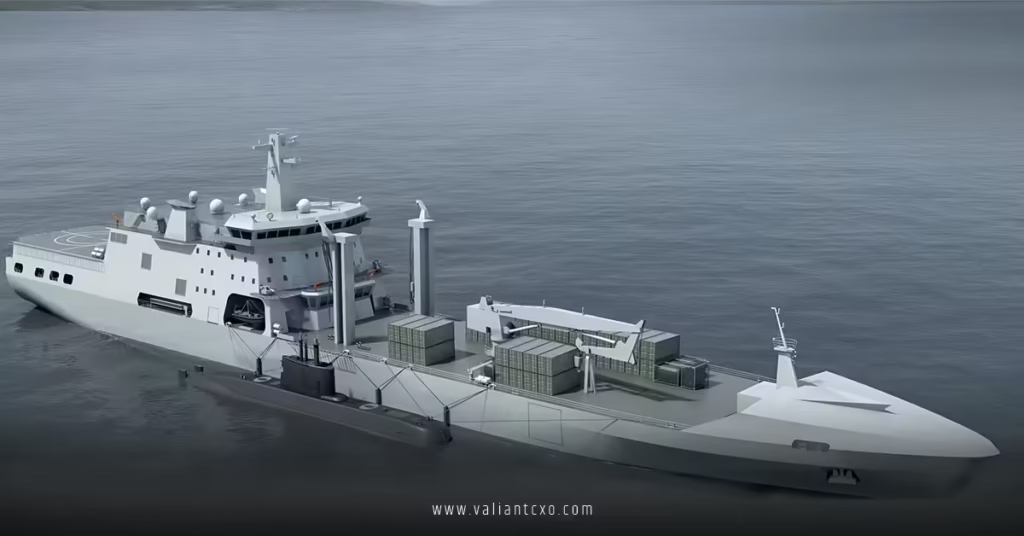
How to judge whether a ship design is mature enough
A beginner-friendly way to think about this is simple: ask whether the yard could build it repeatedly without guessing.
A mature naval design usually has:
- Finalized major compartments
- Defined system interfaces
- Stable vendor equipment selections
- Clash-checked routing for pipes, cables, and ventilation
- A disciplined change process
- Production drawings that reflect actual build sequence
If those pieces are missing, the ship is not ready for smooth serial production.
Step-by-step way to improve naval shipbuilding design maturity
Step 1: Freeze the critical path early
Lock down the spaces and systems that drive the rest of the build. Think machinery rooms, combat systems spaces, electrical distribution, and main routing corridors.
Step 2: Make interface control non-negotiable
Most shipbuilding pain comes from interfaces, not isolated parts. Track every major interface and make ownership crystal clear.
Step 3: Tie design release to production gates
Do not release the yard to full-rate fabrication until the design has crossed a real maturity threshold. Not a ceremonial one. A technical one.
Step 4: Use digital models to catch clashes early
3D model review, digital thread tools, and integrated product data can catch design collisions before steel is cut. But only if the data is current and the teams trust the process.
Step 5: Measure rework aggressively
Track rework hours, causes, and locations. If a team cannot see the pattern, it cannot fix the pattern.
Step 6: Protect the schedule with realism
It is better to delay a build start than to launch a production campaign full of unknowns. Fast is expensive when the design is still moving.
Common mistakes that hurt naval shipbuilding design maturity
Mistake 1: Starting steel too early
This is the classic trap. Leaders want visible progress, so the yard starts work before the design is truly ready.
Fix: Set a hard technical gate before fabrication begins.
Mistake 2: Letting changes pile up
One late change does not kill a program. Twenty late changes can.
Fix: Create strict change-control discipline and limit uncontrolled revisions.
Mistake 3: Treating design and production as separate worlds
They are not separate. Every design decision lands on the shop floor.
Fix: Put design, engineering, and production planning in the same rhythm.
Mistake 4: Ignoring supply chain maturity
A clean drawing is useless if the equipment data is late or unstable.
Fix: Align vendor readiness with design freeze milestones.
Mistake 5: Accepting rework as normal
Some rework is inevitable. Chronic rework is a management problem.
Fix: Treat rework as a signal, not a cost of doing business.
Naval shipbuilding design maturity versus rework risk
| Design maturity level | Rework risk | Schedule risk | Build confidence |
|---|---|---|---|
| Low | High | High | Weak |
| Medium | Moderate | Moderate | Mixed |
| High | Low | Low | Strong |
The pattern is blunt. Better maturity means less chaos. Less chaos means better productivity. Better productivity means the ship actually gets delivered on time, or close to it.
Why US programs should care
This is not just a UK issue.
US naval programs have faced similar pressures for years: ambitious timelines, complex combat system integration, changing requirements, and production starts that can get ahead of design readiness. The same logic applies whether the hull is British or American.
That is why the Babcock Type 31 frigate out-of-sequence construction rework is worth watching from the US. It is a case study in what happens when a modern warship enters production before the design is truly settled.
And once you see the pattern, you start seeing it everywhere.
What good looks like
A mature naval shipbuilding program usually has a few traits in common:
- It starts production only after key design areas are stable
- It uses production feedback to tighten later blocks
- It keeps configuration control tight
- It avoids pretending that “mostly ready” is the same as “ready”
- It treats rework as a failure mode, not a badge of hustle
That last one matters. A lot.
Because in shipbuilding, heroics are expensive. Discipline is cheaper.
Key takeaways
- Naval shipbuilding design maturity is the point where a ship’s design is stable enough to support efficient construction.
- Low design maturity leads directly to out-of-sequence work, rework, delay, and cost growth.
- The Babcock Type 31 frigate out-of-sequence construction rework is a useful real-world example of design outrunning production.
- Strong interface control, design freeze discipline, and realistic production gates are the best defenses.
- Digital tools help, but only when the underlying data is stable and current.
- Rework should be measured, traced, and reduced deliberately, not accepted as normal.
- The same lessons apply to US and UK naval programs alike.
If a shipbuilding program wants smooth delivery, it has to earn it through design maturity. That is the real leverage point. Get that right, and the rest of the build gets a lot less painful.
FAQs
What is naval shipbuilding design maturity in simple terms?
Naval shipbuilding design maturity is how ready and stable a ship design is before major construction begins. The more mature the design, the less likely the yard is to deal with rework, missed interfaces, and delays.
How does naval shipbuilding design maturity relate to the Babcock Type 31 frigate out-of-sequence construction rework?
The Babcock Type 31 frigate out-of-sequence construction rework shows what can happen when construction moves ahead of design stability. Late design changes can force work to be redone, which increases cost and slows delivery.
What is the biggest mistake ship programs make with design maturity?
The biggest mistake is treating an incomplete design as “good enough” to start building. That usually leads to rework later, which is far more expensive than waiting for the design to mature first.