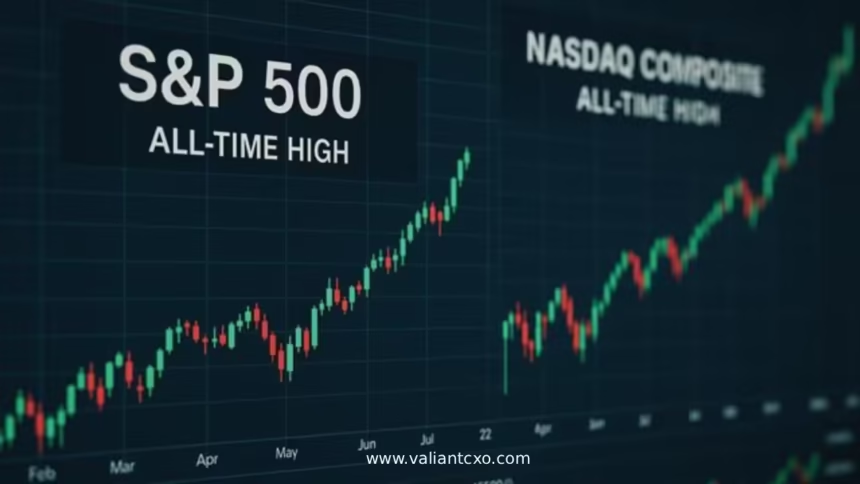
S&P 500 ETF Investing Guide for Beginners instant access to 500 of America’s biggest companies in one simple package. No stock picking. No daily drama. Just broad exposure to the U.S. economy’s heavy hitters.
In 2026, this remains one of the smartest starting points for new investors. The S&P 500 has delivered roughly 10% average annual returns over decades, including dividends.
Here’s the quick starter kit:
- Low-cost ETFs like VOO or IVV track the index with razor-thin fees.
- You can start with as little as $100 through most brokers.
- Dollar-cost averaging smooths out the bumps.
- Perfect for retirement accounts or taxable portfolios alike.
This guide cuts through the noise so you can start investing with confidence.
What Is the S&P 500, Anyway?
The S&P 500 tracks the 500 largest U.S. companies by market value. Think Apple, Microsoft, Nvidia, and hundreds more across tech, healthcare, finance, and consumer goods.
It represents about 80% of the total U.S. stock market. When people say “the market is up,” they’re usually talking about this index.
An S&P 500 ETF owns shares in all those companies proportionally. Your money rides alongside millions of other investors without you lifting a finger.
Why Beginners Love S&P 500 ETFs
Here’s the thing: picking individual stocks is hard. Most people lose to the market over time. An S&P 500 ETF removes that guesswork.
You get instant diversification. One bad apple won’t sink your portfolio. Plus, these funds have crushed savings accounts and bonds long-term.
In my experience, beginners who start here build solid habits fast. They stop obsessing over headlines and focus on consistent contributions instead.
Top S&P 500 ETFs Worth Considering in 2026
Three names dominate the conversation: VOO, IVV, and SPY.
| ETF | Ticker | Expense Ratio | Assets | Best For | 5-Year Annualized Return (approx.) |
|---|---|---|---|---|---|
| Vanguard S&P 500 ETF | VOO | 0.03% | $1.5T+ | Long-term buy-and-hold | ~13.15% |
| iShares Core S&P 500 ETF | IVV | 0.03% | ~$800B | Tax efficiency & retirement | ~13.16% |
| SPDR S&P 500 ETF Trust | SPY | 0.095% | Massive | Active traders & liquidity | ~13.09% |
Data reflects general trends as of mid-2026. Lower fees compound into real money over decades. For most beginners, VOO or IVV wins hands down.
Step-by-Step: How to Start Investing Today
- Open a brokerage account. Fidelity, Vanguard, Schwab, or Robinhood all work. Look for zero-commission trades and fractional shares.
- Fund the account. Link your bank and transfer money. Even $50–100 per month gets you started.
- Buy your first ETF. Search for VOO or IVV. Use a market order for simplicity.
- Set up automatic investments. This is dollar-cost averaging in action—buy fixed amounts regularly regardless of price.
- Hold and ignore the noise. Check quarterly at most. Time in the market beats timing the market.
- Reinvest dividends. Most platforms do this automatically. It supercharges compounding.
What usually happens? New investors overthink the first purchase. Don’t. Just buy a solid fund and keep adding.
Dollar-Cost Averaging: Your Secret Weapon
Markets bounce around. Dollar-cost averaging means investing fixed amounts on a schedule.
Prices high? You buy fewer shares. Prices low? You buy more. Over time, your average cost smooths out.
This beats trying to predict crashes or booms. Studies and real-world results show it works especially well for volatile indexes like the S&P 500.
Common Beginner Mistakes (And Easy Fixes)
Chasing hot tips. Skip the meme stocks. Stick to the index.
Trying to time the market. Almost nobody does it successfully long-term. Fix: Automate everything.
Ignoring fees. That extra 0.06% on SPY adds up. Fix: Choose VOO or IVV for long holds.
Selling during dips. Panic moves destroy returns. Fix: View downturns as buying opportunities.
Over-diversifying too soon. Master the S&P 500 first before adding international or sector funds.
S&P 500 vs Other Strategies
Pure S&P 500 works great as a core holding. Curious about equal weighting for more balance? Check out this detailed breakdown: S&P 500 Equal Weight ETF vs Market Cap 2026. It shows how different approaches perform in various environments.
Many investors blend both for growth plus protection against mega-cap concentration.
Key Takeaways
- S&P 500 ETFs deliver broad U.S. market exposure with minimal effort.
- VOO and IVV offer the best fee structure for beginners.
- Start small, invest consistently, and let compounding work.
- Dollar-cost averaging reduces timing stress.
- Focus on time in the market over perfect entry points.
- These funds have historically returned around 10% annually long-term.
- Build the habit first—perfection comes later.
The real win? Starting now. Even modest monthly investments in an S&P 500 ETF can grow into serious wealth over 10–30 years.
Open that account this week. Pick VOO or IVV. Set up a $100 recurring buy. Then go live your life. Markets reward the patient.
FAQs
How much money do I need to start S&P 500 ETF investing?
Most brokers let you begin with $100 or less thanks to fractional shares. The key is consistency, not a big initial lump sum.
Should I choose VOO, IVV, or SPY as a beginner?
VOO or IVV usually beat SPY for long-term holders due to lower 0.03% expense ratios. SPY suits traders needing maximum liquidity.
Is S&P 500 ETF investing safe for beginners in 2026?
It carries market risk like any stocks, but offers strong historical growth with built-in diversification. Use retirement accounts for extra tax advantages.