Climate adaptation strategies for U.S. regions turn understanding into action. While rising temperatures and shifting patterns reshape landscapes, smart planning helps communities, ecosystems, and economies withstand the punches. These strategies focus on resilience—protecting people and nature without waiting for perfect solutions. In 2026, states and localities lead with tailored approaches that link directly back to how climate change affects Earth ecosystems 2026.
- Regional tailoring works: Northeast flood defenses differ from Southwest drought management.
- Nature-based solutions shine: Wetlands restoration, urban forests, and resilient agriculture deliver dual wins.
- Equity first: Vulnerable communities get priority in planning and funding.
- Implementation accelerates: States roll out updated plans with measurable actions on heat, fire, water, and coasts.
- Why now: Adaptation buys time, cuts costs, and builds stronger systems amid ongoing ecosystem shifts.
The reality hits different when you see it regionally. California’s updated strategy sets six clear priorities. Other states follow with wildfire hardening, heat standards, and flood prep. Here’s the thing—adaptation isn’t one-size-fits-all. It demands local smarts.
Why Regional Adaptation Matters in 2026
Climate impacts vary wildly across the U.S. Coastal zones battle sea level rise. Interior areas face extreme heat and drought. Midwest farms juggle wetter springs and drier summers. Adaptation strategies for U.S. regions address these specifics head-on, reducing risks that cascade through ecosystems already stressed by change.
In my experience, the best plans start with vulnerability assessments then layer in actionable steps. What usually happens is communities that plan early save big on disaster recovery later.
Northeast: Floods, Storms, and Cold-to-Wet Shifts
The Northeast sees heavier precipitation, stronger storms, and sea level rise. Adaptation focuses on infrastructure hardening and nature-based defenses.
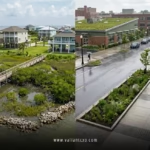
Cities elevate roads and buildings. Wetlands restoration buffers coasts and filters water. Farmers adopt climate-smart crops and drainage improvements. States integrate adaptation into long-term planning, protecting ecosystems that support fisheries and tourism.
What I’d do if advising a coastal town: Map flood zones with updated NOAA data, then prioritize green infrastructure like living shorelines over hard barriers alone.
Midwest: Agriculture, Water Extremes, and Ecosystems
Here, swings between heavy rains and drought dominate. Adaptation strategies emphasize soil health, resilient infrastructure, and ecosystem connectivity.
No-till farming and cover crops build soil resilience. Cities upgrade stormwater systems for bigger downpours. Wildlife corridors help species shift ranges. Great Lakes managers tackle invasive species amplified by warmer waters.
The kicker? These moves also sequester carbon, linking adaptation to mitigation.
South and Southeast: Heat, Hurricanes, and Coastal Squeeze
Extreme heat, intensifying hurricanes, and sea level rise hit hard. Strategies include urban cooling, resilient housing, and mangrove or marsh restoration.
Occupational heat standards protect workers. Coastal communities buy out high-risk properties or elevate homes. Agriculture shifts to heat-tolerant varieties. Natural systems get breathing room to migrate inland.
West and Southwest: Drought, Fire, and Water Scarcity
Wildfires, prolonged drought, and heat define this zone. California’s 2025-updated Climate Adaptation Strategy highlights vulnerable communities, nature-based solutions, and resilient economies.
Prescribed burns and forest thinning reduce fuel loads. Water conservation includes recycling and efficient irrigation. Urban areas plant drought-resistant landscapes and expand cool roofs. Tribes integrate traditional knowledge into plans.
Read California’s latest framework: California Climate Adaptation Strategy.
A Regional Adaptation Comparison Table
| U.S. Region | Primary Climate Risks | Key Adaptation Strategies | Examples in Action | Expected Benefits |
|---|---|---|---|---|
| Northeast | Flooding, sea rise, storms | Green infrastructure, elevation, wetland restoration | Living shorelines, stormwater upgrades | Reduced flood damage, habitat protection |
| Midwest | Extreme precipitation, drought, heat | Soil health practices, resilient crops, infrastructure retrofits | Cover cropping, drainage improvements | Stronger farms, less erosion |
| South/Southeast | Heat, hurricanes, coastal erosion | Heat standards, property buyouts, mangrove restoration | Elevated homes, urban tree canopy | Lower mortality, economic continuity |
| West/Southwest | Drought, wildfire, water scarcity | Fuel reduction, water efficiency, nature-based cooling | Prescribed burns, drought landscaping | Fewer catastrophic fires, sustained water supply |
Data informed by state plans and federal resources like NOAA and EPA. Success hinges on cross-sector coordination.
Climate Adaptation Strategies for U.S. Regions: Step-by-Step Action Plan for Beginners
Jump in without overwhelm.
- Assess locally: Use EPA or state tools to identify top risks in your area.
- Build knowledge: Review how climate change affects Earth ecosystems 2026 to connect impacts with solutions.
- Start small: Plant natives, improve home efficiency, or join community resilience groups.
- Scale up: Advocate for local plans incorporating nature-based solutions.
- Monitor progress: Track metrics like flood risk reduction or heat island cooling.
- Collaborate: Partner with neighbors, tribes, and agencies for bigger impact.
Consistency beats sporadic big efforts every time.
Common Mistakes & How to Fix Them
- Mistake: Treating adaptation as only government work. Fix: Individuals and businesses drive demand and innovation.
- Mistake: Ignoring equity. Fix: Center frontline communities in every decision.
- Mistake: Focusing solely on hard infrastructure. Fix: Blend with nature-based approaches for cost-effective, multi-benefit results.
- Mistake: Static planning. Fix: Build in regular updates as science evolves.
- Mistake: Going it alone. Fix: Leverage federal and state resources for funding and technical help.
In practice, the fix is iterative—test, learn, adjust.
Explore national resilience tools: U.S. Climate Resilience Toolkit.
Check state adaptation progress: Georgetown Climate Center Adaptation Plans.
Key Takeaways
- Climate adaptation strategies for U.S. regions deliver targeted protection against regional threats.
- Nature-based solutions often provide the best return on investment.
- Linking back to how climate change affects Earth ecosystems 2026 keeps efforts grounded in real impacts.
- Equity and collaboration accelerate success.
- Early action saves lives, money, and ecosystems.
- Monitoring and updating plans keeps them relevant.
- Everyone has a role—from backyard gardens to policy advocacy.
- Integrated approaches build true resilience.
U.S. regions face unique pressures, but shared strategies create nationwide strength. Ecosystems show resilience when given half a chance. Pick one strategy that fits your spot—maybe a community tree-planting event or pushing for better local codes—and move on it this season. The payoff compounds fast.
FAQs
What are the most effective climate adaptation strategies for U.S. regions right now?
Regional priorities rule: wildfire fuel management in the West, flood infrastructure in the Northeast, heat action plans in the South, and soil practices in the Midwest.
How do climate adaptation strategies connect to how climate change affects Earth ecosystems 2026?
They directly counter habitat shifts, biodiversity loss, and service disruptions by protecting and restoring natural systems under pressure.
Can individuals contribute meaningfully to climate adaptation strategies for U.S. regions?
Absolutely. Local restoration, voting for resilient policies, and adopting personal measures add up to significant collective impact.