How climate change is affecting Earth’s weather patterns in 2026 shows up in hotter heat waves, wilder swings between drought and flood, and storms packing more punch. The planet crossed key warming thresholds in recent years, and the results hit home right now—especially across the US. Expect more extremes that disrupt lives, economies, and routines.
- Intensified heat waves strike harder and linger longer, pushing temperatures into dangerous territory even outside traditional summer peaks.
- Precipitation gone haywire: Some areas drown in heavy downpours while others bake under prolonged drought.
- Stronger tropical systems: When storms form, they carry more moisture and energy from warmer oceans.
- Wildfire seasons expand with drier vegetation and erratic winds.
- Why it matters: These shifts cost billions, threaten health, and reshape where and how we live.
The changes compound natural variability like El Niño patterns, but human-driven warming loads the dice. Here’s what seasoned observers see playing out.
Rising Global Temperatures Fuel Everyday Extremes
2025 ranked among the hottest years on record, with global averages sitting roughly 1.4°C above pre-industrial levels. Early 2026 data points to continued warmth, with January landing as the fifth-warmest on record according to Copernicus Climate Change Service.
What usually happens is the extra heat in the atmosphere and oceans rewires basic weather mechanics. Warmer air holds more moisture—about 7% more per degree Celsius. That means rain events turn deluges when they hit. Dry spells drag out because evaporation pulls moisture from soils faster.
In the US, this plays out regionally. The Southwest and West face amplified drought and fire risk. Midwest and Southeast deal with bursts of heavy rain and severe storms. Northeast winters mix milder stretches with occasional Arctic blasts that still pack a wallop when they arrive.
The kicker? These aren’t one-off anomalies. Patterns show acceleration beyond many earlier projections.
How Climate Change Is Affecting Earth’s Weather Patterns in 2026: Heat Waves and Drought
Heat doesn’t just feel worse. It lasts longer and hits harder. Record-shattering temperatures in early 2026 across parts of the US echoed patterns from prior years, where climate change made extreme heat significantly more likely and intense.
Droughts follow the same script. Soils dry out quicker, vegetation becomes tinder, and wildfire seasons stretch. The 2025 Los Angeles wildfires delivered a brutal example—costing over $60 billion and linked to conditions made more flammable by warming.
Picture a pressure cooker: the lid stays on longer, and when pressure releases, it does so with force. That’s the new normal for many US regions.
Shifts in Precipitation and Flood Risks
One week scorched earth. The next, inches of rain overwhelm drainage systems. This whiplash defines how climate change is affecting Earth’s weather patterns in 2026.
Heavier rainfall events increased in frequency and intensity. Warmer oceans feed tropical systems more energy and moisture, leading to slower-moving storms that dump record amounts in concentrated areas. Even in a potentially quieter Atlantic hurricane season forecast by NOAA, individual storms that develop carry greater destructive potential.
US examples from recent years include catastrophic flooding in river valleys where climate change amplified rainfall totals. Flash floods and urban flooding become more common as infrastructure struggles to keep pace.
Storms, Tornadoes, and Severe Weather
Severe thunderstorm outbreaks and tornado activity surged in 2025, contributing to multiple billion-dollar disasters. Climate change doesn’t create every storm, but it juices the ingredients: more instability, stronger updrafts, and heavier hail or rain.
Hurricanes and typhoons show mixed signals. Overall numbers might dip some years due to atmospheric patterns, yet intensity climbs. Warmer sea surface temperatures provide the fuel for rapid intensification and higher rainfall rates.
Impacts on US Regions in 2026
- West Coast: Extended fire weather, smoke impacts on air quality.
- Central US: Tornado alley expands in timing and reach; hail and wind damage spike.
- Gulf and Southeast: Flood risks from tropical moisture and sea level rise.
- Northeast and Midwest: Variable winters with more rain-on-snow events and summer heat domes.
These regional fingerprints matter for planning everything from agriculture to insurance.
| Weather Pattern | Pre-2000 Typical | 2026 Observed/Projected Trends | US Impacts |
|---|---|---|---|
| Heat Waves | Days to weeks | Longer duration, higher peaks (+1-2°C or more from climate influence) | Health risks, energy demand, wildfires |
| Heavy Rain Events | Moderate totals | 10-30%+ more intense when occurring | Flooding, infrastructure strain |
| Drought Periods | Seasonal | More persistent, multi-year risks | Water shortages, crop losses |
| Tropical Storms | Variable intensity | Stronger winds, heavier rain when active | Coastal damage, inland flooding |
| Wildfire Conditions | Summer peaks | Earlier starts, longer seasons | Billions in damages, air quality |
(Data synthesized from NOAA, NASA, and WMO reports on observed trends. Actual events vary by year and location.)
How Climate Change Is Affecting Earth’s Weather Patterns in 2026: The Role of Oceans and Ice
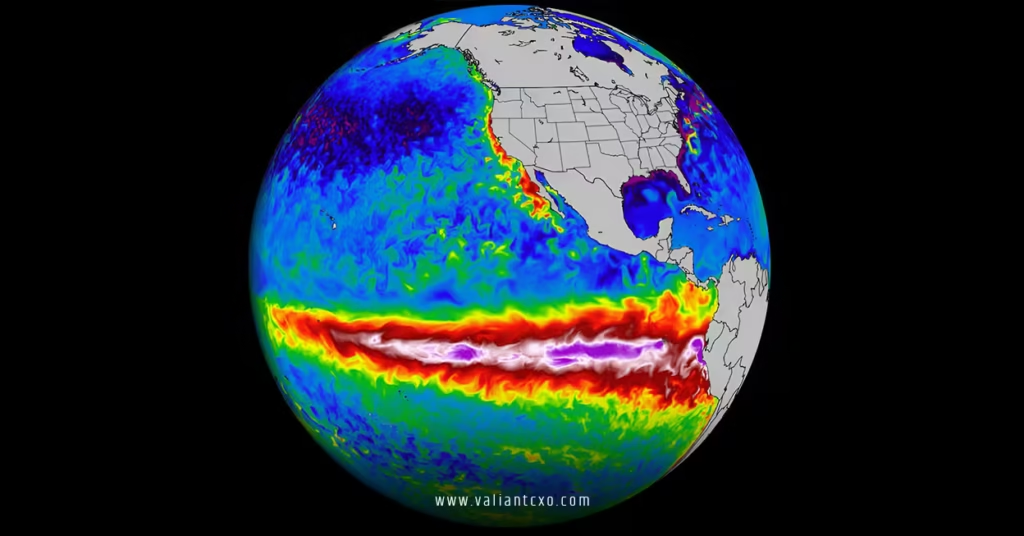
Oceans absorbed the bulk of excess heat—roughly 90%—driving marine heat waves and altering atmospheric circulation. Sea level rise from melting ice and thermal expansion inches higher, worsening storm surges along US coasts.
El Niño possibilities in 2026 add another layer. These natural oscillations interact with the long-term warming trend, potentially amplifying extremes like heat and erratic rainfall.
Step-by-Step Action Plan for Beginners
Want to get ahead of the shifts? Start simple and build.
- Track local forecasts smarter: Use NOAA or National Weather Service apps for alerts on heat, floods, or fire weather. Check climate outlooks monthly.
- Build personal resilience: Stock emergency kits with water, non-perishables, medications, and a battery radio. Know your evacuation routes.
- Harden your home: Improve insulation for heat/cold, clear gutters, consider flood barriers if in vulnerable zones. Native landscaping reduces water use and fire risk.
- Reduce your footprint: Cut energy waste at home—efficient appliances, renewables where possible. Every bit slows the trajectory.
- Community level: Advocate for updated infrastructure and zoning. Join local resilience groups.
- Stay informed: Follow verifiable sources like NASA Earth Observatory or state climate offices. Avoid hype; focus on data.
What I’d do if starting fresh? Prioritize flood and heat proofing first in most US areas, then layer in emission reductions.
Common Mistakes & How to Fix Them
People often treat weather as random or assume “it’ll bounce back.” Wrong. Ignoring long-term trends leads to repeated surprises.
Mistake 1: Relying solely on past experience for planning. Fix: Review updated climate projections from .gov sites annually.
Mistake 2: Overlooking indirect effects like supply chain disruptions from distant events. Fix: Diversify food and energy sources locally where feasible.
Mistake 3: Thinking individual actions don’t matter. Fix: Focus on what scales—home efficiency multiplies across neighborhoods.
Another trap: Panic without preparation. Channel energy into practical steps instead.
How Climate Change Is Affecting Earth’s Weather Patterns in 2026: Looking at Attribution Science
Scientists use rapid attribution studies to quantify climate change’s role in specific events. For instance, heat waves become virtually impossible without the warming we’ve already caused. Heavy rain events see boosted probabilities and intensities.
This science sharpens predictions and underscores urgency.
For deeper reading, check NASA’s Climate Change portal for satellite insights, NOAA’s Billion-Dollar Disasters tracker for economic impacts, and WMO’s State of the Global Climate reports for international context.
Key Takeaways
- Warming drives more extreme heat, moisture-laden storms, and fire-friendly conditions.
- US experiences regional differences but nationwide increases in costly disasters.
- Natural variability like El Niño layers on top of the human signal.
- Preparation beats reaction—small steps compound.
- Attribution links specific extremes to climate change with growing confidence.
- Oceans and atmosphere hold the memory of emissions already released.
- Adaptation and mitigation both matter now.
- Data from trusted agencies remains the best guide through uncertainty.
The bottom line? How climate change is affecting Earth’s weather patterns in 2026 demands clear-eyed action. It disrupts the predictable rhythms we built societies around, yet knowledge equips us to adapt smarter. Start with your own backyard and push for broader solutions. Check your local climate risk assessment today and adjust one habit this week. The patterns are shifting—don’t get caught flat-footed.
FAQs
How is climate change affecting Earth’s weather patterns in 2026 differently from previous decades?
Recent years show faster intensification. Heat waves last longer, rainfall concentrates into fewer but heavier events, and wildfire seasons expand. The cumulative warming pushes baselines higher, so even “normal” years feel extreme.
Will 2026 bring more hurricanes to the US due to climate change?
NOAA forecasts a potentially below-average Atlantic season in terms of numbers, but any storms that form benefit from warmer oceans, bringing stronger winds and heavier rain. Focus remains on impacts over sheer count.
What can beginners do right now about how climate change is affecting Earth’s weather patterns in 2026?
Assess your home’s vulnerabilities to heat, flood, and fire. Build an emergency plan, reduce household emissions, and stay plugged into reliable forecasts. Local resilience efforts amplify individual moves.