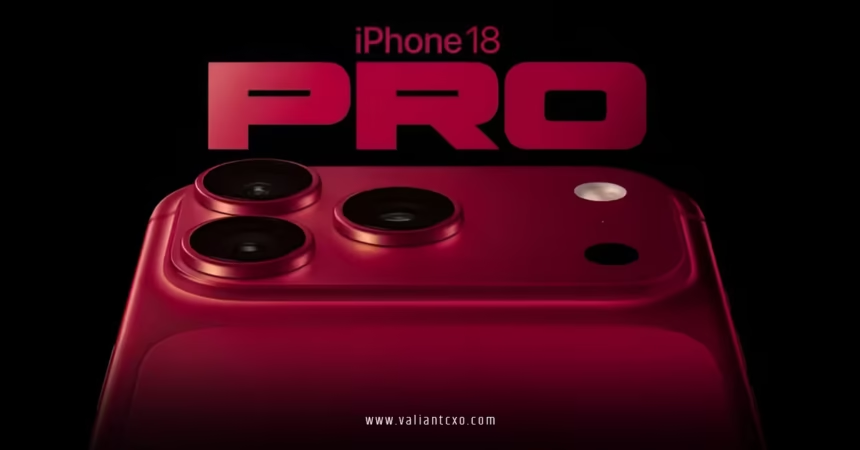
The iPhone 18 Pro rumors roundup is already stacked: talk of a redesigned camera system, a more efficient A20 chip on a 2nm process, smarter AI features, and real gains in battery life and connectivity. Some of it is noise. Some of it is likely the next logical step in Apple’s playbook.
If you want the big picture, not just scattered leaks, you’re in the right spot.
- Design rumors point to slimmer bezels, lighter materials, and subtle but meaningful ergonomic tweaks.
- The camera is expected to lean harder into hardware upgrades plus smarter computational photography.
- The A20 chip on a 2nm node should focus more on efficiency and AI acceleration than raw “bragging rights” performance.
- Battery life, thermals, and charging speeds are shaping up as key battlegrounds against Android flagships.
- Early talk around the iPhone 18 Pro variable aperture camera 2nm A20 chip battery life combo suggests a camera-first upgrade without sacrificing endurance.
Apple hasn’t confirmed iPhone 18 Pro details yet, so everything here is based on industry trends, supply-chain chatter, and how Apple usually iterates. Treat it as a roadmap, not a spec sheet.
Quick summary: iPhone 18 Pro rumors at a glance
If you don’t want to read the whole iPhone 18 Pro rumors roundup, here’s the distilled version:
- Design: Thinner bezels, refined titanium or similar premium material frame, and subtle weight reductions.
- Display: High-refresh ProMotion OLED with better outdoor brightness and potentially more efficient power draw.
- Camera: Upgraded main and telephoto lenses, likely with a variable aperture system on at least the primary sensor.
- Chip: A20 on a 2nm process node, optimized for AI and efficiency, not just benchmark hero runs.
- Battery: Modest capacity tweaks, but bigger gains from chip efficiency and smarter power management.
The pattern is familiar: Apple rarely throws the whole phone out and starts over. It nudges every major system forward, then leans on software to tie it all together.
Design rumors: evolution, not revolution
Don’t expect a completely radical chassis. Do expect refinement.
Thinner bezels and lighter feel
Most leaks and component chatter suggest:
- Slightly thinner bezels around the display
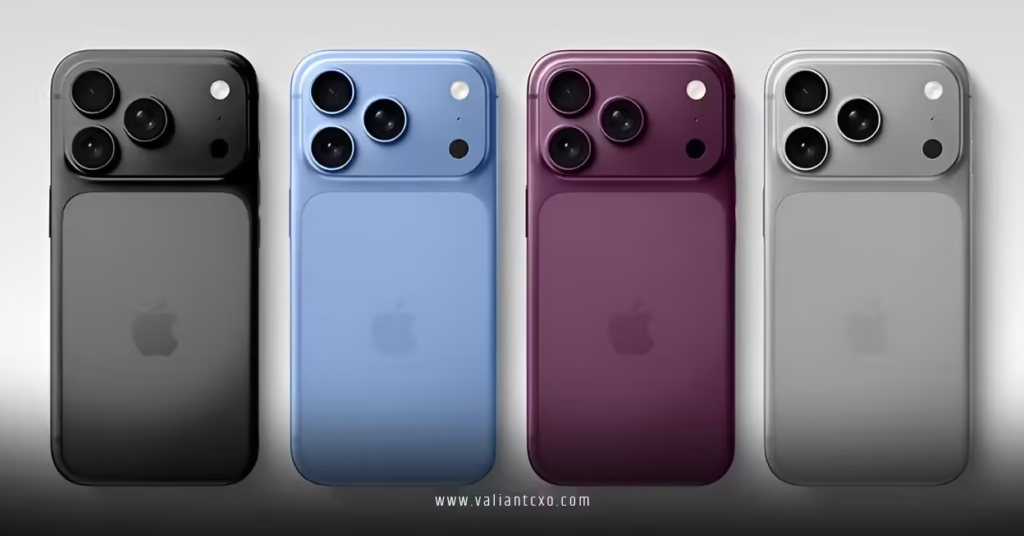
- Continued push toward lighter but durable materials
- Tiny changes to button placement and camera bump shaping
In my experience, these “small” changes matter more than they sound. A few grams shaved off and better weight distribution make a phone feel less fatiguing during long camera sessions or gaming. That’s the kind of difference you notice every single day.
Port, buttons, and build details
- USB‑C is here to stay after the regulatory nudge and user acceptance.
- The mute switch is unlikely to return once the Action button trend is fully locked in.
- Expect improved ingress protection and more durable glass claims.
Nothing headline-grabbing here, but reliability and feel-in-hand are a big part of why people stick with the Pro line.
Display: brighter, smoother, more efficient
Display rumors usually follow one script: brighter, more efficient, better HDR. The iPhone 18 Pro rumors roundup is no different.
You’ll likely see:
- ProMotion with variable refresh, dropping low for static content to save power.
- Higher peak brightness outdoors for easier daylight visibility.
- Incremental OLED efficiency gains, cutting into the display’s share of power draw.
Here’s why that matters. The display is one of the biggest battery hogs. Any efficiency win here gives Apple more headroom to push camera and AI features without tanking real-world endurance.
Camera: where the iPhone 18 Pro will earn its name
This is the part everyone cares about—and where iPhone 18 Pro rumors get loud.
Variable aperture and upgraded optics
The most exciting talk centers on a more advanced main camera module, likely featuring a variable aperture system. That means your primary lens can adjust how much light it lets in, instead of being stuck at a single fixed opening.
In practice, that could mean:
- Cleaner daylight highlight control without overreliance on software.
- Better low-light performance by letting in more light when needed.
- More natural depth-of-field and flexibility for both photos and video.
If you want the deep dive on how this ties into silicon and endurance, it’s worth reading more about the iPhone 18 Pro variable aperture camera 2nm A20 chip battery life balance and how those components play off each other.
Telephoto and ultra‑wide improvements
Beyond the main sensor, rumors point to:
- More capable telephoto with better low-light reach.
- Sharper ultra‑wide for night and indoor group shots.
- Improved sensor-shift stabilization and smarter anti-flicker tools.
What usually happens is simple: Apple bumps the hardware just enough, then makes the bigger leap with computational photography. Expect smarter scene detection, better skin tones, and fewer “plastic” looking night photos.
A20 on 2nm: what that actually means
“2nm A20” sounds impressive, but here’s the honest take: node size is only part of the story.
Performance vs efficiency
A 2nm process should give Apple:
- Better performance-per-watt for everyday tasks and camera processing.
- More transistors packed into the same space for neural and graphics improvements.
- Lower baseline power draw when the phone is idling or doing light work.
Apple tends to use these gains to:
- Add features (especially AI and camera pipelines).
- Keep or improve battery life rather than just chasing higher peak performance numbers.
So, don’t expect the iPhone 18 Pro to feel twice as fast. Expect it to feel smoother, cooler, and more consistent, especially under heavy mixed workloads like shooting, editing, and sharing content quickly.
AI and on-device intelligence
On-device AI is the direction of travel for everyone. Apple is likely to push:
- Faster, more efficient on-device models for photo and video editing.
- Smarter Siri-like functionality, even if under a new branding or UX.
- Classification, transcription, and real-time enhancements that don’t require the cloud.
That’s where the neural side of the A20 will shine. And yes, all of that can hit battery hard if the system isn’t efficient—which is why chip and software optimization matter more than ever.
Battery life: rumors, realism, and what to expect
Battery life is where hype often dies. So let’s stay grounded.
Capacity vs efficiency
Most modern iPhones see modest battery capacity changes year over year. Real gains usually come from:
- More efficient chips and modems.
- Smarter background-task management.
- Better display power behavior via adaptive refresh rates.
If Apple ties the 2nm A20 properly into iOS power-management, the iPhone 18 Pro could offer:
- Similar or better screen-on-time than the previous Pro generation.
- Less heat under camera and gaming loads.
- Stronger standby performance (less overnight drain).
That’s where the iPhone 18 Pro variable aperture camera 2nm A20 chip battery life combination becomes compelling—less wasted energy in both the camera stack and the silicon.
Charging speed and heat
Don’t expect Apple to suddenly match the wild fast-charging speeds some Android brands advertise; its usual priority is battery health and safety over raw watts. Instead, watch for:
- Slightly improved wired and MagSafe-style wireless charging times.
- Smarter heat management during longer charging sessions.
- Software nudges to preserve long-term battery health.
In my experience, phones that stay cooler while charging and shooting video age better. It’s less glamorous than a huge watt number on the box, but much more important six to twelve months in.
Connectivity and extras: 5G, Wi‑Fi, satellite, and beyond
Rumors around connectivity focus on:
- Updated 5G modem for better efficiency and coverage.
- Newer Wi‑Fi and Bluetooth standards for faster, more stable connections.
- Incremental improvements to satellite-based emergency features.
These all affect user experience—and battery. Weak signal and inefficient modems are quiet battery killers. Any modem improvement in the iPhone 18 Pro will pay dividends for people who live in challenging coverage areas.
Step-by-step: how to decide if you should wait for the iPhone 18 Pro
Here’s a simple action plan if you’re on the fence about waiting for the iPhone 18 Pro:
- Audit your current pain points.
Are you annoyed by camera quality, battery life, or performance stutters? Rank them. - Match rumors to your priorities.
- Care most about photos and video? The rumored camera and variable aperture push is a big plus.
- Hate charging twice a day? Chip efficiency and potential battery upgrades matter more.
- Check your current device age.
- On an iPhone 12 or older? The jump will be significant almost regardless.
- On a 15 or 16 Pro? Waiting for real reviews might be smarter than pre-ordering blind.
- Set a realistic budget.
Pro models rarely get cheaper. If the rumored camera and chip combo directly hits your top priorities, the price premium is easier to justify. - Wait for trusted reviews.
Treat launch events as marketing. Base your decision on hands-on testing from reviewers who measure battery, thermals, and camera performance in realistic scenarios.
What I’d do if camera and endurance were my top priorities? I’d keep an eye on how reviewers test that iPhone 18 Pro variable aperture camera 2nm A20 chip battery life synergy under all-day use, not just a few sample shots.
Common mistakes people make with iPhone 18 Pro rumors
Rumor season is fun… and a minefield. Here’s where people usually mess up.
Mistake 1: Treating every leak as confirmed
Not every supplier leak, CAD render, or “industry source” is equal. Parts change. Prototypes evolve. Priorities shift.
Fix: Look for patterns across multiple sources and years of Apple behavior, not a single sensational leak.
Mistake 2: Overestimating battery life gains
A new node and a bigger number on the chip label don’t guarantee all-day-plus battery.
Fix: Expect incremental gains and let real-world testing confirm whether the iPhone 18 Pro truly outperforms its predecessors.
Mistake 3: Ignoring thermals
A phone can have a huge battery and still feel awful if it runs hot and throttles.
Fix: Pay attention when reviewers talk about temperature under camera, gaming, and charging loads.
Mistake 4: Buying just for one rumored feature
Chasing “one big leak” is risky. That feature might get cut, delayed, or overshadowed by compromises elsewhere.
Fix: Judge the total package—camera, chip, battery, display, connectivity, and storage—before upgrading.
Key takeaways
- The iPhone 18 Pro rumors roundup points to a refinement-focused upgrade with serious attention on camera hardware plus smarter computation.
- A 2nm A20 chip is likely more about efficiency and AI acceleration than raw speed bragging rights.
- Display efficiency and modem upgrades are important for real-world battery life, not just benchmark scores.
- The iPhone 18 Pro variable aperture camera 2nm A20 chip battery life balance is shaping up as a central story for heavy camera users who still demand all-day endurance.
- Rumors are useful for planning, but final judgment should wait for real-world testing of thermals, battery behavior, and camera performance.
- If your current phone struggles with photos, video, or lasting a full day, the iPhone 18 Pro is worth serious consideration once confirmed specs and reviews land.
FAQs
Is the iPhone 18 Pro expected to be a big upgrade over current Pro models?
Compared to very recent Pro models, expect more of a focused evolution than a total overhaul: better camera hardware, a more efficient A20 chip on 2nm, and incremental gains in battery life, display performance, and connectivity.
How important is the A20 2nm chip for everyday users?
For most people, the A20 on 2nm matters less for raw speed and more for smoother performance, cooler operation, and improved endurance—especially when combined with camera-intensive use and modern AI features.
Should I wait specifically for the iPhone 18 Pro if I care about camera and battery?
If camera quality and all-day endurance are your top priorities, it’s worth waiting to see how the iPhone 18 Pro variable aperture camera 2nm A20 chip battery life combination performs in real reviews before locking into a long-term device.