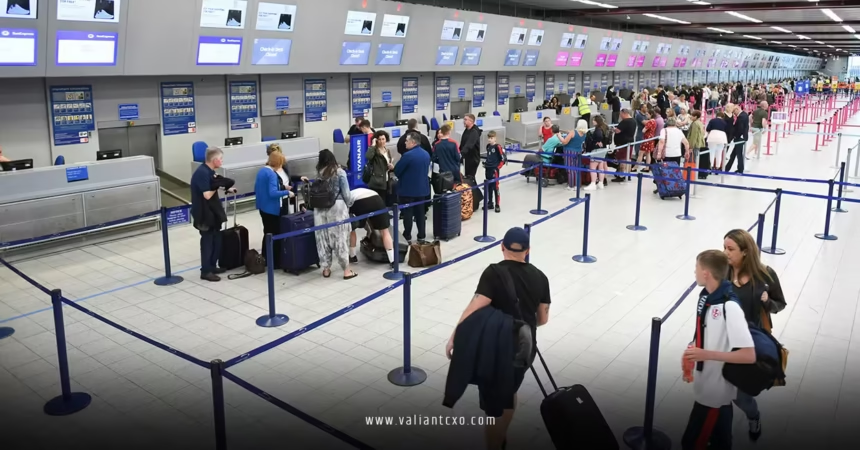
Europe airport security wait times guide :
Europe airport security wait times can turn an exciting trip into a stress test if you don’t plan for them. The good news? Most of the pain is predictable – and avoidable – if you understand how European airports work, when queues spike, and how new systems like EES at the border can add extra friction on top of regular security.
This guide walks through what really drives wait times, how to read between the lines of airport advice, and what to do differently when you’re booking, packing, and walking into the terminal.
Quick overview: what actually controls your wait time
Before we go deeper, here’s the short, scannable version of Europe airport security wait times:
- Security checkpoints in Europe vary wildly between airports, even within the same country.
- Early mornings, late afternoons, weekends, and holidays are peak queue times almost everywhere.
- Low-cost carrier terminals often mean longer lines and fewer “comforts” while you wait.
- New border systems like EES add separate delays at passport control, not security, but they still hit your overall airport time.
- If your itinerary crosses an external Schengen border, also factor in EU EES airport border delays summer 2026 when you plan your arrival and connections.
Security is only one part of the story. Border control can be another big bottleneck. People who ignore that second piece are usually the ones sprinting through the terminal.
Security vs border control: don’t mix them up
Here’s where a lot of travelers get tripped up.
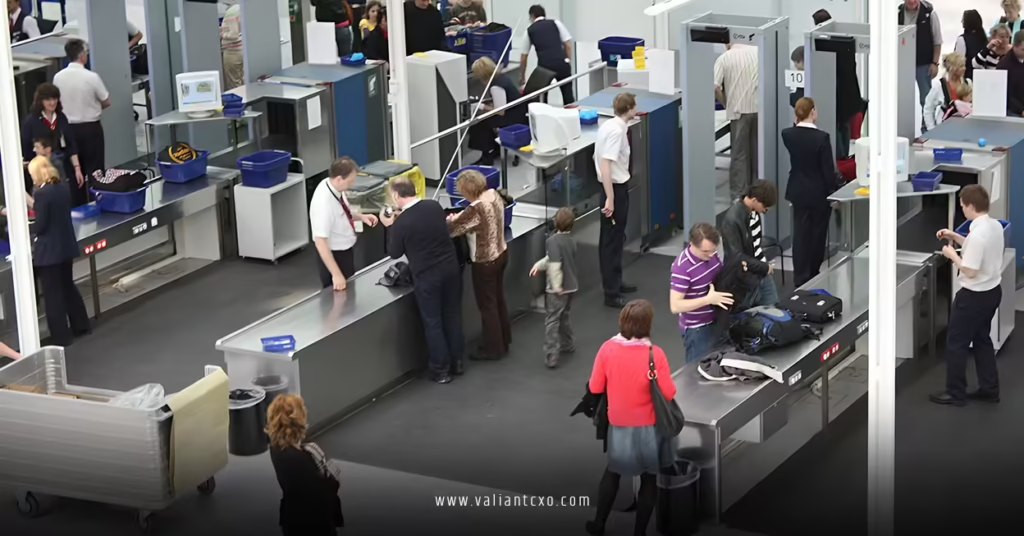
- Security check: bags on the belt, liquids in a bag, laptops out (or not), body scanners, etc.
- Border control / passport check: stamping or scanning your passport, sometimes biometrics, entry questions.
In Europe, especially in the Schengen area, you might hit both:
- Security to access the departure gates.
- Border control if you’re entering or leaving Schengen, or connecting from non-Schengen to Schengen.
Why this matters for wait times:
- Security lines are influenced by passenger volume, staffing, and how strict the screening rules are.
- Border lines are influenced by nationality mix, systems like EES, and flight patterns (lots of non-EU arrivals at once).
If you underestimate either piece, your “1.5 hours at the airport” plan collapses fast.
How Europe airport security works (and why it feels different than the U.S.)
From a U.S. traveler’s perspective, European airport security feels familiar but more variable.
Some airports now use scanners that let you keep liquids and laptops in the bag. Others cling to strict 100 ml rules and separate trays for everything. Airports also have different staffing models and contracts, which can dramatically affect wait times at peak hours.
Typical patterns you’ll notice:
- One main security zone: Many European airports funnel you through a central checkpoint after check-in or self-service bag drop. If that jammed area goes down, everyone feels it.
- Multiple smaller checkpoints: Some hubs split security by gate area or terminal, which can create uneven wait times; one side may be jammed while another is practically empty.
- Priority lanes: Business class, elite status, or paid fast-track options exist in many airports, but not all of them advertise it clearly.
When you read “arrive 2 hours early” on an airline ticket, that’s a generic suggestion, not a guarantee. At a busy European hub in summer, 2 hours can be barely enough if you hit check-in, security, and border queues in one unlucky roll.
Key factors that affect Europe airport security wait times
Let’s break down what usually drives your wait time at security in Europe.
1. Time of day
No magic here:
- Early morning (roughly 5–9 a.m.): wave of departures
- Late afternoon / early evening: another spike
- Late night: fewer flights, sometimes fewer open lanes too
If your flight leaves in a “bank” of departures, assume everyone else is trying to get through the same checkpoint at the same time.
2. Day of week and season
Summer travel, school holidays, and weekends are when European airports feel like big-city subway stations at rush hour.
In my experience, August in tourist-heavy countries (Spain, Italy, France, Greece, Portugal) is where security lines can get ugly if you show up late.
3. Terminal and airline
Low-cost carriers often operate from secondary terminals or older infrastructure. That can mean:
- Fewer security lanes
- More passengers with lots of bags and less familiarity with procedures
- Less staff flexibility
Full-service carriers at main terminals tend to have slightly better flow and more options (premium lanes, better staffed checkpoints), but they aren’t immune from chaos.
4. Local security rules and tech
Some airports have rolled out improved scanners that make the process faster:
- Keep liquids and electronics in your bag
- Fewer tray rearrangements
- Quicker throughput per passenger
Others are still on older kit, where every laptop, tablet, and cable pouch has to come out. Multiply that by a full flight of people who haven’t flown in years, and your “simple” queue becomes slow-motion.
How border systems affect your total airport time
Security is only half the story when you’re dealing with international or Schengen-border travel.
When you arrive in or depart from Schengen, or connect between non-Schengen and Schengen flights, you may face:
- Outbound passport check: when leaving Schengen.
- Inbound check: when entering for the first time on that journey.
- EES processing: for many non-EU nationals, especially U.S. travelers, as Europe modernizes border control.
If you’re flying in summer, EU EES airport border delays summer 2026 can add extra minutes (or more) to your airport experience, especially if you’re arriving at a busy hub during a peak wave of non-EU flights.
The takeaway: don’t just plan for security. Plan for security plus border control, especially on routes that cross Schengen’s external border.
How early should you arrive at European airports?
There’s no one-size-fits-all answer, but a practical baseline for most travelers:
- Schengen domestic/short-haul, no bags: 90 minutes before departure, more in peak summer.
- Schengen/European flights with checked bags: 2 hours minimum, 2.5–3 in peak periods.
- Non-Schengen or flights with border checks and bags: 3 hours is safe, more if you’re inexperienced or traveling with kids.
If your airport is known for long security lines, or you’re traveling during school holidays, add extra buffer. It’s much easier to kill 30 minutes at the gate than to rebook a missed flight.
Strategies to cut Europe airport security wait times
You can’t control airport staffing, but you can control how prepared you are.
1. Choose flight times strategically
If you have flexibility:
- Avoid the first big departure wave if you’re not a morning person.
- Avoid tight evening flights when people are more stressed and queues are building.
- Look at mid-day flight options where possible.
Fewer people, fewer lines. Simple, but overlooked.
2. Travel with smarter baggage
Big security bottlenecks often come from passengers who are unpacking half their life into trays.
- Use simple packing: one main carry-on, one personal item.
- Pre-pack liquids in a transparent bag according to the strictest rules you might encounter.
- Keep electronics and cables in easy-to-grab sections.
The faster you move through the checkpoint, the less you contribute to the slow-crawl effect.
3. Leverage fast-track when it actually helps
Paid or status-based fast-track lanes can be worth it if:
- The airport is notorious for long waits.
- You’re traveling at peak times.
- You have a tight-ish connection by the time you reach security.
But here’s the kicker: a separate fast-track lane doesn’t always mean no line. Sometimes it’s just a shorter line. Decide based on your specific airport and time of day, not on the promise alone.
4. Check real-time or recent reports when possible
Some airports and apps offer live or approximate wait time data. Even when that isn’t available, recent traveler reviews and airport-specific forums can tip you off to:
- Construction affecting security lanes
- Temporary staffing issues
- Known choke points (e.g., one terminal consistently worse than others)
That intel is more valuable than generic “arrive 2 hours before departure” boilerplate.
Connecting flights and security: where things get messy
Connections in Europe can involve:
- Re-clearing security
- Going through border control
- Moving between terminals via long walks or buses
The classic trap: booking a tight connection where you assume your bags are checked through and you won’t have to clear security again. Often wrong.
In my experience:
- 45–60 minutes for a connection that may include security and border control is asking for trouble.
- 90 minutes can work if everything goes right, but still carries some risk in summer.
- 2+ hours is where most of the stress disappears, even with moderate queues.
Remember, if you’re connecting from outside Schengen into a Schengen destination, your first entry point is where you hit border control (and possibly EES). That can pile onto security times and gate transfer time.
Common mistakes travelers make with Europe airport security
Let’s talk about what usually goes wrong – and how to fix it.
Mistake 1: Treating “arrival at airport” as “arrived at security”
People underestimate how long it takes to:
- Get from curb to check-in
- Check bags or print tags
- Walk across large terminals
Fix: Build time for each stage, not just security. If you’re parking off-site or taking a shuttle, add even more buffer.
Mistake 2: Packing chaos in carry-ons
Random bags stuffed with loose items slow everything down:
- Liquids buried at the bottom
- Laptops under piles of clothes
- Metal items everywhere
Fix: Before you reach security, prep your bag for “one smooth motion” access — liquids, laptop, and metal items easy to grab.
Mistake 3: Ignoring peak dates and local holidays
It’s not just your own holiday calendar that matters. European half-terms, national holidays, and big events (sports, festivals) can spike traffic.
Fix: Quickly check if your travel date aligns with major local holidays or events at your departure or arrival city, especially in summer.
Mistake 4: Forgetting about border delays
People plan for security and then get blindsided by long passport queues.
Fix: If your trip crosses Schengen’s external border, bake border control into your timing – especially with systems like EES and seasonal patterns highlighted in guides to EU EES airport border delays summer 2026.
What I’d do if I were flying through Europe this summer
If I were planning a Europe trip with tight timing, here’s the playbook I’d follow:
- Prioritize flights with sane connection times, even if they cost a bit more.
- Choose main terminals over fringe ones when possible, especially with kids or lots of luggage.
- Arrive early for morning and weekend flights – I’d rather have a coffee airside than watch my gate close.
- Pack carry-ons for “security speed,” not just for maximum capacity.
- Treat border control as a separate time block, not rolled into the same “security window,” particularly when flying into or out of Schengen.
It’s not about paranoia. It’s about removing avoidable stress from a trip you actually want to enjoy.
Key takeaways
- Europe airport security wait times are wildly variable, driven by airport, terminal, time of day, and season.
- Security and border control are separate steps; crossing Schengen borders adds extra time on top of regular security.
- Tight connections through European hubs are risky when you add security queues and potential border delays.
- Smart packing, earlier arrivals, and carefully chosen flight times can cut your risk considerably.
- Low-cost terminals often mean longer lines and fewer fast-track options.
- Summer, weekends, and school holidays significantly increase wait times.
- New border systems in Europe, including those linked to EES, can increase passport control time even if security lines look manageable.
FAQs
How early should I arrive for a European flight in peak summer?
For most travelers, 2 hours before a Schengen short-haul flight and 3 hours before a non-Schengen or long-haul flight is a realistic minimum in summer. If you’re checking bags or traveling with children, add extra buffer in case security or border control queues are longer than expected.
Are Europe airport security wait times worse at low-cost carrier terminals?
Often, yes. Low-cost carrier terminals typically handle large volumes of price-sensitive travelers, with fewer premium lanes and sometimes fewer open security stations. That combination can mean longer lines and more crowding, especially during morning and weekend peak waves.
How do border systems like EES affect my total time at the airport?
EES and related border checks don’t change the security process itself but can significantly add to your overall time in the airport when entering or leaving Schengen. If you’re traveling around the period discussed in guides on EU EES airport border delays summer 2026, plan extra time for passport control on top of your standard security allowance, especially at busy hubs and during peak season.