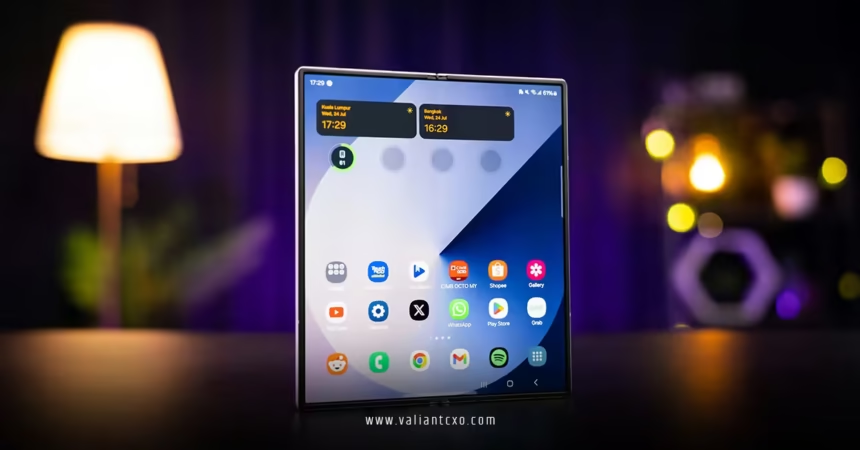
If you run a business today, your phone is not just a gadget—it’s your office in your pocket. You hop from email to Zoom, from spreadsheets to WhatsApp, and you need a device that can keep up without forcing you to carry a laptop everywhere. That’s where foldable phones start to make real sense for business owners and entrepreneurs.
We’re going to be looking at the best foldable phones for business, and how you can pick a device that genuinely supports your day-to-day work instead of just impressing people in meetings. If you would like to find out more, feel free to read on.
Pic – CC0 License
Why foldable phones make sense for business
Foldables give you two big advantages as a business user: more screen space and more flexibility. When you unfold the device, you suddenly have room to review contracts, edit slides, scan dashboards, or handle multiple chats at once without squinting. When you fold it back, you still have a phone that fits in your pocket.
You save time because you switch less between devices. You can review a proposal while on a call, take notes during a meeting, and pull up a calendar next to your inbox all on one screen. Over a long workday, that smoother workflow adds up to fewer distractions and more focus.
Another plus is how these devices look to clients and partners. Turning up with a modern foldable sends a quiet signal that you care about tools and innovation. For some industries—consulting, creative work, tech, real estate—that impression matters.
Samsung Galaxy Z Fold series: still the benchmark
Samsung’s Fold line has set the standard for foldable phones in many markets. Large inner screens, strong multitasking tools, and deep integration with productivity apps make them attractive for business use. If you’re comparing foldables, you’ll almost always bump into the Fold series first.
On the horizon, there’s a lot of interest around the Samsung Galaxy Z Fold 8 Ultra specs price release date, especially for business buyers who want the latest and most capable hardware. If Samsung delivers the expected upgrades in performance, battery life, and durability, the Fold 8 Ultra could easily become one of the best foldable phones for business in 2026.
The main reasons the Fold range works well for professionals are simple:
- Big inner display that feels like a compact tablet
- Good support for split-screen apps and multitasking
- Strong security features through Samsung Knox
- Access to the wide Android app ecosystem
If you already use Samsung or Android in your business, sticking with this ecosystem can make device management and app compatibility easier.
What to look for when choosing a foldable for work
Before you pick any foldable, you need to be clear about how you actually use your phone in your business. Here are the key areas to look at:
- Screen size and layout
You want a cover screen that’s comfortable for quick tasks and an inner screen that’s big enough for documents, slides, and dashboards. If you spend a lot of time reading and editing, the inner display matters more. - Battery life
Long days, travel, and back-to-back meetings will expose weak batteries very quickly. Check real-world battery reviews and look for devices that can handle a full workday without stress. - Durability and hinge quality
Foldables are opened and closed constantly. For business owners, a broken hinge or damaged screen is more than an annoyance—it’s downtime. - Security and business features
Look for strong device encryption, secure folders, work profiles, and regular software updates. If you’re handling client data, this is non-negotiable. - Multitasking tools
Split-screen, floating windows, and smart app layouts are the features that turn a foldable into a mobile workstation. The better these tools are, the more productive you’ll be. - Ecosystem fit
Your foldable should play nicely with your laptop, tablet, and cloud apps. If your team is already deep into a certain platform, that should guide your choice.
Best foldable phones for business right now
While models change quickly, a few types of foldables consistently stand out for entrepreneurs and business users:
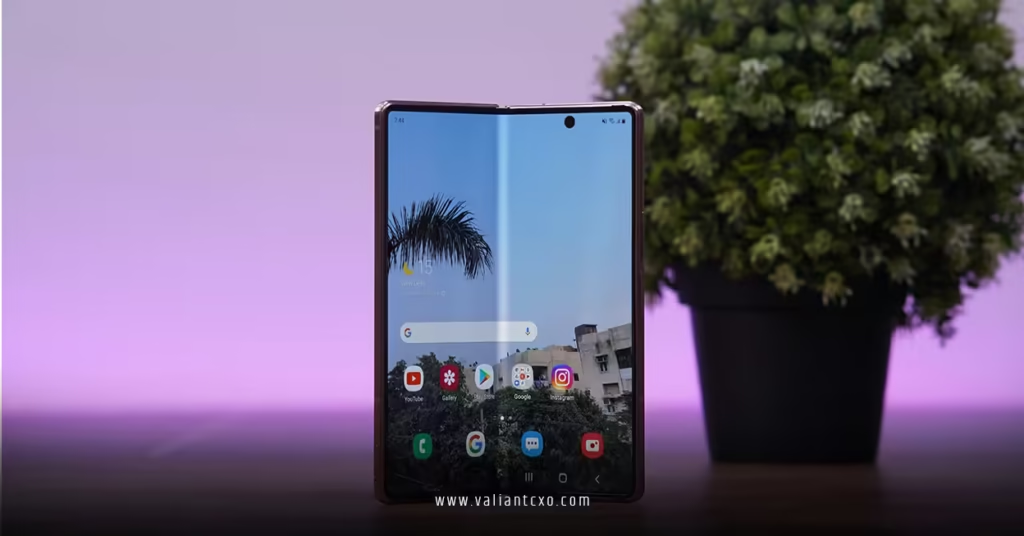
Large book-style foldables
These open up into tablet-sized screens and are ideal if you:
- Read and edit documents daily
- Present decks or visuals on the go
- Work with data-heavy apps and dashboards
They make sense for consultants, managers, analysts, and founders who live in their inbox and productivity tools.
Compact clamshell foldables
These flip open vertically and are closer to classic phones when unfolded. They work well if you:
- Want a pocketable phone with a premium look
- Mostly handle calls, messaging, and social media
- Need occasional extra screen space, not all-day multitasking
They’re often better suited to salespeople, field workers, and owners who want style plus practicality without the full tablet experience.
Is a foldable really right for your business?
A foldable shines if you treat your phone like a primary work device. If your day is packed with calls, video meetings, files, and constant messaging, the extra screen space and multitasking tools will feel like an upgrade.
On the other hand, if you:
- Spend most of your time behind a desk
- Rarely work from your phone
- Mainly use your phone for basic communication
Then a standard flagship might be enough, and you can invest the price difference elsewhere in the business.
The right way to think about it is simple: does a foldable help you make better use of small pockets of time? If you can turn travel, waiting rooms, and coffee breaks into real work sessions, the device starts to pay for itself.
How to roll out foldables across a team
If you’re buying for a team, take a planned approach rather than rolling out foldables to everyone:
- Identify the roles that live on mobile—sales, client-facing staff, traveling managers.
- Start with a pilot group and measure how the devices affect responsiveness and workload.
- Set clear guidelines for device care and security, especially around sensitive data.
- Review the impact after a few months before expanding the rollout.
This way, you spend where you’ll see the most benefit and avoid giving complex devices to people who won’t use the advanced features.
Where foldables fit into your broader tech stack
Foldable phones are not meant to replace everything. Think of them as one piece of your business toolkit, alongside:
- Laptops or desktops for deep work
- Cloud tools for collaboration
- Project management and CRM systems
- Video conferencing platforms
A good foldable helps you stay connected and productive when you’re away from the desk, but you still need solid systems behind it. The phone is the front end; your processes and tools are the engine.
We hope that you have found this article enlightening in some way, especially if you’ve been wondering whether foldable phones are just hype or a genuine business asset. Used well, they can help you work smarter on the move, respond faster to clients, and get more done without carrying extra hardware. The key is to match the device to your actual workflow and to keep an eye on upcoming models like those linked to the Samsung Galaxy Z Fold 8 Ultra specs price release date as the foldable category matures.