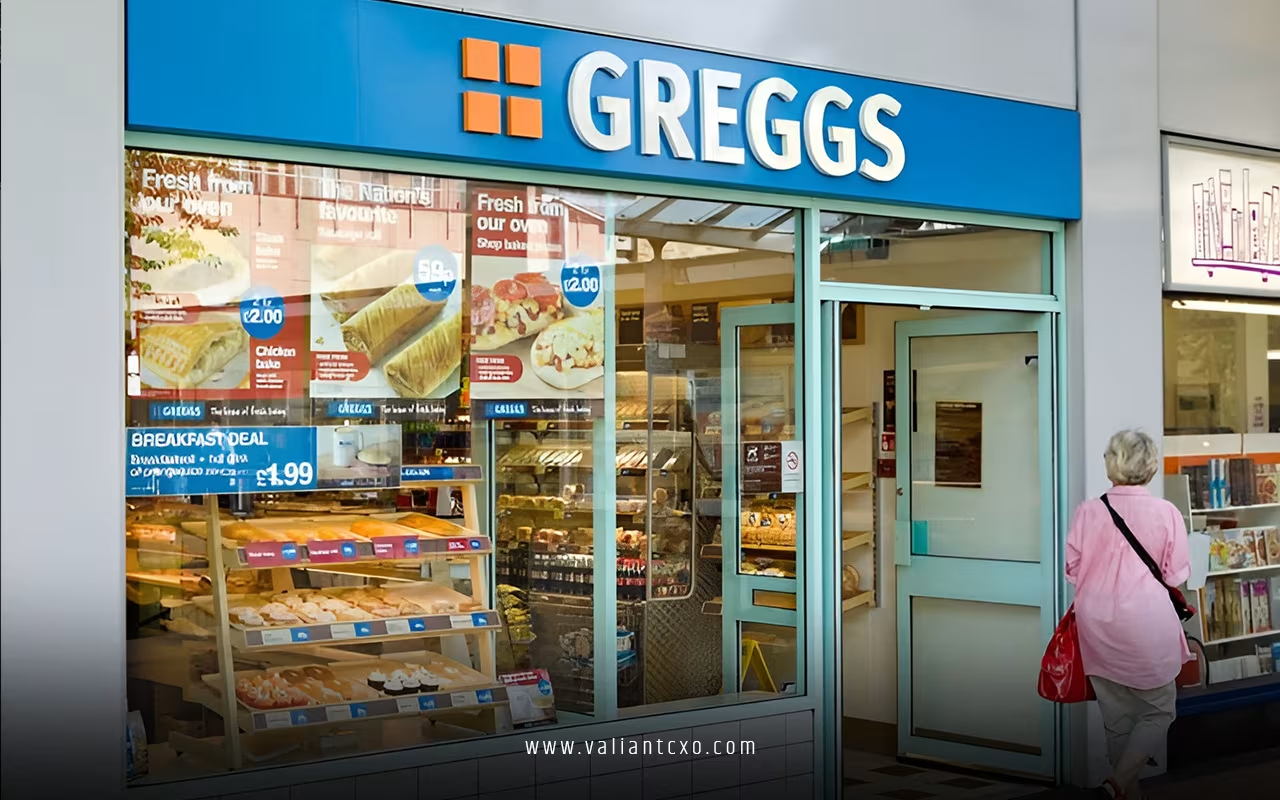
Greggs new store openings first half 2026 show how a well-known bakery chain kept growing even when foot traffic in the broader food-to-go market slowed. Many of you running small or mid-sized businesses face the same pressure—wanting to open more locations without stretching cash flow or diluting what makes your brand work. It’s easy to chase rapid growth and end up with underperforming sites.
In this article, we’re going to be taking a look at Greggs new store openings first half 2026, and how you can apply disciplined site selection and format flexibility to your own expansion plans. If you would like to find out more, feel free to read on.
Pic – CC0 License
Steady Growth Numbers From Greggs new store openings first half 2026
Greggs added 34 net new shops between January and the end of June 2026. They opened 65 shops in total (including 27 franchised units and 17 relocations) while closing 31. That brought the estate to 2,773 shops as of 27 June 2026, of which 627 were franchised.
Sales rose 7.2 percent to £1,101.5 million and operating profit climbed 22.9 percent to £86.5 million. Like-for-like sales still grew even as overall UK food-to-go visits fell. The company also opened its first international travel-hub shop at Tenerife South Airport through a franchise partner.
For full-year 2026 the target is now 100–110 net openings, a slight pull-back from an earlier 120 goal. Management said they are prioritizing quality locations over pure speed. About 62 percent of the new shops (excluding relocations) went into catchments that previously had no Greggs within a mile.
Why Careful Site Choices Matter for Your Business
You can see the same principle at work in successful US chains. Opening in white-space locations—places where your brand is missing—reduces the chance that one shop steals sales from another. Greggs kept focusing on retail parks, travel hubs, roadsides, and convenience sites rather than crowding already saturated high streets.
If you are planning new locations, map the competitive density first. Ask whether a new site truly brings in incremental customers. Greggs’ data showed their share of visits still rose, proving the approach works. You can read the full interim results on the Greggs corporate site for the exact breakdown.
New Formats Open More Doors
Greggs is testing smaller “Bitesize” shops and a self-service “Greggs Express” format. These let the brand fit into tighter spaces such as train platforms or convenience stores. Four Bitesize units were already trading and more Express trials are planned.
For US entrepreneurs this is a practical lesson. Not every market needs a full-size store. A smaller footprint or a partnership model can lower build-out costs and speed up openings. Franchise partners handled 27 of the new shops in the first half, which spreads capital risk. If you are capital-constrained, exploring licensed or franchised formats in secondary locations can keep momentum without overloading your balance sheet.
Balancing Speed and Discipline
Greggs new store openings first half 2026 Earlier in 2026 Greggs had aimed for around 120 net openings. By mid-year they revised that to 100–110. They still expect the medium-term run rate to stay at least 100 net openings a year and see long-term potential for at least 3,500 UK shops.
That adjustment is worth copying. Many growing businesses stick rigidly to an aggressive target even when site quality softens. Greggs chose to slow slightly and keep returns healthy. You can track similar disciplined expansion stories through reliable business reporting such as Investing.com coverage of the results.
Menu innovation also helped. New items like an enhanced salad range and a chicken roll supported like-for-like sales. Growth is rarely just about more doors; the offer inside those doors has to stay relevant.
Applying These Lessons in the US Market
Whether you run coffee shops, quick-service restaurants, or specialty retail, the Greggs pattern is transferable. Focus first on underrepresented neighborhoods or traffic generators. Test compact formats before committing large capital. Use franchise or partner capital where it makes sense. And be willing to adjust the annual opening target if the pipeline quality changes.
You can also review broader UK retail expansion trends in reports from established outlets such as Morningstar’s summary of the half-year performance. The numbers show that measured growth still delivers strong profit conversion even in a softer consumer environment.
We hope that you have found this article enlightening in some way and that the practical steps around site selection, format flexibility, and realistic targets give you a clearer path for your own expansion decisions. Take what fits your market, adapt the rest, and keep measuring results as you grow.