
Palantir AIP Artificial Intelligence Platform overview starts with a simple truth for many business owners: you have piles of data and ambitious AI ideas, but turning them into real daily operations feels messy and risky. Most tools promise smart insights yet leave you wrestling with security gaps, scattered systems, or results that never quite fit how your company actually works.
In this article, we’re going to be taking a look at Palantir AIP Artificial Intelligence Platform overview, and how you can put generative AI to work on your real operations without the usual headaches. If you would like to find out more, feel free to read on.
Pic – CC0 License
What Makes Palantir AIP Different
Palantir AIP sits on top of the company’s Foundry data platform and Apollo deployment system. Together they form something closer to an operating system for your business than a single piece of software.
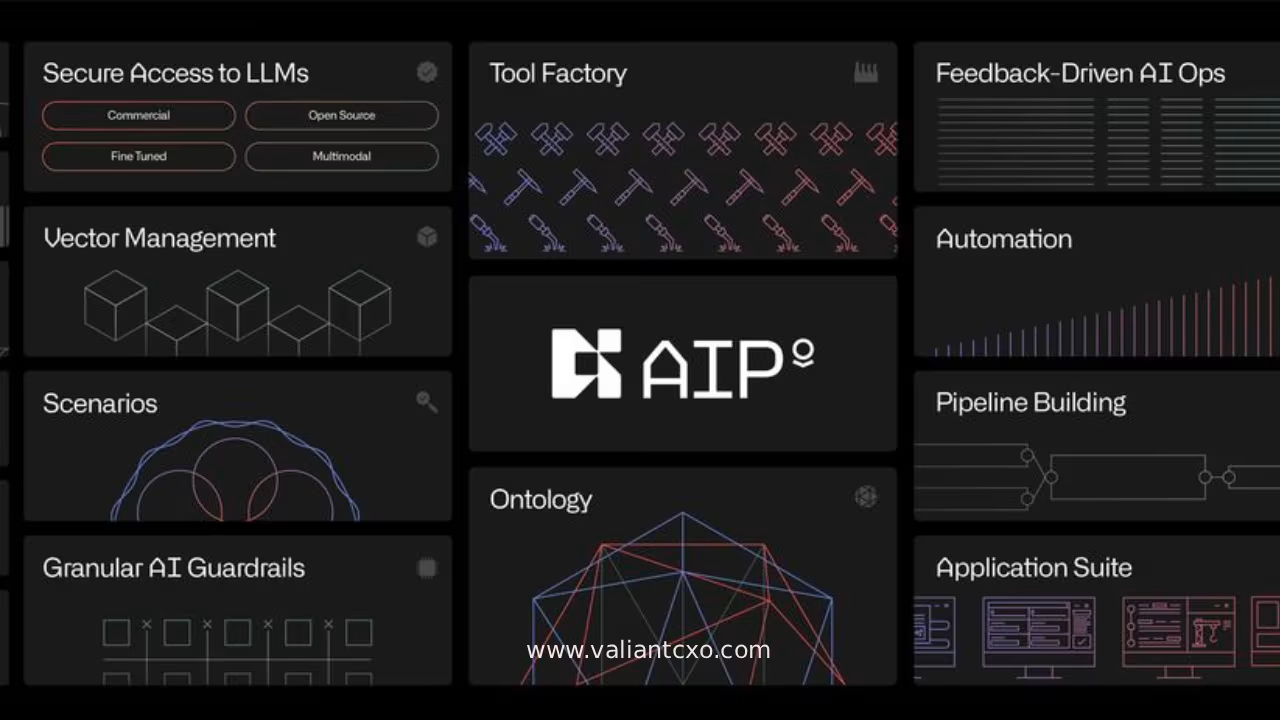
The heart of it is the Ontology. Think of this as a living digital model of your company. It maps your key objects—customers, suppliers, machines, orders, staff—and the rules and actions that connect them. AI then works inside that model instead of floating free with generic answers.
This setup means the platform can pull in data from many sources, apply your business logic, and trigger real actions. You get governed access to a wide range of large language models, including commercial ones and open-source options. Data stays protected; nothing gets retained or used for training by outside model providers.
Core Tools in the Palantir AIP Artificial Intelligence Platform overview
Palantir AIP Artificial Intelligence Platform overview You do not need a big engineering team to start building. AIP offers both no-code and code-friendly tools.
AIP Logic lets you create AI-powered functions with a point-and-click interface. You can design prompts, connect them to your Ontology data, test them, and turn them into automations.
AIP Chatbot Studio helps you build interactive agents that can answer questions, update records, or run multi-step tasks using your own data.
AIP Evals gives you a way to test and measure how well those functions and agents perform before and after they go live. You can compare models, spot weak spots, and keep improving.
These tools sit inside a secure environment that already handles access controls, auditing, and resource management. That matters a lot if you deal with sensitive customer or operational information.
How Businesses Actually Use It
Palantir AIP Artificial Intelligence Platform overview Companies across industries are putting AIP to work on everyday problems. In supply chains it helps managers spot material shortages early and see the knock-on effects across the network. In insurance it supports underwriting by extracting data from documents, checking against guidelines, and suggesting next steps. Manufacturing teams use it for production scheduling and resolving technical issues faster.
The common thread is operational decision-making. Instead of just generating reports, the platform helps people and automated agents act on the information. You can set up schedule-based or event-driven automations that respect your existing rules and keep a full audit trail.
For UK entrepreneurs this can mean tighter control over costs, quicker responses to disruption, and the ability to scale AI use without building everything from scratch. Many start with a focused use case—customer service responses, inventory visibility, or document processing—and expand once they see results.
Security and Governance Built In
One of the biggest worries with AI is trust. Palantir AIP addresses this head-on. Every action, whether taken by a person or an agent, can be logged and traced. Access follows your existing permissions. You choose which models to use and can even bring in your own fine-tuned or domain-specific ones.
This approach has been refined through work with both commercial organisations and high-security government users. The result is a system designed so that AI stays inside clear guardrails rather than creating new risks.
You can explore more details on the official Palantir AIP platform page and the AIP overview documentation. For practical examples across industries, the AIP Now library shows ready-to-adapt workflows.
Getting Started as a Smaller Business
Palantir AIP Artificial Intelligence Platform overview You do not need to be a large enterprise to benefit. The platform supports gradual adoption. Many organisations begin with AIP Assist for internal help navigating the tools, then move into building simple Logic functions or chatbots.
Focus first on one clear pain point where data already exists and decisions currently take too long. Use the Ontology to define the key objects involved. Test with AIP Evals so you know the quality before wider rollout. Keep humans in the loop at the start so the system learns from real feedback.
The combination of Foundry’s data handling and AIP’s AI layer means you can connect existing systems rather than ripping them out. Over time this creates a single place where data, logic, and actions stay aligned.
Why This Matters for Growth
Palantir AIP Artificial Intelligence Platform overview When AI sits inside your actual operations instead of on the side, the benefits compound. Teams spend less time searching for information or chasing updates. Decisions improve because they rest on a shared, up-to-date picture of the business. Automation handles routine steps while people focus on judgement calls.
For UK business owners facing rising costs, supply challenges, or customer expectations, this kind of practical AI can free capacity without adding headcount. It also builds resilience—when something changes, the system can surface the impact quickly and suggest responses grounded in your own history and rules.
We hope that you have found this article enlightening in some way and that it gives you a clearer picture of how a platform like this can fit into your plans. The best next step is usually to map one specific process in your business and see where structured data plus governed AI could make the biggest difference.