Developing Internal Talent vs External Hiring One of the hardest calls you will make as a business owner is deciding whether to promote from inside or bring someone new in from outside. Get it wrong and you can slow growth, damage culture, or waste money. Get it right and you build a stronger team that lasts.
In this article, we’re going to be taking a look at developing internal talent vs external hiring, and how you can decide which path fits your business at different stages. If you would like to find out more, feel free to read on.
Pic – CC0 License
Why This Choice Matters More Than You Think
Every company reaches a point where a key role needs filling. It could be a sales lead, an operations manager, or a department head. At that moment you face a clear fork in the road: develop someone already on the team or hire externally.
Both options have real upsides and real costs. The businesses that grow steadily tend to treat this as a strategic decision rather than a quick fix. They look at where the company is heading, what skills already exist inside, and how much time and money they can invest.
A recent high-profile example comes from women’s football. When Manchester United Women decided on a new direction focused on younger players and longer-term development, they chose a coach whose background matched that plan. You can see the full story in our earlier piece on Eva Olid replaces Marc Skinner. The same thinking applies inside your company.
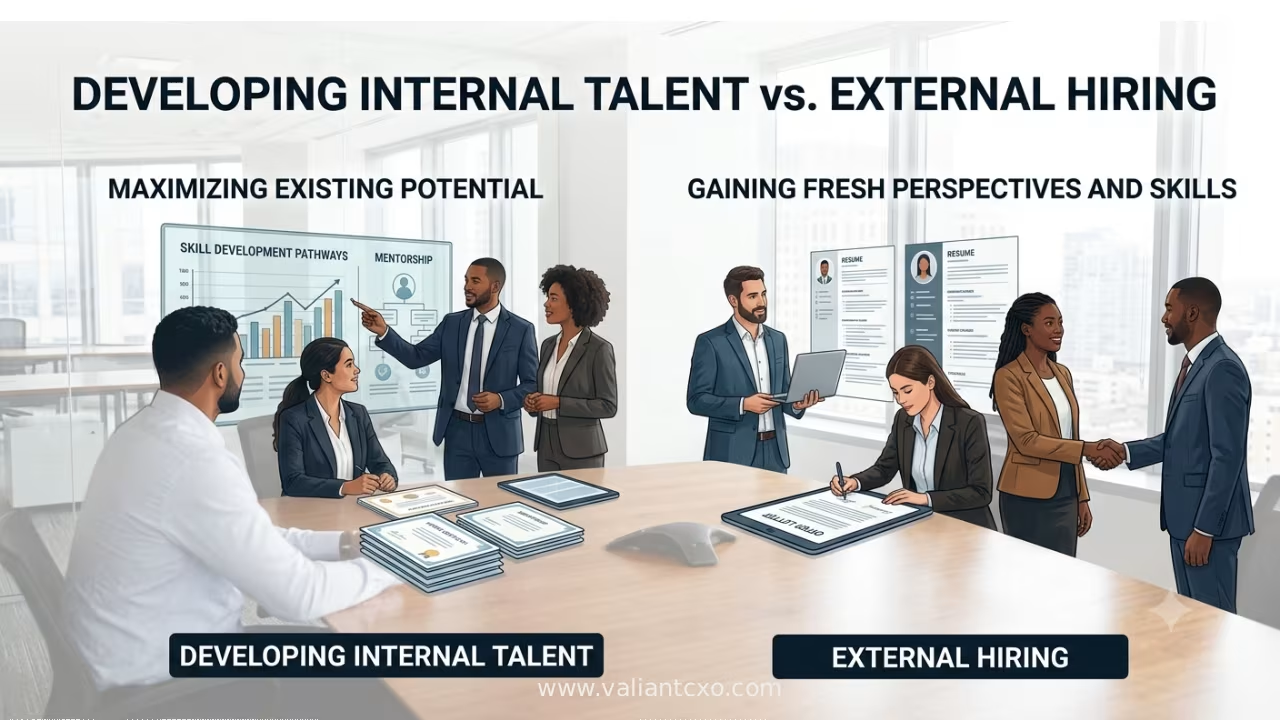
The Case for Developing Internal Talent
Promoting from within often feels safer and cheaper at first glance. People already know the culture, the systems, and the unwritten rules. They understand what has worked and what has failed.
Here are the main advantages:
- Lower risk of culture clash. An internal candidate already shares the company’s values and ways of working.
- Faster ramp-up. They need less time to learn the product, the customers, and the internal politics.
- Stronger morale. When people see clear paths to promotion, they stay longer and work harder.
- Lower hiring costs. You skip recruiter fees, long interview processes, and relocation packages.
- Knowledge stays in-house. Years of experience walking out the door becomes less common.
Developing internal talent also forces you to build better systems. You start documenting processes, creating training plans, and giving people stretch projects. That discipline helps the whole business, not just the person being promoted.
The downside is real too. Sometimes the skills you need simply do not exist inside the company. Promoting the wrong person can create resentment among peers and leave gaps in the team they left behind. And if your internal pipeline is weak, you may have no strong candidates when the moment arrives.
When External Hiring Makes More Sense
Developing Internal Talent vs External Hiring Bringing someone in from outside can inject fresh ideas, new networks, and skills your team has never had. This is especially useful when the business is entering a new market, adopting new technology, or needing a complete change of approach.
Key benefits of external hiring include:
- Access to proven experience. You can hire someone who has already solved the exact problem you face.
- New perspectives. Outsiders often challenge “the way we’ve always done it.”
- Faster capability in new areas. If you need digital marketing expertise or international sales knowledge that no one inside possesses, hiring is usually quicker.
- Signal of ambition. A strong external hire can show the market and your team that the company is serious about growth.
The costs are higher and more obvious. Recruiting takes time and money. The new person may need months to understand the culture. There is always a risk they will not fit. Existing staff can feel passed over, which hurts engagement.
External hiring works best when you have a clear gap that cannot be filled reasonably soon by training, and when you have the management bandwidth to support the new person properly.
How to Decide Between Developing Internal Talent vs External Hiring
Developing Internal Talent vs External Hiring Use a simple checklist before you open a role:
- Do we already have someone who is 70–80% ready and can grow into the rest of the job within six to twelve months?
- Is the skill we need core to our long-term direction, or is it a temporary need?
- How strong is our current internal pipeline? Have we been developing people for the last year or two?
- What is the real cost of a failed external hire versus the cost of a slower internal promotion?
- Will promoting internally create a bigger gap somewhere else that we cannot easily fill?
If the answer to the first question is yes and the pipeline is reasonably healthy, developing internal talent is usually the smarter long-term move. If the gap is large and urgent, external hiring becomes the practical choice.
Many successful companies use a mix. They develop internal people for most roles and hire externally only when they need specialized skills or a deliberate culture reset. That balance keeps institutional knowledge while still bringing in new energy.
Practical Steps to Strengthen Your Internal Pipeline
If you want more options when the next key role opens, start building the pipeline now:
- Identify high-potential people early and give them real stretch projects.
- Create simple development plans with clear skills and milestones.
- Cross-train people so knowledge is not locked in one person.
- Hold regular career conversations, not just annual reviews.
- Promote publicly and explain why, so others see the path is real.
These habits take modest time but pay off when you next face a leadership decision. You will have stronger candidates and a culture that values growth.
Putting It Into Practice
Developing internal talent vs external hiring is not a one-time choice. It is a recurring decision that shapes the kind of company you become. Businesses that default only to external hiring often stay dependent on the job market. Those that invest in their people build deeper capability and lower long-term costs.
Look at the direction of your business over the next two to three years. Decide which skills you will need most. Then work backwards. Build the internal pipeline where you can, and hire externally only where the gap is too wide to close in time.
The companies that handle this well rarely make the decision in a panic. They prepare, they measure, and they stay honest about what their team can and cannot do yet.
We hope that you have found this article enlightening in some way and that it helps you make clearer calls the next time a key role opens in your business. Keep investing in the people who already know your company best, and bring in outside help only when the need is real and urgent.