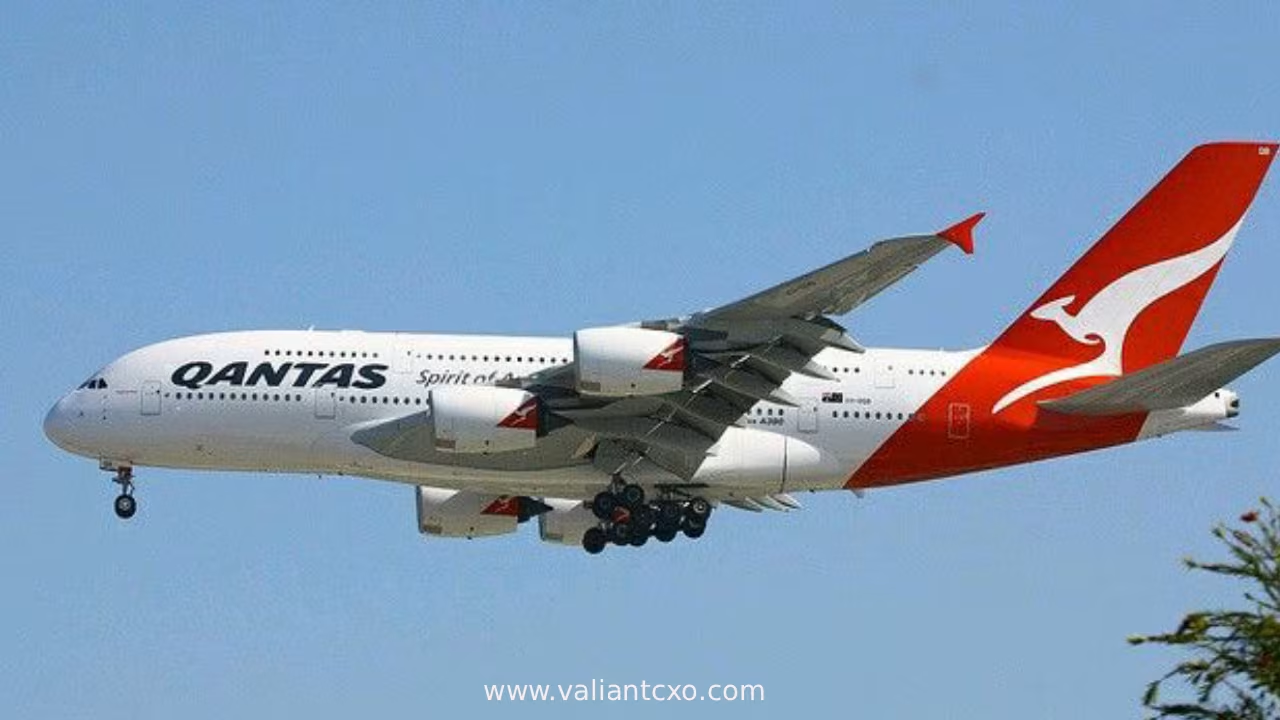
Qantas aircraft flew with tool left in left wing Sydney to Dallas after maintenance crews finished work on the air conditioning system of an Airbus A380 at Sydney Airport. On 7 January 2026, a battery-powered work light measuring about 33 centimetres stayed behind inside the left wing structure. The jet then carried passengers to Dallas-Fort Worth and returned two days later before anyone spotted the missing item.
Here’s the quick picture:
- A Qantas A380 (registration VH-OQK) completed two long-haul sectors with a maintenance work light sealed inside its left wing.
- The light was left during air-conditioning sensor work on 7 January 2026 and recovered only on 9 January after the return flight.
- Australian Transport Safety Bureau investigators traced the problem to gaps in foreign-object checks and tool-accountability steps.
- No structural damage or flight-control issues occurred, yet the event underlines why tool control remains a non-negotiable safety barrier.
- Qantas responded by tightening procedures and creating a dedicated tooling working group.
The kicker is simple: even experienced teams can miss something when processes lean too heavily on memory and routine. What usually happens in these cases is a cascade of small oversights that only surface after the aircraft has already flown.
How the Qantas aircraft flew with tool left in left wing Sydney to Dallas
Maintenance began after the A380 arrived from Los Angeles. Technicians needed access deep inside the left wing to service the air-conditioning system. They signed out a battery-operated work light by scanning its barcode, placed it inside the wing for illumination, finished the sensor change, and turned the light off. Then they forgot it.
Qantas aircraft flew with tool left in left wing Sydney to Dallas Foreign-object clearance inspections followed. The light stayed hidden. When tools were returned to the crib, no one noticed the light was still missing. The end-of-shift unreturned-tool check also failed to flag it. A licensed engineer then issued the certificate of release to service. The aircraft departed for Dallas that afternoon.
Two full sectors later—Sydney to Dallas-Fort Worth and back—an outstanding equipment report finally triggered a search. The light turned up inside the wing. Zero damage. Zero system interference. But the risk had been real.
In my experience covering these events, the pattern is familiar. Human attention drifts under time pressure and repetitive tasks. Systems that rely only on people catching their own mistakes eventually let something through.
Why foreign object debris still matters on long-haul routes
Foreign object debris—FOD—doesn’t need to be dramatic to be dangerous. A loose item can shift, jam a control surface, or interfere with systems that only activate in certain flight phases. On an A380 crossing the Pacific, the stakes are obvious. The ATSB put it plainly: foreign objects pose a significant risk to safe operation.
This wasn’t Qantas’s first brush with the issue. A 2023 event left a 1.25-metre nylon turning tool inside an engine; the aircraft flew dozens of cycles before discovery. Different aircraft, different location, same underlying lesson.
Qantas voluntarily reported the January 2026 incident and has since introduced a mandatory pre-clearance check confirming every tool is accounted for before release. They also stood up a tooling working group looking at technology upgrades across maintenance bases.
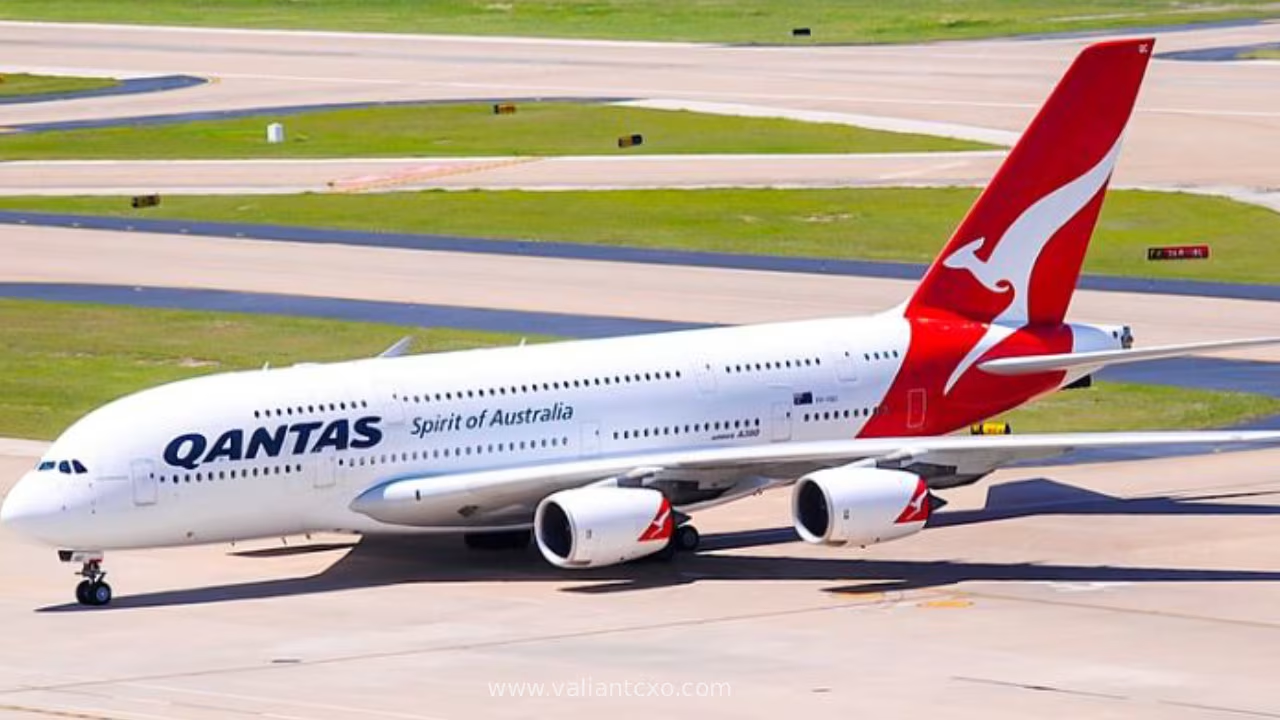
Step-by-step action plan for stronger tool control
Qantas aircraft flew with tool left in left wing Sydney to Dallas If you manage or work in aircraft maintenance, treat this as a practical checklist rather than theory. Here’s what I’d do if I were reviewing a hangar’s processes tomorrow morning:
- Require barcode or RFID scan-out and scan-in for every single tool, including lights, mirrors, and temporary stands. No verbal “I’ve got it.”
- Build a mandatory visual and physical FOD sweep of every accessed compartment before the panel closes. Two sets of eyes, not one.
- Program the maintenance information system so it blocks the certificate of release to service until every open tool report is closed. No manual override without a second signature.
- Run a short end-of-shift tool-crib audit that cross-checks against the day’s work cards. Make it non-negotiable, even when the shift is short-handed.
- After any storage or reactivation period, add an extra layer of FOD inspection focused on areas that were opened during the return-to-service work.
- Brief the whole crew on the actual incident details—not just the policy. Real stories stick better than generic reminders.
These steps close the exact gaps the ATSB identified: missed visual checks, incomplete tool returns, and a system that allowed release despite an open report.
Common mistakes and how to fix them
Mistake one: assuming a quick visual scan is enough inside a complex wing bay. Fix: use mirrors, lights, and a second technician. Photograph the empty space if needed.
Mistake two: treating the tool-crib return as a formality. Fix: the person who signed the tool out must physically present it or escalate immediately. No “I think I left it in the box.”
Mistake three: issuing a certificate of release while any tool report remains open. Fix: hard-stop the software until the report is actioned. Human override only with documented dual approval.
Mistake four: letting operational pressure shorten the final walk-around. Fix: build a non-negotiable time buffer into the turnaround schedule for FOD and tool checks.
These aren’t theoretical. They map directly to the sequence that let the work light stay aboard for two ocean crossings.
Timeline of the Qantas aircraft flew with tool left in left wing Sydney to Dallas
| Date / Event | What Happened | Outcome |
|---|---|---|
| 7 January 2026, Sydney | Air-conditioning maintenance; work light placed in left wing and left behind | Aircraft released and departed for Dallas |
| 7–9 January 2026 | Two passenger sectors flown (Sydney–Dallas–Sydney) | Light remained undetected inside wing |
| 9 January 2026, Sydney | Outstanding equipment report reviewed; search launched | Work light recovered; no damage found |
| Post-incident | Qantas safety directive and tooling working group established | Mandatory pre-clearance checks introduced |
| 17 August 2026 | ATSB final report released | Breakdown in tool control processes confirmed |
The table shows how quickly a single missed item can travel thousands of miles before anyone notices.
For deeper reading on the official findings, see the full ATSB investigation report into the VH-OQK foreign object debris event. Coverage of the human-factors angle appears in the CNN report on the work light left in the Qantas wing. Broader context on foreign object risks sits in the FAA’s guidance on foreign object debris prevention.
Qantas aircraft flew with tool left in left wing Sydney to Dallas – what changed afterward
Qantas moved fast. A safety directive updated tooling control processes. The new mandatory pre-clearance check forces confirmation that every tool is accounted for before the aircraft can be released. A working group is exploring technology solutions—think better tracking systems and automated alerts—that reduce dependence on perfect human performance every single time.
That’s the right direction. Processes that assume people never miss anything eventually fail. Processes that expect occasional misses and catch them early stay safer.
Key Takeaways
- The work light stayed inside the left wing of a Qantas A380 for two full passenger flights between Sydney and Dallas in January 2026.
- Multiple layers of intended defence—FOD inspections, tool returns, end-of-shift checks, and the release certificate—all failed in sequence.
- No damage occurred, yet the event confirmed that foreign objects remain a real operational risk.
- Qantas responded with tighter tool-control rules and a dedicated working group.
- Software that blocks release until tools are cleared removes one major human-error pathway.
- Real incident details stick with crews better than generic policy reminders.
- Tool control is only as strong as its ability to recover when someone inevitably slips.
Qantas aircraft flew with tool left in left wing Sydney to Dallas The main benefit of studying this event is practical: it shows exactly where the chain broke and how to reinforce each link. Next step is straightforward—review your own tool-accountability process against the gaps listed above and close any that still exist. Do it before the next long-haul turnaround, not after.
FAQs
Did the Qantas aircraft that flew with a tool left in the left wing from Sydney to Dallas suffer any damage?
No. The ATSB confirmed the 33-centimetre work light caused neither structural damage nor system disruption during the two sectors.
How was the missing tool eventually found after the Qantas aircraft flew with tool left in left wing Sydney to Dallas?
An employee reviewing an outstanding equipment report two days later realised a work light signed out against the aircraft had never been returned, prompting a targeted search of the left wing.
What specific changes did Qantas make after the incident involving the tool left in the left wing on the Sydney to Dallas route?
The airline introduced a mandatory pre-clearance check requiring confirmation that all tooling is accounted for before release to service, issued a safety directive updating procedures, and formed a tooling working group to pursue further technology and process improvements.