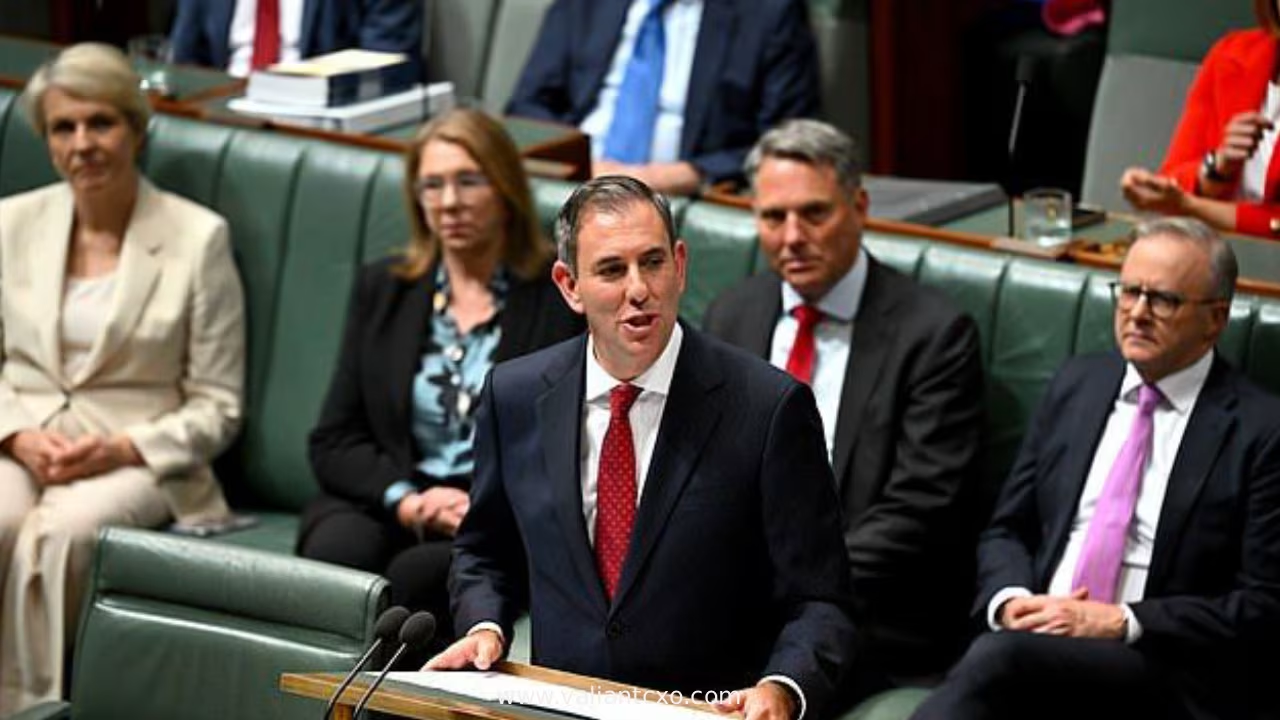
Australia superannuation early access rules stay deliberately tight for a reason. Super is locked away until preservation age so compounding can do its job. Yet limited pathways exist for genuine crises. Understanding those pathways—and the current political heat around expanding them—matters more in 2026 than ever.
Here’s the quick overview:
- Early access is possible only under strict conditions set by the Superannuation Industry (Supervision) Regulations.
- Main grounds: severe financial hardship, compassionate expenses, terminal medical condition, and permanent incapacity.
- Applications go either to your super fund or the ATO, depending on the ground.
- Amounts are capped in most hardship cases; tax treatment varies.
- These rules sit at the centre of the broader Jim Chalmers universal super system defence 2026 debate over whether the lock-up should stay or loosen.
For anyone weighing an early withdrawal, the first rule is simple: treat it as a last resort. The second rule is to know exactly which gate you must pass through.
The Core Conditions of Release
You can normally withdraw super only after reaching preservation age (now 60 for most people) and meeting a standard condition such as retirement or turning 65. Early access sits outside those normal triggers. The law lists a short set of special conditions.
Severe financial hardship is handled by your super fund, not the ATO. You must show you cannot meet reasonable and immediate family living expenses and that you have received eligible government income support payments for a continuous 26 weeks. The withdrawal is limited to between $1,000 and $10,000 in any 12-month period (or the remaining balance if smaller). Once you reach preservation age plus 39 weeks and meet the income-support test, the dollar cap disappears.
Compassionate grounds sit with the ATO. Eligible expenses include medical treatment or transport for you or a dependant, home or vehicle modifications for severe disability, palliative care, funeral costs for a dependant, and mortgage payments needed to stop foreclosure or forced sale of your home. You must prove the expense is unpaid (or was paid with borrowed money still outstanding) and that you have no other way to cover it. Day-to-day living costs do not qualify.
Terminal medical condition requires certificates from two registered medical practitioners stating the illness or injury is likely to result in death within 24 months. At least one must be a specialist in the relevant field. Once approved, the benefits become unrestricted and can be taken as a tax-free lump sum.
Permanent incapacity allows release if the trustee is satisfied that ill-health makes it unlikely you will ever again engage in gainful employment for which you are reasonably qualified by education, training or experience.
Other narrow pathways exist for temporary residents departing Australia and for very small balances under $200 after employment ends. The First Home Super Saver Scheme is separate: it only releases voluntary contributions, not the compulsory employer amounts that form the bulk of most balances.
Australia Superannuation Early Access Rules in Practice
The process is paper-heavy by design. Friction keeps casual withdrawals low.
For hardship, contact your fund. They will usually ask Services Australia for confirmation of income-support payments. You supply evidence of living expenses you cannot meet. Approval is not automatic.
For compassionate release, apply online or by paper form through the ATO. You need detailed invoices, medical reports, and proof you cannot pay another way. The ATO decides; your fund then pays the approved amount. Do not book the treatment or service until the money is in your account—applications can be rejected.
Terminal condition and permanent incapacity applications go straight to the fund, backed by the required medical evidence.
Tax is not uniform. Terminal-condition releases are generally tax-free. Hardship and compassionate amounts are taxed as ordinary super lump sums, which means some tax may still be withheld depending on your age and the taxable component.
In my experience, people who succeed treat the application like a formal claim, not a casual request. Incomplete evidence is the most common reason for delay or rejection.
How the Rules Fit the Wider Political Fight
Australia superannuation early access rules These narrow gates are exactly what Treasurer Jim Chalmers is defending in the Jim Chalmers universal super system defence 2026 push. He argues the current limits protect compounding and long-term retirement incomes. Opposition voices, including One Nation and some Coalition figures, want the gates widened for cost-of-living pressure or housing deposits. The existing rules already allow limited early access; the debate is whether those limits should stay or expand.
What I’d do if I were advising someone under pressure right now: exhaust every other option first—payment plans, hardship programs with lenders, emergency relief from community organisations—before touching super. The compounding cost of an early withdrawal is almost always higher than people expect.
Comparison of Main Early Access Pathways
| Ground | Who Decides | Key Eligibility | Amount Limit | Typical Tax Treatment |
|---|---|---|---|---|
| Severe financial hardship | Super fund | 26 weeks continuous income support + cannot meet living expenses | $1,000–$10,000 per 12 months (no cap after preservation age + 39 weeks) | Taxed as ordinary lump sum |
| Compassionate grounds | ATO | Specific eligible expenses + no other way to pay | Amount reasonably required for the expense | Taxed as ordinary lump sum |
| Terminal medical condition | Super fund | Two medical certificates (one specialist) confirming likely death within 24 months | No set limit | Usually tax-free |
| Permanent incapacity | Super fund | Ill-health makes future gainful employment unlikely | No set limit | Taxed as ordinary lump sum (possible disability concessions) |
Australia superannuation early access rules The table makes the differences clear. Hardship is the most commonly used pathway for living-cost pressure, yet it carries the tightest dollar caps for younger members.

Step-by-Step Action Plan for Beginners
- Confirm your preservation age and current balance. Log into your fund portal or MyGov.
- Check whether any existing early-access ground actually fits your situation. Most people will not qualify—and that is intentional.
- Gather evidence early. Income-support letters, medical reports, invoices, and bank statements showing you cannot pay another way.
- Contact the right decision-maker. Fund for hardship, terminal condition or incapacity; ATO for compassionate grounds.
- Model the long-term cost. Use a compound-interest calculator to see what the withdrawn amount would have been worth at retirement.
- If approved, update your insurance and beneficiary details immediately. Early release can affect cover inside the fund.
- After any withdrawal, restart contributions as soon as possible and leave the remaining balance untouched.
Australia superannuation early access rules Follow the sequence in order. Skipping the modelling step is how people discover too late how much retirement income they surrendered.
Common Mistakes & How to Fix Them
Mistake 1: Assuming cost-of-living pressure automatically qualifies.
Fix: It does not. You still need the 26-week income-support test and proof you cannot meet living expenses any other way.
Mistake 2: Booking medical treatment before ATO approval.
Fix: Wait for the release decision and the money. Rejected applications leave you with the bill and no super release.
Mistake 3: Ignoring tax.
Fix: Ask your fund for an estimate of tax withheld before you apply. The net amount reaching your bank can be lower than expected.
Mistake 4: Falling for illegal early-access schemes.
Fix: Any promoter promising easy access outside the legal conditions is offering an illegal arrangement. Penalties apply to both the promoter and the member.
Mistake 5: Treating the First Home Super Saver Scheme as general early access.
Fix: It only covers voluntary contributions you deliberately put in for that purpose. Compulsory employer contributions stay locked.
The people who avoid these traps treat the rules as fixed law rather than flexible guidelines.
Key Takeaways
- Australia superannuation early access rules remain narrow and evidence-based in 2026.
- Severe financial hardship, compassionate grounds, terminal medical condition and permanent incapacity are the main lawful pathways.
- Dollar caps and strict tests exist to protect long-term compounding.
- Applications require detailed evidence; incomplete claims are routinely delayed or refused.
- These limited gates are the practical expression of the preservation principle at the heart of the Jim Chalmers universal super system defence 2026 argument.
- Early withdrawal almost always reduces future retirement income more than the immediate cash helps.
- Exhaust every non-super option before applying.
Australia superannuation early access rules The system is built so that most people never touch their super early. That design choice is what has produced one of the world’s stronger private retirement systems. If you face genuine hardship that fits the published criteria, the pathways are there. Use them carefully, document everything, and keep the rest of your balance working for the decades ahead. Check the latest ATO guidance before you start any application—the forms and evidence requirements can change.
FAQs
What are the main Australia superannuation early access rules in 2026?
Early access is limited to severe financial hardship (fund-assessed, capped amounts), compassionate grounds (ATO-assessed for specific expenses), terminal medical condition, and permanent incapacity. Ordinary living costs or housing deposits outside those rules do not qualify.
Does Jim Chalmers universal super system defence 2026 affect early access right now?
No. The current legal conditions remain unchanged. Chalmers is arguing that those conditions should stay tight; any expansion would require future legislative change after an election.
How do I apply for early release on compassionate grounds?
Apply directly to the ATO with evidence of the eligible expense, proof you cannot pay another way, and supporting medical or financial documents. Your fund only pays once the ATO issues a release authority.