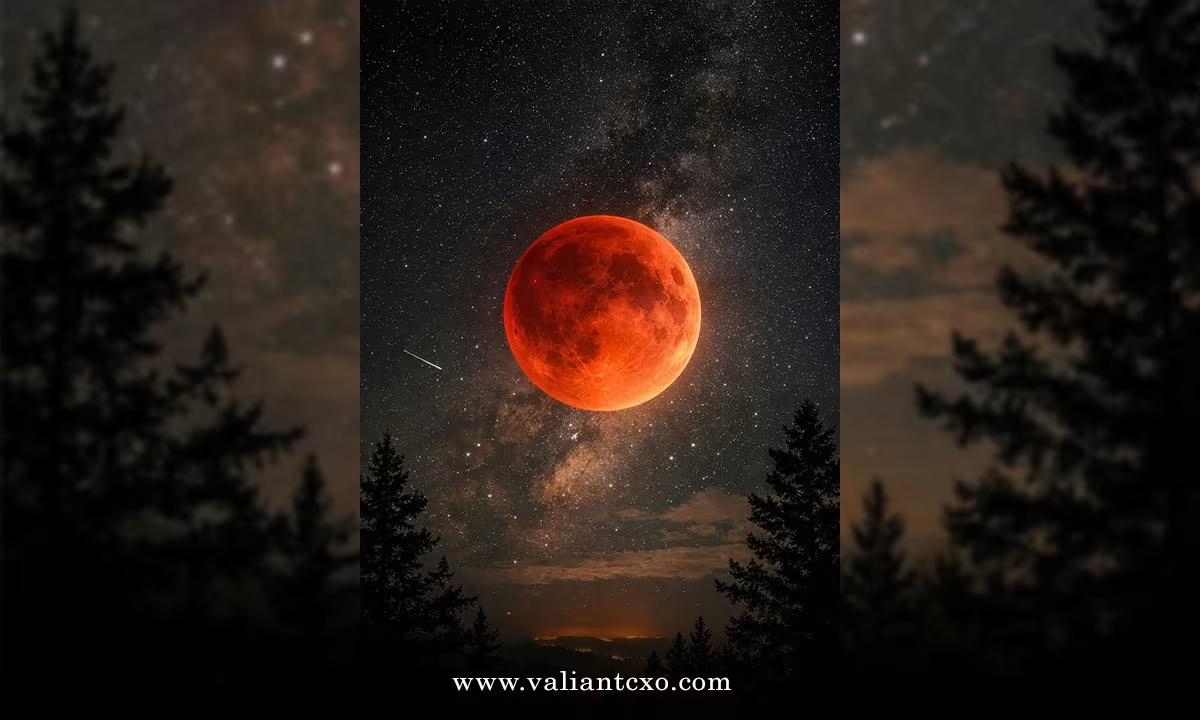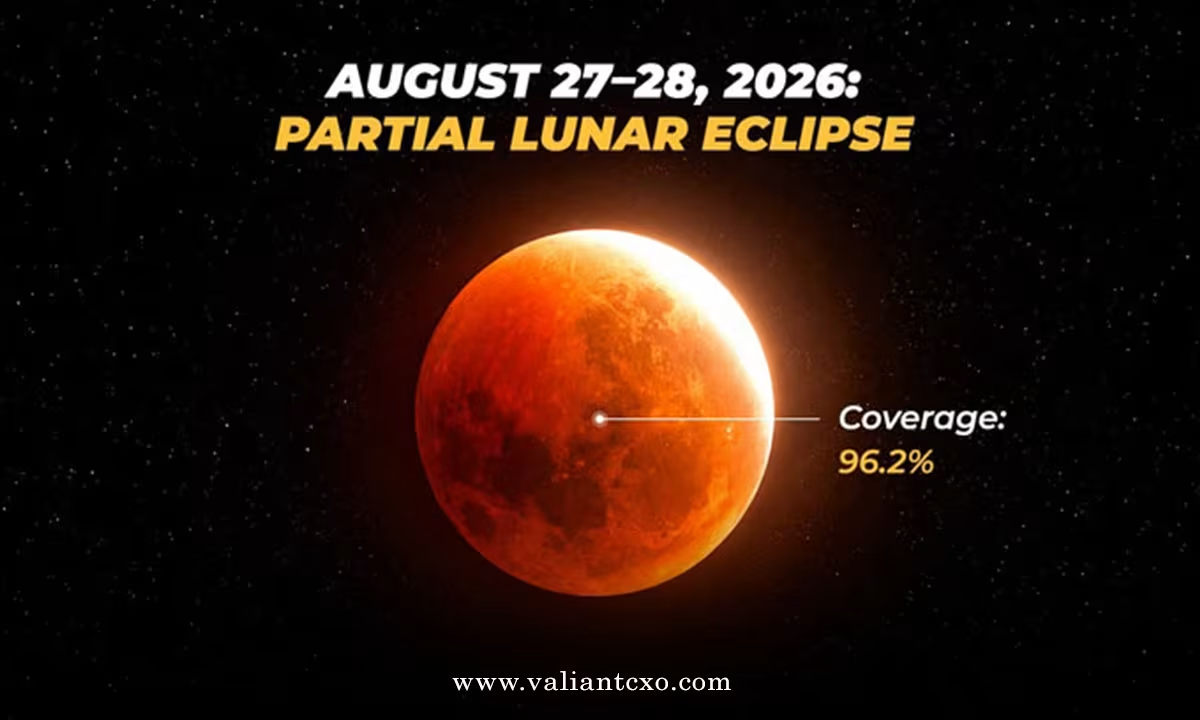
How to watch the 96% blood moon partial lunar eclipse August 27-28 2026 starts with knowing this isn’t just another full moon night. On the evening of August 27 into the early hours of the 28th, Earth’s shadow will swallow roughly 96% of the lunar disk, leaving only a thin bright crescent while the rest takes on that deep copper-red glow skywatchers chase.
Here’s the quick rundown:
- A deep partial lunar eclipse peaks at 96.2% coverage—close enough to a true blood moon that the difference is mostly academic.
- Visible across nearly all of the contiguous United States under clear skies.
- No special gear required; naked-eye viewing works, though binoculars sharpen the view.
- Peak times fall between 9:12 p.m. PDT and 12:12 a.m. EDT depending on your zone.
- This is the deepest lunar eclipse visible from North America until 2028–2029.
Miss this one and you’ll wait years for anything comparable. The full Sturgeon Moon slides through Earth’s umbra, and the show is free if the weather cooperates.
What Exactly Happens During This Eclipse
Lunar eclipses occur when Earth sits directly between the Sun and a full Moon, casting its shadow across the lunar surface. The outer penumbra creates a subtle dimming most people barely notice. The inner umbra is where the real drama lives. At greatest eclipse on August 28 at 04:12–04:13 UTC, about 96% of the Moon’s face sits inside that dark core. A narrow sliver stays lit. The shadowed portion can shift toward red or orange because sunlight filters through Earth’s atmosphere—the same Rayleigh scattering that paints sunsets. Color intensity depends on dust, volcanic aerosols, and humidity that night. Some years it’s brick red. Others lean more copper. In my experience, the deeper the partial, the more striking the hue once your eyes adapt.
This one belongs to Saros series 138. NASA’s eclipse pages confirm the umbral magnitude sits around 0.93 and the obscuration hits 96.2%. It lasts roughly 5 hours 38 minutes from first penumbral contact to last, with the partial (umbral) phase stretching about 3 hours 18 minutes. For most of the lower 48, the Moon sits high enough that you’ll catch the entire sequence if skies stay clear.
Exact Viewing Times Across the United States
Timing is everything. Maximum eclipse is a single global moment, but local clocks shift by zone. Here’s the practical schedule for how to watch the 96% blood moon partial lunar eclipse August 27-28 2026:
| Phase | Eastern (EDT) | Central (CDT) | Mountain (MDT) | Pacific (PDT) |
|---|---|---|---|---|
| Penumbral begins | 9:23 p.m. Aug 27 | 8:23 p.m. Aug 27 | 7:23 p.m. Aug 27 | 6:23 p.m. Aug 27 |
| Partial (umbral) begins | 10:33 p.m. Aug 27 | 9:33 p.m. Aug 27 | 8:33 p.m. Aug 27 | 7:33 p.m. Aug 27 |
| Greatest eclipse | 12:12 a.m. Aug 28 | 11:12 p.m. Aug 27 | 10:12 p.m. Aug 27 | 9:12 p.m. Aug 27 |
| Partial ends | 1:52 a.m. Aug 28 | 12:52 a.m. Aug 28 | 11:52 p.m. Aug 27 | 10:52 p.m. Aug 27 |
| Penumbral ends | 3:01 a.m. Aug 28 | 2:01 a.m. Aug 28 | 1:01 a.m. Aug 28 | 12:01 a.m. Aug 28 |
East Coast and Midwest viewers get the full overnight progression. West Coast observers see the Moon rise already partially eclipsed in many places, so the early penumbral stage may be missed, but the peak and exit remain excellent. Alaska and Hawaii see more limited portions. Check your exact local moonrise if you’re near the western edge. Detailed city-by-city predictions live on Time and Date’s eclipse pages.
Step-by-Step Action Plan for Beginners
- Check the forecast 24–48 hours out. Clear skies beat fancy equipment every time. Apps that show cloud cover percentages help more than generic “partly cloudy” labels.
- Find an open eastern or southeastern horizon if you’re on the West Coast; otherwise any dark, open view works. City parks, rooftops, or backyards with a clear line of sight to the Moon are fine. Light pollution dims the red tones but won’t hide the shadow bite.
- Step outside 15–20 minutes before partial begins so your eyes adjust. The first umbral “bite” is unmistakable once it appears.
- Watch naked-eye first. Then grab binoculars (7×50 or 10×50 are ideal) for sharper crater detail along the shadow edge. A small telescope shows even more, but tripods help because the Moon moves.
- Stay through greatest eclipse and at least 30–45 minutes after. The exit of the shadow is often as dramatic as the entry.
- Photograph if you want. Phone cameras in night mode or with a simple tripod capture the color well. Long exposures work once the Moon darkens.
What I’d do if I were starting from zero: pick a known clear-sky spot, set two alarms (one for partial start, one for peak), and bring a chair. Comfort matters more than you think when you’re standing for three hours.
Common Mistakes and How to Fix Them
Waiting until the exact peak time is the classic error. By then the best color is already underway. Arrive for the partial start instead. Another frequent miss: assuming you need eclipse glasses. You don’t. Lunar eclipses are safe for naked-eye, binocular, or telescope viewing. Solar filters are only for solar eclipses. Light pollution washes out the red? Move a few blocks away from streetlights or simply let your eyes dark-adapt longer. Expecting a pure “blood red” every time leads to disappointment. Color varies; enjoy whatever hue shows up. Finally, forgetting the weather. A 60% cloud chance often means gaps—watch those gaps.
Gear That Actually Helps (and What You Can Skip)
Naked eye is enough for the big picture. Binoculars turn it into a memorable experience. A red flashlight preserves night vision if you’re consulting charts or cameras. Warm clothes matter more than most people plan for—August nights can cool fast once you’re standing still. Skip the expensive “eclipse kits.” This isn’t a solar event. Tripods for phones or cameras are optional but useful.
For authoritative global maps and animations, NASA’s Scientific Visualization Studio page on this eclipse remains one of the cleanest sources.
Where Visibility Is Strongest in the USA
The entire contiguous United States sees the partial phase. Eastern and central regions enjoy the longest uninterrupted views with the Moon high in the sky. Western states catch the rising Moon already in shadow, which can produce striking low-horizon photos against city skylines or mountains. Higher elevations and desert Southwest locations often deliver the steadiest seeing. Coastal marine layers can be the wild card on the West Coast—check local forecasts closely.
The eclipse is visible from Europe, Africa, and South America as well, but North America sits in the prime overnight zone. Roughly a billion people worldwide can see at least the partial phase under clear conditions.
Why This One Feels Special
True total lunar eclipses are rarer for any given location. This 96% partial sits close enough that the visual impact rivals many total events. The next comparable deep lunar eclipse for the Americas doesn’t arrive until later in the decade. Coming two weeks after the August 12 total solar eclipse, it closes out a strong 2026 eclipse season. Think of it as the Moon putting on a slow-motion curtain call after the solar drama.
One sharp question worth asking yourself: when was the last time you stood outside at midnight just to watch a shadow move across another world? Most of us can’t remember. This is the chance.
Key Takeaways
- Peak coverage hits 96.2% at 12:12 a.m. EDT / 9:12 p.m. PDT on the night of August 27–28, 2026.
- No eye protection needed—safe for naked-eye viewing.
- Arrive early for the partial phase; the color develops as the umbra deepens.
- Binoculars enhance detail but aren’t required.
- Clear skies matter more than location within the contiguous U.S.
- Color intensity varies with atmospheric conditions; expect copper to deep red tones on the shadowed portion.
- Full event spans over five hours; the dramatic partial window lasts about three hours 18 minutes.
- Next similarly deep lunar eclipse for North America is years away.
Mark the date, check the sky the afternoon before, and step outside. The Moon will do the rest. If clouds threaten your primary spot, have a backup location ready. That’s the practical edge that turns a good night into a memorable one.
FAQs
Is the 96% blood moon partial lunar eclipse August 27-28 2026 safe to watch without glasses?
Yes. Unlike solar eclipses, lunar eclipses reflect sunlight and pose no risk to your eyes. Naked-eye, binocular, or telescope viewing is completely safe.
Will the entire United States see how to watch the 96% blood moon partial lunar eclipse August 27-28 2026 the same way?
Almost. The lower 48 sees the partial phase. Eastern and central zones get the full sequence overnight; western zones may miss early stages as the Moon rises already partially eclipsed. Alaska and Hawaii have more limited windows.
How red will the Moon actually look during the peak?
It depends on global atmospheric conditions that night. Expect the shadowed portion to shift toward copper, orange, or deep red once most of the disk is inside the umbra. The bright remaining sliver stays white, creating a striking contrast.