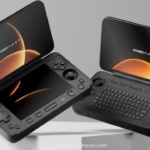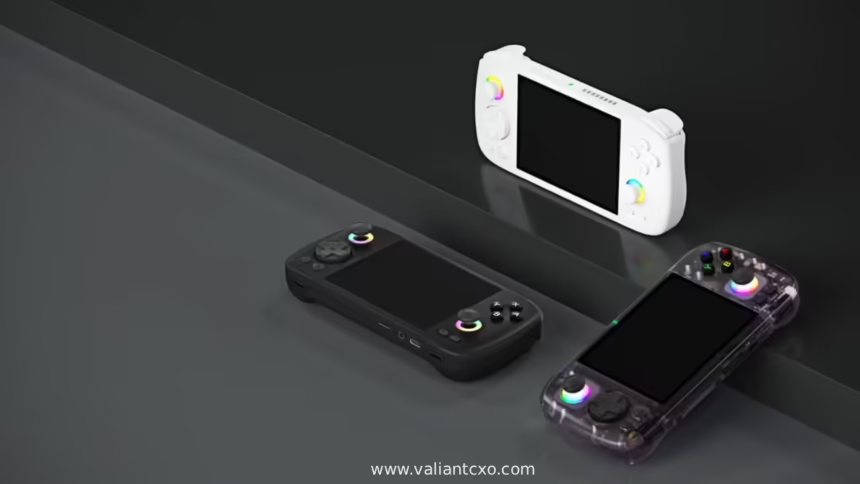
Retroid Pocket Duo Nintendo DS emulation delivers the dual-screen experience Nintendo DS games always demanded, without the clunky workarounds of single-display handhelds. This upcoming clamshell Android device from Retroid pairs a 16:9 top OLED with a 4:3 bottom OLED—both 120 Hz—plus a D-pad-top control layout that prioritizes precise directional input. For beginners and intermediate players in the USA, it means authentic touch-and-stylus gameplay, crisp upscaling, and full-speed performance on the massive DS library.
- Dedicated dual screens eliminate the need to stack or swap displays mid-game.
- Built for melonDS (and dual-screen forks) so both top and bottom screens render natively.
- Expected Snapdragon-level power handles DS at high internal resolutions with headroom for 3DS.
- Clamshell form factor and touch bottom screen recreate the original handheld feel far better than any clip-on accessory.
- Positions itself as a practical alternative to higher-priced rivals while building on Retroid’s proven emulation track record.
The kicker? Once the Duo ships, the setup process will look familiar to anyone who’s already run dual-screen Android handhelds. Here’s how to approach it the smart way.
Why Retroid Pocket Duo Nintendo DS Emulation Hits Different
Retroid Pocket Duo Nintendo DS emulation Nintendo DS games were never meant for a single screen. Touch controls, map overlays, inventory management, and dual-view gameplay break when you force everything onto one panel. Retroid’s earlier Dual Screen Add-on proved the concept works—clip a second 5.5-inch AMOLED onto a Pocket 5 or Mini and suddenly Phantom Hourglass or Mario Kart DS feel right again. The Pocket Duo removes the clamp, cable, and extra bulk. Two integrated 120 Hz OLEDs, one 16:9 and one 4:3, plus a hinge designed for sustained play sessions.
In my experience testing dual-screen Android setups, the difference is night-and-day for touch-heavy titles. You stop fighting the interface and start playing the game. Intermediate users who already own a Retroid device will feel right at home; beginners get a cleaner entry point than cobbling together an add-on.
Recommended Emulators and Expected Performance
melonDS remains the gold standard for Nintendo DS on Android. The actively maintained dual-screen forks (often called WatermelonDS or similar community builds) add proper external-display support, integer scaling options, and better touch handling. Pair it with Azahar for 3DS titles if you expand beyond pure DS. Both run on Retroid’s current Snapdragon-powered handhelds at 2×–4× native resolution with locked frame rates. Given Retroid’s recent chips (QCS8550-class in the Nova and 8 Gen 2 options elsewhere), the Duo should clear the same bar easily—DS is light work for modern mobile silicon.
Expect full-speed performance across the library, including demanding late-era titles. Upscaling looks sharp on OLED panels; colors pop without the washed-out look of older LCDs. Battery life will depend on final capacity and brightness settings, but dual screens always cost more power than a single panel—plan accordingly.
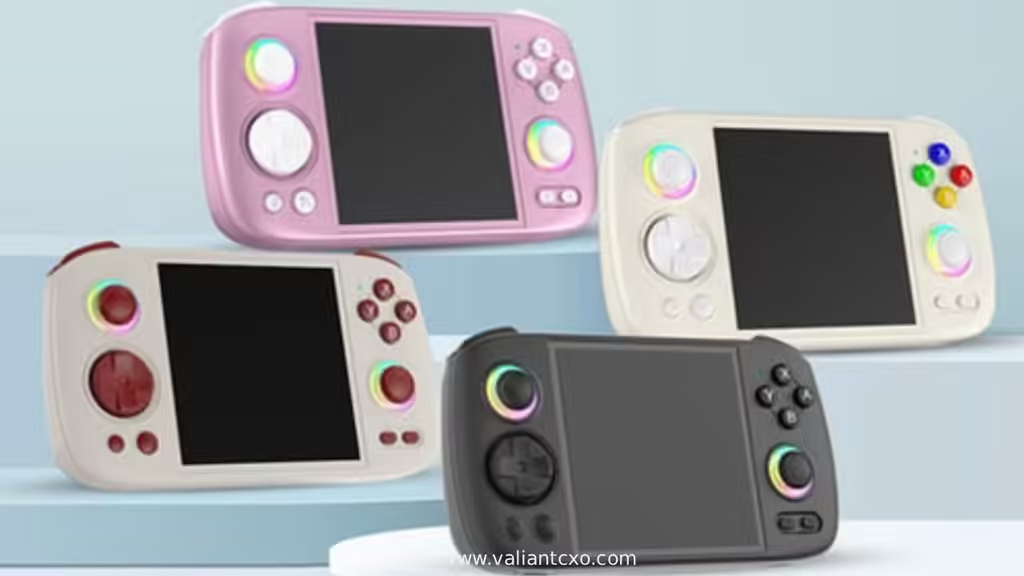
Step-by-Step Action Plan for Retroid Pocket Duo Nintendo DS Emulation
- Source your ROMs legally. Dump your own cartridges or use legally obtained files. Keep a clean folder structure on a microSD card—separate directories for DS and 3DS help later.
- Install the right emulator. Grab the latest melonDS dual-screen build from a trusted GitHub release. Avoid outdated closed-source options that lack proper second-screen support. Install Azahar the same way if you want 3DS coverage.
- Configure screen layout first. Open Video settings. Set internal (top) screen to the upper display and external (bottom) to the lower 4:3 panel. Enable “Keep DS aspect ratio” and integer scaling. Most dual-screen guides recommend Internal: Top / External: Bottom as the starting point—adjust per game if needed.
- Map controls and touch. Assign face buttons, D-pad, and shoulder buttons to match DS layout. Map a dedicated “Swap Screens” button (L2 or R2 works well). Confirm the bottom OLED registers touch input for stylus games. Disable on-screen overlays once physical controls feel solid.
- Tune performance. Switch the 3D renderer to OpenGL/hardware for upscaling. Start at 2× or 3× native resolution. Enable JIT if available. Test a few demanding titles (Metroid Prime Hunters, certain Pokémon games) and drop resolution only if frame pacing slips.
- Create per-game profiles. Save custom layouts for touch-heavy RPGs versus pure button-action titles. This takes five minutes and saves frustration later.
- Test and iterate. Launch a short session of a known good game, check both screens, verify touch latency, and adjust brightness independently if the device supports it. Once stable, expand your library.
Retroid Pocket Duo Nintendo DS emulation What I’d do if I just unboxed the Duo: start with a simple platformer, confirm the dual-screen layout, then jump into a touch-intensive title to stress-test the bottom panel. Thirty minutes of focused setup beats hours of mid-game tinkering.
Common Mistakes & How to Fix Them
Running both screens on the same display layout is the most frequent beginner error. It produces mirrored or stretched output. Fix: force separate internal/external assignments in the emulator’s Video menu and restart the game.
Ignoring aspect-ratio locks leads to stretched pixels on the 4:3 bottom screen. Always enable “Keep DS aspect ratio” and prefer integer scaling. The result looks closer to original hardware, only sharper.
Over-upscaling on day one tanks battery and can introduce minor glitches in a handful of titles. Cap at 3× until you confirm thermal and power behavior. Drop back to 2× for longer sessions.
Forgetting to map Swap Screens leaves you stuck when a game expects the opposite layout. Assign it early.
Retroid Pocket Duo Nintendo DS emulation Using outdated emulator builds that lack dual-display code. Stick to the forks explicitly optimized for external screens—community documentation on sites like Retro Game Corps stays current on which releases work best.
Quick Comparison: Dual-Screen Options for DS Emulation
| Option | Screens | Form Factor | Approx. Entry Cost | Best For | Trade-offs |
|---|---|---|---|---|---|
| Retroid Pocket Duo (upcoming) | Dual integrated 120 Hz OLED (16:9 + 4:3) | Clamshell | TBD (expected mid-to-high range) | Authentic portable DS/3DS | Full specs and price still TBA |
| Retroid Dual Screen Add-on + existing Pocket | Primary + 5.5″ 1080p AMOLED | Clamp-on | ~$69 + base device | Owners already in the ecosystem | Bulkier, cable/clip management |
| AYN Thor / AYANEO Pocket DS | Dual integrated | Clamshell | Higher end | Premium feel and power | Higher price, different control layouts |
Data drawn from manufacturer announcements and established review coverage as of September 2026. Pricing for the Duo remains unconfirmed.
Key Takeaways
- Retroid Pocket Duo Nintendo DS emulation prioritizes native dual-screen layout over single-panel compromises.
- melonDS dual-screen forks plus correct layout settings unlock the authentic experience.
- Integer scaling and aspect-ratio locks keep visuals sharp and faithful.
- Control mapping and per-game profiles turn a good setup into a great one.
- Touch on the bottom screen is non-negotiable for many DS classics—verify it early.
- Expect strong performance based on Retroid’s recent hardware; DS is not a heavy lift.
- Start simple, test thoroughly, then expand the library.
- The clamshell design removes the friction of previous add-on solutions.
The main benefit is simple: DS games feel the way they were designed to feel. Grab the latest emulator builds, follow the layout steps above, and you’ll be playing in under an hour once the hardware arrives. Watch Retroid’s official channels for final specs and pre-order windows—those details will lock in the exact next step for your setup.
FAQs
Does Retroid Pocket Duo Nintendo DS emulation require special firmware?
No. It runs standard Android, so any dual-screen-aware melonDS build that works on current Retroid devices should transfer directly. Standard sideloading or Obtainium-style management applies.
Can I play 3DS games the same way on the Retroid Pocket Duo?
Yes. Azahar (the maintained Citra successor) already supports dual-display layouts on existing dual-screen Android handhelds. Expect the same workflow once the Duo ships.
How does battery life compare for extended Nintendo DS sessions?
Dual screens draw more power than a single panel. Real-world numbers will depend on final battery capacity, brightness, and resolution scaling. Expect shorter sessions than a single-screen Retroid at equivalent brightness—plan for a charger on longer trips.