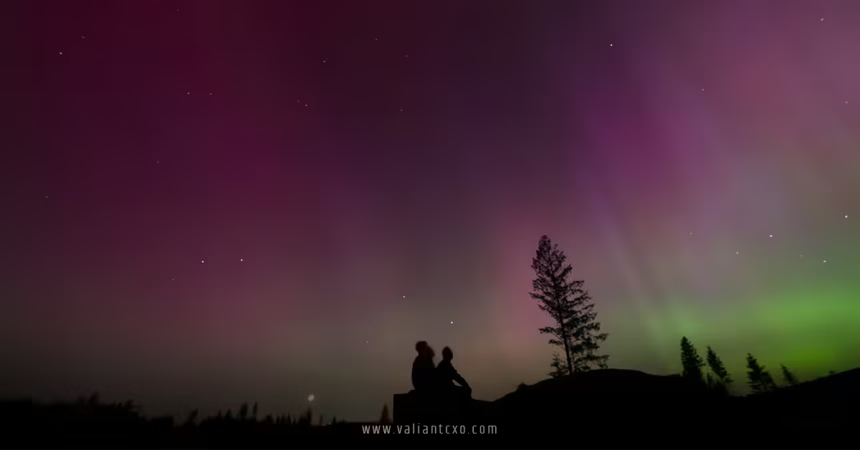
Northern Lights Could Put on a Show for Large Sections of the U.S., and if you’ve never witnessed this celestial spectacle, you’re in for a treat! Imagine standing under a vast night sky, watching vibrant ribbons of green, purple, and pink dance across the heavens like a cosmic artist’s masterpiece. The aurora borealis, commonly known as the Northern Lights, is a bucket-list experience for many, and when the conditions are right, this natural phenomenon can light up the skies far beyond its usual Arctic haunts. In this article, we’ll dive into why the Northern Lights Could Put on a Show for Large Sections of the U.S., what causes this dazzling display, and how you can maximize your chances of catching it. Let’s embark on this starry journey together!
What Are the Northern Lights?
The Northern Lights are nature’s own light show, a breathtaking display of colorful waves and curtains shimmering in the night sky. But what exactly causes this phenomenon? At its core, the aurora borealis results from charged particles from the sun colliding with Earth’s atmosphere. These particles, carried by solar winds, get caught in our planet’s magnetic field and interact with gases like nitrogen and oxygen, creating those iconic glowing hues.
Think of it like a cosmic pinata party: the sun sends out bursts of energy, and when they hit Earth’s magnetic shield, they spill out a dazzling array of colors. The stronger the solar activity, the farther south the Northern Lights can be seen. That’s why, when the Northern Lights Could Put on a Show for Large Sections of the U.S., even folks in states like Ohio, Pennsylvania, or Colorado might get a front-row seat to this celestial extravaganza.
Why Do the Northern Lights Appear in the U.S.?
Typically, the Northern Lights are most visible in high-latitude regions like Alaska, Canada, or Scandinavia. However, during periods of intense solar activity, such as solar storms or coronal mass ejections (CMEs), the aurora’s reach extends much farther south. These solar events are tied to the sun’s 11-year solar cycle, which fluctuates between periods of high and low activity. When the sun is at its solar maximum—its most active phase—the Northern Lights Could Put on a Show for Large Sections of the U.S.
In 2025, we’re approaching the peak of Solar Cycle 25, which means more frequent and intense solar storms. These storms supercharge the aurora, pushing it into lower latitudes. So, if you’re in states like New York, Michigan, or even as far south as Arizona, you might just look up one night and see the sky ablaze with color. Isn’t it wild to think that a star 93 million miles away could paint your backyard sky?
When and Where to See the Northern Lights in the U.S.
Timing is everything when it comes to catching the Northern Lights Could Put on a Show for Large Sections of the U.S. The aurora is most likely to appear during the fall and winter months, from September to March, when nights are longer and darker. But it’s not just about the season—solar activity plays a huge role. Keep an eye on space weather forecasts, which predict auroral activity based on solar storms.
Best U.S. Locations for Viewing
While Alaska is the go-to U.S. state for reliable aurora sightings, a strong solar event can bring the Northern Lights Could Put on a Show for Large Sections of the U.S., including unexpected places. Here are some prime spots to consider:
- Northern Midwest: States like Minnesota, Wisconsin, and Michigan offer clear, dark skies away from city lights, making them ideal for aurora chasing.
- Pacific Northwest: Washington and Montana provide wide-open spaces with minimal light pollution, perfect for spotting the Northern Lights.
- Northeast: Maine, Vermont, and upstate New York can offer stunning views during strong auroral events.
- Rocky Mountains: Parts of Idaho, Wyoming, and Colorado may get a glimpse when the Northern Lights Could Put on a Show for Large Sections of the U.S.
The key? Get away from urban areas. Light pollution is the aurora’s worst enemy, washing out those delicate colors like a bad Instagram filter. Head to rural areas, national parks, or designated dark-sky sites for the best experience.
Timing Your Aurora Hunt
The Northern Lights are most active between 10 p.m. and 2 a.m., so plan to stay up late. Check space weather websites like SpaceWeatherLive for real-time aurora forecasts. These sites track the Kp index, a measure of geomagnetic activity ranging from 0 to 9. A Kp of 5 or higher means the Northern Lights Could Put on a Show for Large Sections of the U.S., so keep your eyes peeled when the numbers climb.
How to Prepare for Viewing the Northern Lights
Chasing the Northern Lights isn’t like flipping on a TV—you need a bit of prep to make the most of it. When the Northern Lights Could Put on a Show for Large Sections of the U.S., a little planning goes a long way. Here’s how to set yourself up for success.
Gear Up for the Cold
Aurora season often means chilly nights, especially in northern states. Dress in layers—think thermal base layers, a fleece jacket, and a windproof outer shell. Don’t forget a hat, gloves, and warm socks. A thermos of hot cocoa or coffee can make those late-night stakeouts way more enjoyable. It’s like camping, but instead of roasting marshmallows, you’re roasting your eyes on a cosmic light show.
Bring the Right Equipment
You don’t need fancy gear to enjoy the Northern Lights, but a few tools can enhance the experience:
- Camera or Smartphone: The Northern Lights can be faint to the naked eye during weaker displays, but a camera with a long-exposure setting can capture vivid colors. Most modern smartphones have night mode, which works wonders.
- Tripod: Keep your camera steady for those crisp, Instagram-worthy shots.
- Blanket or Chair: If you’re waiting for hours, comfort is key.
Find the Perfect Spot
Scout your location in advance. Look for a spot with a clear view of the northern horizon, free from trees, buildings, or city lights. National parks like Glacier National Park in Montana or Voyageurs National Park in Minnesota are fantastic choices. When the Northern Lights Could Put on a Show for Large Sections of the U.S., these spots become magical.
Understanding Solar Activity and Its Role
The sun is the real MVP behind the Northern Lights. Its surface is a hot mess of magnetic activity, spitting out charged particles in bursts called solar flares or coronal mass ejections. When these particles hit Earth, they get funneled toward the poles by our planet’s magnetic field, creating the aurora. But why does this sometimes mean the Northern Lights Could Put on a Show for Large Sections of the U.S.?
The Solar Cycle Explained
The sun operates on an 11-year cycle, swinging between quiet and chaotic phases. During the solar maximum, which we’re nearing in 2025, solar storms are more frequent and intense. These storms can push the aurora’s visibility as far south as Alabama or California. It’s like the sun is throwing a party, and the U.S. gets an invite when the guest list expands.
Space Weather Forecasts
To predict when the Northern Lights Could Put on a Show for Large Sections of the U.S., scientists monitor solar activity using satellites and ground-based observatories. Websites like NOAA’s Space Weather Prediction Center provide aurora forecasts, including maps showing how far south the lights might reach. Bookmark these sites and check them regularly, especially during peak solar activity.
Tips for Photographing the Northern Lights
Capturing the Northern Lights on camera is like trying to bottle a rainbow—it’s tricky but oh-so-rewarding. When the Northern Lights Could Put on a Show for Large Sections of the U.S., you’ll want to be ready to snap some epic shots. Here’s how to do it.
Camera Settings for Beginners
If you’re new to astrophotography, don’t worry—you don’t need a pro-level camera. Here are some basic settings to get started:
- Manual Mode: Switch your camera to manual to control exposure, focus, and ISO.
- ISO: Set it between 800 and 3200, depending on how bright the aurora is.
- Shutter Speed: Use a long exposure of 5–20 seconds to capture the light.
- Aperture: Choose a wide aperture (f/2.8 or lower) to let in more light.
- Focus: Set your lens to infinity focus for sharp stars and aurora.
Smartphone Photography Tips
No DSLR? No problem. Modern smartphones can capture stunning aurora photos. Enable night mode, use a tripod to avoid shaky shots, and tap the screen to focus on the sky. Apps like ProCamera or NightCap can give you more control over settings. When the Northern Lights Could Put on a Show for Large Sections of the U.S., your phone might just become your new best friend.
The Science Behind the Colors
Ever wonder why the Northern Lights look like a neon dance party? The colors come from different gases in Earth’s atmosphere reacting to solar particles. Nitrogen, the most common gas, glows purple, blue, or pink when energized, while oxygen produces green. The result? A palette that can range from subtle pastels to vivid streaks, depending on the intensity of the solar activity.
When the Northern Lights Could Put on a Show for Large Sections of the U.S., you might see green dominating the sky, with hints of purple or red during stronger storms. It’s like the atmosphere is putting on a fashion show, with each gas strutting its stuff in vibrant hues.
Cultural Significance of the Northern Lights
The Northern Lights have captivated humans for centuries, inspiring myths and legends across cultures. Indigenous peoples in North America often saw the aurora as spirits dancing in the sky or messages from ancestors. In Norse mythology, the lights were reflections of the Valkyries’ armor. Even today, the Northern Lights Could Put on a Show for Large Sections of the U.S., sparking wonder and awe just as they did thousands of years ago.
For many, witnessing the aurora is a spiritual experience, a reminder of our tiny place in the universe. Have you ever felt that sense of smallness under a starry sky? The Northern Lights amplify that feeling, connecting us to something bigger than ourselves.
Common Myths About the Northern Lights
Let’s bust a few myths that might trip you up when chasing the Northern Lights Could Put on a Show for Large Sections of the U.S.:
- Myth: You need to be in the Arctic to see them. Nope! Strong solar storms can bring the aurora to lower latitudes.
- Myth: The lights are always visible at night. Not true—they depend on solar activity and clear, dark skies.
- Myth: You need a fancy camera to enjoy them. While cameras enhance faint displays, a strong aurora is visible to the naked eye.
How to Stay Safe While Aurora Chasing
Chasing the Northern Lights can mean late nights in remote areas, so safety is key. Always tell someone your plans, especially if you’re heading to a rural spot. Bring a fully charged phone, a portable charger, and a map (in case GPS fails). If you’re driving, watch for wildlife—deer and moose love to roam at night. When the Northern Lights Could Put on a Show for Large Sections of the U.S., excitement can make you forget the basics, so stay prepared.
Conclusion
The Northern Lights Could Put on a Show for Large Sections of the U.S., and you don’t want to miss this cosmic spectacle. From understanding the science behind the aurora to picking the perfect viewing spot, a little knowledge and preparation can turn a good night into an unforgettable one. Keep an eye on space weather forecasts, bundle up, and head to a dark-sky location for your best shot at witnessing this natural wonder. Whether you’re in Minnesota, Montana, or even farther south, the aurora borealis is a reminder that the universe is full of surprises. So, grab your camera, gather some friends, and chase the lights—your next great adventure is waiting in the stars!
FAQs
1. When is the best time to see the Northern Lights Could Put on a Show for Large Sections of the U.S.?
The best time is during fall and winter (September to March) when nights are longer and darker. Strong solar activity, tracked via space weather forecasts, increases your chances, especially during the solar maximum in 2025.
2. Can I see the Northern Lights in southern states?
Yes! When the Northern Lights Could Put on a Show for Large Sections of the U.S., strong solar storms can push the aurora as far south as Arizona or Alabama. Check aurora forecasts for real-time updates.
3. Do I need special equipment to photograph the Northern Lights?
Not necessarily. A smartphone with night mode or a camera with long-exposure settings can capture stunning shots. A tripod helps keep images sharp when the Northern Lights Could Put on a Show for Large Sections of the U.S.
4. Why do the Northern Lights appear in different colors?
The colors come from solar particles interacting with atmospheric gases—nitrogen glows purple or pink, while oxygen produces green. The intensity of the solar storm affects the vibrancy.
5. How can I stay safe while chasing the Northern Lights?
Choose a safe, dark-sky location, dress warmly, and tell someone your plans. Bring a charged phone and watch for wildlife, especially in rural areas where the Northern Lights Could Put on a Show for Large Sections of the U.S.
For More Updaes !! : valiantcxo.com