Antisemitic attacks in Australia have skyrocketed in recent years, turning what was once a relatively safe haven for Jewish communities into a place where fear and vigilance are part of daily life. Picture this: families afraid to wear visible Jewish symbols in public, schools needing armed guards, and synagogues fortified like fortresses. That’s the reality for many Australian Jews today. The surge in antisemitic attacks in Australia, particularly since October 2023, has shocked the nation, with incidents ranging from graffiti and verbal abuse to arson and, tragically, the deadly Bondi Beach shooting 2025. How did we get here? Let’s unpack this troubling trend and explore what’s being done—or what needs to be done—to stop it.
You might ask yourself: Isn’t Australia known for its multicultural harmony and laid-back ethos? Absolutely, but hate doesn’t take holidays. Antisemitic attacks in Australia aren’t new, but they’ve exploded in frequency and severity, leaving communities on edge and prompting urgent calls for action.
The Sharp Rise in Antisemitic Attacks in Australia Post-October 2023
Since the Hamas attacks on Israel in October 2023 and the ensuing Gaza conflict, antisemitic attacks in Australia have reached unprecedented levels. Reports from the Executive Council of Australian Jewry (ECAJ) paint a grim picture: incidents quadrupled in 2024 alone, with over 2,000 recorded that year—far surpassing previous records.
By the period ending September 2025, another 1,654 incidents were logged, still about five times the pre-2023 average. That’s not just numbers; it’s real people facing harassment, vandalism, and violence. Think of it like a wildfire sparked by global tensions, spreading unchecked through streets, campuses, and online spaces. Antisemitic attacks in Australia now include everything from slurs shouted in public to coordinated arson plots, making Jewish Australians feel increasingly isolated.
Why the spike? Experts point to imported conflicts fueling local hate, with some incidents even linked to foreign influences like Iran. But whatever the trigger, the result is the same: a community under siege.
Key Statistics on Antisemitic Attacks in Australia
To grasp the scale, here’s a quick breakdown:
- Pre-October 2023 annual average: Around 400-500 incidents.
- 2023-2024: Over 2,062 reported cases—a 316% jump in some metrics.
- 2024-2025: 1,654 incidents, with a rise in severe attacks like arson.
- Total post-October 2023: More than 3,700 over two years.
These figures come from meticulous tracking by groups like the ECAJ, focusing on clear anti-Jewish acts. It’s like a storm that hasn’t let up, forcing many to hide their identity—just imagine not feeling safe wearing a kippah on the train.
Notable Incidents Fueling Concerns About Antisemitic Attacks in Australia
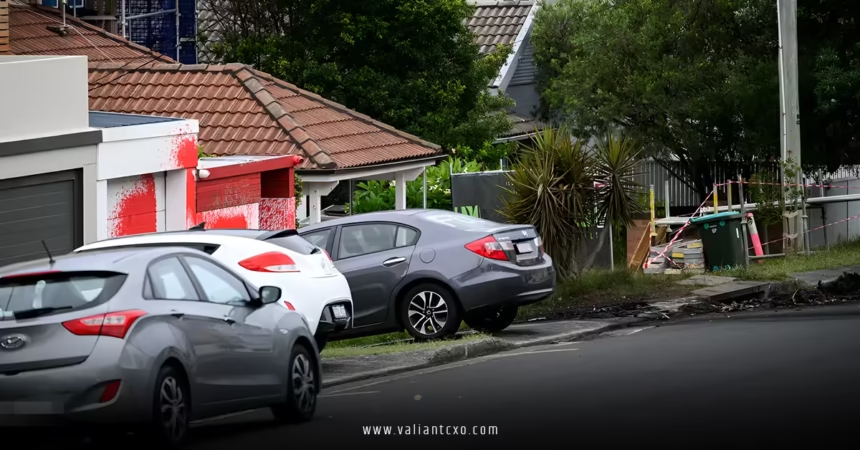
Antisemitic attacks in Australia have escalated from “minor” hate to outright terrorism. In Melbourne, the Adass Israel Synagogue was firebombed in late 2024, destroying sacred items and injuring witnesses. Sydney saw Jewish-owned businesses vandalized, cars torched, and homes defaced with swastikas.
Graffiti reading “Jew die” appeared on schools, and bomb threats disrupted synagogues nationwide. Then came the unthinkable: the Bondi Beach shooting 2025, where gunmen targeted a Hanukkah celebration, killing at least 15 and injuring dozens in a blatant antisemitic terror act. This wasn’t random—it was the culmination of years of rising tension, turning a joyful beach event into a nightmare.
Rhetorical question: If places of worship and family gatherings aren’t safe, where is? These incidents highlight how antisemitic attacks in Australia have grown bolder, often in broad daylight.
The Tragic Bondi Beach Shooting 2025 and Its Link to Broader Antisemitic Attacks in Australia
The Bondi Beach shooting 2025 stands out as the deadliest manifestation yet. On December 14, 2025, during “Chanukah by the Sea,” attackers opened fire on families, claiming lives and shattering Australia’s sense of security. Declared a terrorist act targeting Jews, it echoed warnings from community leaders that unchecked hate could lead to mass violence.
Linking back, the Bondi Beach shooting 2025 didn’t happen in a vacuum—it followed a pattern of arsons, threats, and vandalism that authorities had been tracking. It’s a stark reminder that ignoring smaller antisemitic attacks in Australia can breed catastrophe.
Government and Community Responses to Antisemitic Attacks in Australia
The Australian government has stepped up, appointing Jillian Segal as Special Envoy to Combat Antisemitism in 2024 and launching task forces like Strike Force Pearl. Prime Minister Anthony Albanese condemned incidents strongly, expelling Iranian diplomats over linked attacks and pledging tougher laws.
Yet, critics argue more is needed—faster implementation of recommendations, better campus oversight, and mandatory sentencing for hate crimes. Community efforts include increased security funding and education programs, but many feel words must turn to decisive action.
Analogy time: It’s like patching leaks in a sinking boat—we need to fix the hull, not just bail water. Enhanced police operations and international cooperation are positive, but eradicating root causes demands education and unity.
Challenges in Combating Antisemitic Attacks in Australia
One hurdle? Distinguishing legitimate criticism from hate. Another: Online radicalization amplifying global tensions locally. Foreign interference, like alleged Iranian involvement in arsons, adds complexity. Plus, lenient sentencing sometimes undermines deterrence.
Universities have faced scrutiny for failing Jewish students, with protests crossing into intimidation. Addressing antisemitic attacks in Australia requires balancing free speech with safety—tricky, but essential.
How Communities Are Healing and Fighting Back Against Antisemitic Attacks in Australia
Amid the darkness, resilience shines. Vigils draw thousands, blood donations surge, and interfaith solidarity grows. Public menorah lightings defy fear, symbolizing light over hate.
Jewish organizations advocate tirelessly, while allies from all backgrounds condemn attacks. It’s heartwarming to see Australians rally, reminding us that unity can drown out division.
Conclusion: A Call to Action Against Antisemitic Attacks in Australia
Antisemitic attacks in Australia represent a profound challenge to our national values of fairness and inclusion. From the quadrupling of incidents post-2023 to heartbreaking events like synagogue firebombings and the devastating Bondi Beach shooting 2025, the toll on Jewish communities is immense. Yet, through government initiatives, community strength, and public outrage, there’s hope for change.
We must commit to education, enforcement, and empathy to ensure no one lives in fear because of their faith. Australia, let’s reclaim our reputation as a welcoming nation—together, we can turn the tide against hate.
FAQs About Antisemitic Attacks in Australia
1. What caused the recent surge in antisemitic attacks in Australia?
The surge in antisemitic attacks in Australia largely followed the October 2023 Hamas attacks and Gaza war, with incidents quadrupling in 2024 due to imported tensions and local radicalization.
2. How many antisemitic incidents were reported in Australia in 2024-2025?
Reports show over 2,000 antisemitic attacks in Australia in 2023-2024, followed by 1,654 in the next period—still five times pre-2023 levels.
3. What role did the Bondi Beach shooting 2025 play in highlighting antisemitic attacks in Australia?
The Bondi Beach shooting 2025, a targeted terror attack killing 15 during Hanukkah, underscored the escalation of antisemitic attacks in Australia from vandalism to lethal violence.
4. How has the Australian government responded to antisemitic attacks?
Responses include appointing a special envoy, task forces, and diplomatic actions against foreign links, though calls persist for stronger measures against antisemitic attacks in Australia.
5. Are antisemitic attacks in Australia linked to foreign influences?
Some, like 2024 arsons, were tied to Iran, adding an international dimension to antisemitic attacks in Australia.