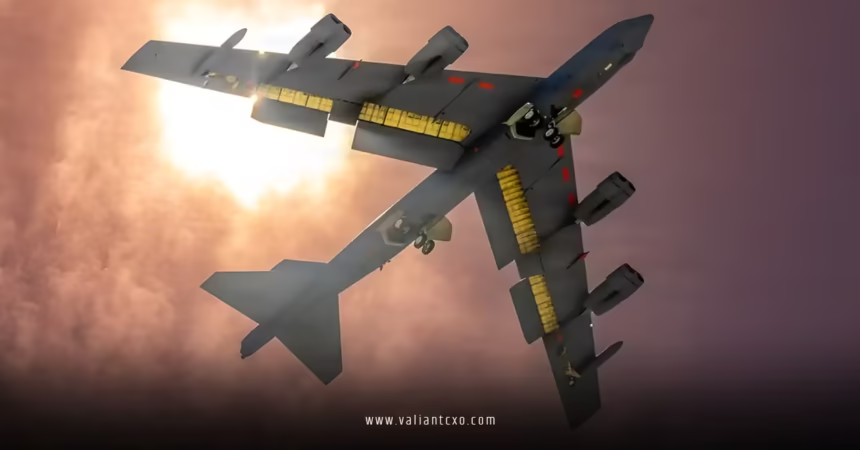
B-52 Stratofortress upgrades 2026 mark the most significant overhaul of the iconic bomber in decades. The U.S. Air Force is pouring billions into new engines, radar, avionics, and more to extend this Cold War warrior’s life well past 2050. These changes turn the aging B-52H into the redesigned B-52J. Here’s the thing: even with fresh tech, risks remain real—as the recent B-52 bomber crash Edwards Air Force Base June 2026 tragically showed during radar test flights.
- Core focus: Rolls-Royce F130 engines and AN/APQ-188 AESA radar lead the charge.
- Fleet impact: All 76 active B-52Hs get the full package eventually.
- Why it matters: Keeps America’s bomber fleet credible against peer threats without a full new build.
- Timeline reality: Tests ramp up in 2026, but full fleet rollout stretches into the 2030s.
- Budget bite: The overall modernization hits around $48 billion.
Major Components of the B-52 Stratofortress Upgrades 2026
Engine replacement steals the spotlight. Eight new Rolls-Royce F130 turbofans replace the thirsty 1960s-era Pratt & Whitney TF33s. Expect 30% better fuel efficiency, longer range, lower maintenance, and quieter operation. Boeing snagged a $2 billion contract in early 2026 to modify the first two test aircraft in San Antonio.
Radar gets a fighter-jet upgrade too. The new AN/APQ-188 AESA system ditches the old mechanically scanned radar for active electronically scanned array tech. Better detection, multi-target tracking, all-weather punch, and resistance to jamming. The first radar-equipped jet arrived at Edwards AFB in late 2025 for 2026 flight testing.
Cockpit and systems follow suit: glass displays, updated avionics, improved power generation, new comms, and more. The result? A B-52J that feels decades newer while keeping that unmistakable silhouette.
B-52 Stratofortress Upgrades 2026: Progress and Pain Points
Here’s a breakdown of key upgrades versus the old setup:
| Upgrade Area | Legacy (B-52H) | 2026+ Modernization (B-52J) | Expected Benefit |
|---|---|---|---|
| Engines | 8x TF33 (1960s) | 8x Rolls-Royce F130 | 30% fuel savings, less maintenance |
| Radar | AN/APQ-166 mechanical | AN/APQ-188 AESA | Superior targeting & awareness |
| Cockpit | Analog dials | Digital glass displays & controls | Reduced crew workload |
| Power/Systems | Limited generation | Enhanced electrical & hydraulic | Supports future weapons & sensors |
| Service Life | Struggling sustainment | Viable into 2050s+ | Cost-effective deterrence |
Delays plague both engine and radar tracks. Radar low-rate production decisions slipped into late 2026 and 2027. Engine critical design review cleared in May 2026, with flight testing still ahead. Small fleet size complicates things too.
Why Upgrade Instead of Retire?
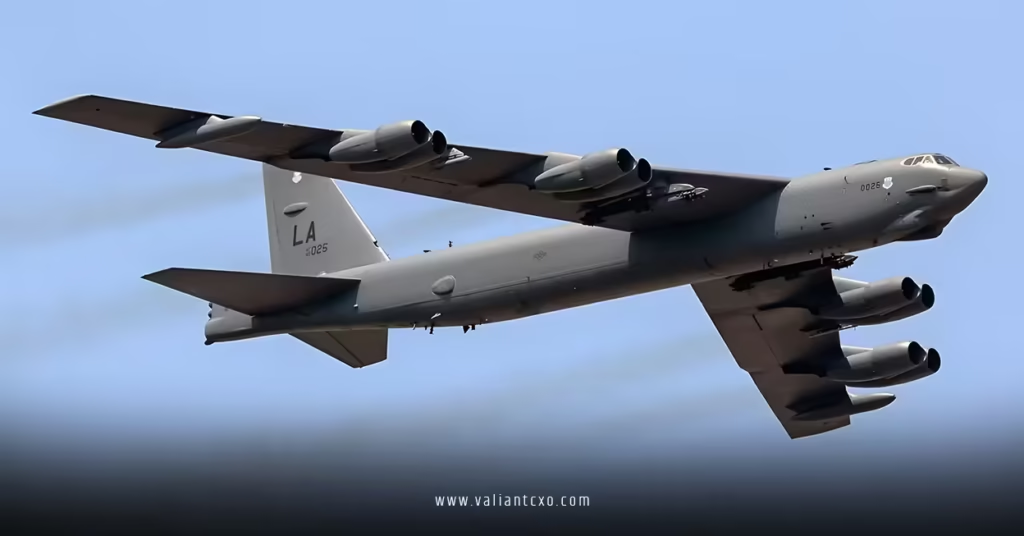
The B-52 carries massive bomb loads over insane distances. No other platform matches its loiter time or payload flexibility today. Paired with the stealthy B-21 Raider, it anchors the bomber force. Upgrades let the Air Force avoid the massive expense of a clean-sheet replacement while addressing obsolescence.
In my experience, these legacy-to-modern transitions always reveal surprises. Integration challenges on 70-year-old airframes test everyone’s patience. The B-52 bomber crash Edwards Air Force Base June 2026 during radar modernization testing drove that point home painfully.
Step-by-Step: What the Upgrade Process Looks Like
- Design and prototyping — Finalize specs and test components on ground rigs (like engine altitude tests at AEDC).
- Aircraft modification — First two jets head to Boeing San Antonio for structural work and new systems install.
- Ground testing — Systems integration checks before wheels-up.
- Flight testing at Edwards — Push envelopes on radar, engines, and handling. Data feeds back into fixes.
- Production decisions — Low-rate then full-rate rollout across the fleet.
- Fleet incorporation — Train crews, update tactics, and declare initial operational capability (likely 2030s).
What I’d do if advising program managers? Prioritize conservative test schedules. One rushed flight can set everything back years.
Common Mistakes & How to Fix Them
Rushing integration to hit arbitrary deadlines tops the list. Fix: Insist on thorough ground testing first.
Underestimating aging airframe quirks bites hard. Fix: Invest heavily in structural inspections before mods.
Poor coordination between Boeing, Rolls-Royce, Raytheon, and the Air Force. Fix: Embed joint teams and shared digital twins for modeling.
Ignoring human factors in new cockpits. Fix: Involve operational crews early in design reviews.
Strategic and Operational Impact
These B-52 Stratofortress upgrades 2026 boost standoff weapon integration, electronic warfare resilience, and overall survivability. New engines cut tanker dependency. The AESA radar sharpens targeting for hypersonics and cruise missiles.
The program isn’t cheap or fast. Yet it buys decades of relevance. Learn more about the B-52 Radar Modernization Program from official Air Force sources. For broader context on test risks, see details around the B-52 bomber crash Edwards Air Force Base June 2026. Check Boeing’s defense modernization updates.
Key Takeaways
- B-52 Stratofortress upgrades 2026 center on F130 engines and AESA radar for the new B-52J.
- Testing ramps aggressively at Edwards AFB this year.
- Fuel efficiency and capability jumps are game-changers.
- Delays are real but progress continues despite setbacks.
- The crash in June 2026 underscores test flight dangers.
- Total program cost approaches $48 billion for long-term payoff.
- Keeps the BUFF as a flexible deterrent well into the 2050s.
- Lessons will shape future legacy platform modernizations.
The B-52 refuses to die. These upgrades prove it. Next step: Follow official Air Force and Boeing releases for test milestones. If you’re tracking defense programs, bookmark Edwards AFB updates and dig into the full modernization roadmap today.
FAQs
How do the B-52 Stratofortress upgrades 2026 connect to recent incidents?
The June 2026 crash at Edwards happened during radar modernization testing. It highlights the high stakes of flight test programs pushing these exact upgrades.
When will the full B-52 fleet receive the new engines and radar?
Test aircraft fly in 2026-2028. Fleet-wide upgrades follow, with initial operational capability now eyed for the early 2030s after delays.
What makes the B-52J designation significant?
It’s the first new model letter since the H in 1961. The upgrades are so extensive they justify the redesignation for the modernized Stratofortress.
text