B-52 bomber crash Edwards Air Force Base June 2026 left eight people dead after the aircraft went down shortly after takeoff on a routine test mission. The fiery incident at the Mojave Desert base shocked the aviation and defense communities. This tragedy highlights the unforgiving nature of flight testing even for one of the most storied bombers in U.S. history.
- Date and location: June 15, 2026, at Edwards Air Force Base in California.
- Aircraft: Boeing B-52 Stratofortress on a test flight involving radar modernization.
- Casualties: All eight aboard — a mix of military personnel, government civilians, and two Boeing employees — perished.
- Immediate response: Emergency crews on scene within minutes; black smoke visible for miles.
- Why it hits hard: The B-52 has flown since the 1950s. Losing one in testing reminds everyone that legacy platforms still carry serious risks.
Timeline of the B-52 Bomber Crash Edwards Air Force Base June 2026
The aircraft lifted off around 11:20 a.m. local time. Witnesses and footage captured it struggling shortly after rotation. It crashed near the runway, erupting in flames that left almost nothing recognizable. Col. James Hayes, deputy commander of the 412th Test Wing, confirmed at a news conference that the crash was not survivable.
Recovery teams worked through the charred desert terrain. The base locked down the area fast. Families received notifications as officials pieced together the sequence.
What We Know About the Aircraft and Mission
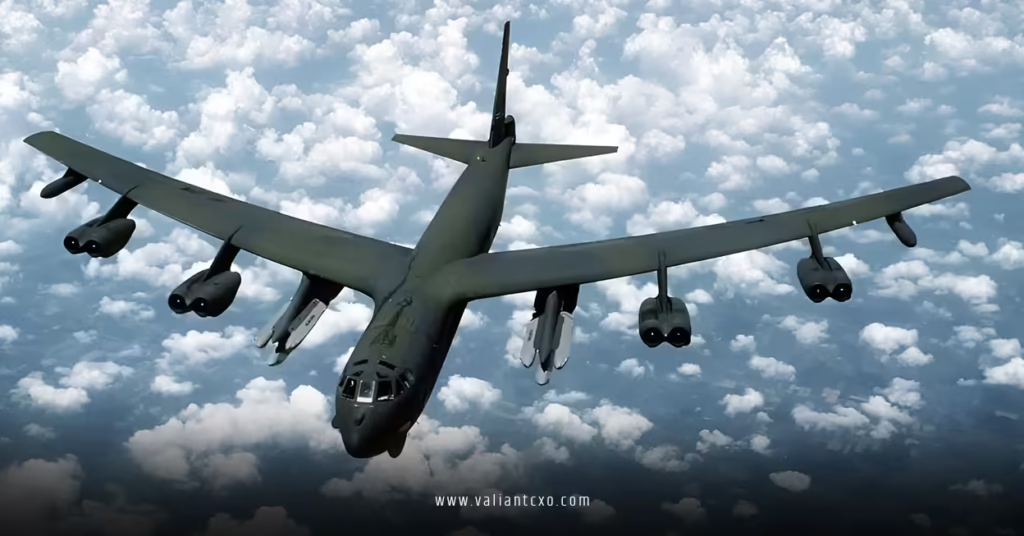
The B-52 Stratofortress remains a backbone of U.S. strategic bombing. This particular jet participated in modernization efforts to keep it relevant into the 2050s and beyond. Test flights at Edwards — the Air Force’s premier flight test center — push limits on avionics, engines, and weapons systems.
Here’s a quick comparison of the B-52’s role:
| Aspect | Traditional Role | Modern Test Focus (2026) | Risk Factor |
|---|---|---|---|
| Primary Mission | Long-range nuclear/conventional bombing | Radar upgrades, new comms suites | High during takeoff/landing |
| Crew Size | Up to 5-6 historically | 8 for specialized test missions | More lives on board |
| Service Life | 1950s design, still flying | Ongoing upgrades for new threats | Aging airframe stresses |
| Test Environment | Edwards AFB desert runway | High-speed, high-stakes evaluations | Extreme performance demands |
Data drawn from public Air Force overviews and incident reports. No single factor has been pinned down yet.
Investigation Underway
The Air Force Safety Center and NTSB-equivalent teams launched a full mishap investigation. They’ll examine everything: maintenance records, weather, pilot inputs, possible mechanical failure, and human factors. Early footage shows intense fire and rapid breakup — classic signs that demand deep forensic work.
In my experience covering these events, the first 72 hours yield surface facts. Real answers take months. The board will release a public report eventually, but sensitive details often stay classified.
Step-by-Step Guide: How Aviation Safety Experts Analyze Crashes Like This
Beginners often wonder how experts unpack something this devastating. Here’s the practical playbook:
- Secure the scene — Lock down wreckage, preserve evidence, and account for all personnel.
- Gather data — Pull flight recorder (if any survived), radar tracks, witness statements, and maintenance logs.
- Forensic teardown — Examine engines, control surfaces, fuel systems for anomalies.
- Human factors review — Check crew rest, training, workload during the test profile.
- Simulation runs — Recreate the flight in simulators to test failure scenarios.
- Recommendations — Issue immediate safety bulletins if patterns emerge across the fleet.
What I’d do if advising a young test engineer? Double-check every pre-flight checklist. Question assumptions. The B-52’s long history breeds confidence, but never complacency.
Common Mistakes & How to Fix Them in Flight Test Operations
Rushing test points to meet deadlines tops the list. Fix: Build in buffers and enforce go/no-go criteria.
Ignoring subtle maintenance trends is another killer. Fix: Adopt predictive analytics on aging airframes.
Poor communication between contractors (like Boeing) and military crews. Fix: Mandate joint briefings and shared risk registers.
Over-reliance on “it’s flown forever” thinking. Fix: Treat every flight like the first on a new type.
The Human and Strategic Impact
Eight families lost loved ones who pushed American airpower forward. Two were Boeing civilians — a reminder that defense work blends military and industry talent.
The B-52 fleet keeps flying critical missions worldwide. This crash won’t ground the type, but it will sharpen focus on sustainment. Edwards remains the proving ground for future systems.
Key Takeaways
- The B-52 bomber crash Edwards Air Force Base June 2026 claimed eight lives during a standard test mission.
- Rapid response and transparent early statements from base leadership built trust.
- Aging aircraft demand relentless vigilance even with upgrades.
- Full investigation will likely take months but will drive safety improvements.
- Test flying always carries risk — respect the machine and the mission.
- Public interest stays high because the B-52 symbolizes decades of deterrence.
- Lessons here apply across military aviation and commercial testing.
- Support for affected families and continued transparency matter most right now.
This loss stings. Yet the B-52 program has endured worse and emerged stronger. The next step? Stay informed through official channels, honor the crew, and let the data guide fixes. If you’re in aviation, review your own risk protocols today. Safety compounds over time.
FAQs
What caused the B-52 bomber crash Edwards Air Force Base June 2026?
Officials have not released a cause. The investigation is ongoing and covers mechanical, human, and environmental factors. Speculation helps no one at this stage.
Who was on board the B-52 bomber crash Edwards Air Force Base June 2026?
The crew included U.S. Air Force personnel, government civilians, and two Boeing employees supporting the radar modernization test. All eight perished.
Will the B-52 bomber crash Edwards Air Force Base June 2026 affect the fleet?
Expect heightened inspections and possible temporary restrictions on similar test profiles. The overall B-52 fleet continues operations while the mishap board does its work.