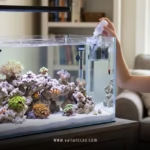
Best beginner corals for reef tank 2026 setups focus on hardy, forgiving species that thrive while you dial in your system. These corals handle the parameter swings common in new tanks, deliver quick visual wins, and won’t bankrupt you if something goes sideways.
- Zoanthids and mushrooms top the list for their bulletproof nature and color variety.
- Green star polyps (GSP) spread fast and signal tank health.
- Add a few LPS like hammers or Duncans once stable.
- They matter because starting smart builds confidence and prevents total wipeouts.
Pick these, and your tank pops early without the heartbreak.
What Makes a Coral Beginner-Friendly in 2026?
Hardy corals shrug off minor mistakes. They grow under moderate lighting and flow. Most need little supplemental feeding.
In my experience, new reefers kill expensive SPS first. Stick to softies and easy LPS. Your tank stabilizes faster, and you learn the rhythms—flow, light, nutrients—without panic.
Here’s the thing: stability beats perfection. A tank holding steady at decent numbers beats one chasing ideal readings that swing wildly.
Top Picks for Best Beginner Corals for Reef Tank 2026
Zoanthids (Zoas)
These colorful polyps steal the show. They come in neon greens, purples, reds—whatever vibe you want. Moderate light and low-to-medium flow suit them perfectly. They spread reliably, giving you that rewarding “it’s working” feeling fast.
Mushroom Corals
Practically indestructible. Low light? Fine. Gentle flow? Ideal. They tolerate higher nutrients better than most and add lush texture to the bottom or lower rocks. Watch them “dance” as they settle in.
Green Star Polyps (GSP)
Bright green carpets that sway in the current. Fast growers. Super forgiving. Isolate them on their own rock, or they’ll take over your scape like an ambitious ivy. Great indicator—if GSP looks happy, your basics are solid.
Kenya Tree Coral
Branching softie with tree-like structure. Moderate everything works. It pulses and grows visibly, adding height and movement.
Toadstool Leather Corals
Mushroom-shaped with flowing polyps. Hardy, but give them space—they can release chemicals if stressed. Moderate light and flow.
Hammer Corals (Euphyllia)
Slight step up but still beginner-accessible. Sweeping tentacles look premium. Moderate light and flow. Keep space from neighbors—they sting.
Duncan Corals
Organized heads that puff up when happy. Low-to-moderate light tolerant. Responds well to occasional feeding.
Comparison Table: Best Beginner Corals for Reef Tank 2026
| Coral | Light Needs | Flow Needs | Growth Rate | Difficulty | Approx. Cost (Frag) | Best For |
|---|---|---|---|---|---|---|
| Zoanthids | Moderate | Low-Medium | Medium-Fast | Very Easy | $15–40 | Color & Coverage |
| Mushrooms | Low-Moderate | Gentle | Medium | Very Easy | $10–30 | Low-Light Areas |
| Green Star Polyps | Moderate-High | Moderate | Fast | Very Easy | $10–25 | Movement & Spread |
| Kenya Tree | Moderate | Moderate | Fast | Easy | $20–45 | Height & Structure |
| Hammer | Moderate | Moderate | Slow-Medium | Easy | $30–60 | Visual Impact |
| Duncan | Low-Moderate | Low-Medium | Medium | Easy | $25–50 | Feeding Fun |
This table cuts through the noise. Match placement to your tank zones.

Step-by-Step Action Plan for Adding Best Beginner Corals for Reef Tank 2026
- Cycle fully. Ammonia and nitrite at zero for at least two weeks. Test daily at first.
- Nail parameters. Target: Temp 77–79°F, salinity 1.025–1.026, alk 8–11 dKH, calcium 400–450 ppm, nitrates 5–15 ppm, phosphates 0.03–0.1 ppm. Weekly 10–20% water changes keep things steady.
- Set lighting and flow. Start conservative. Ramp LEDs slowly over weeks. Aim for gentle, random flow—no dead spots.
- Quarantine and acclimate. Drip acclimate new frags. Observe for pests.
- Start small. Two to four frags max. Place on lower rocks first. Watch for 2–3 weeks.
- Feed sparingly. Broadcast or target with reef roids or phyto for softies. Overfeeding spikes nutrients.
- Monitor and adjust. Corals closed? Tweak flow or light. Polyp extension is your feedback loop.
What usually happens is the first month feels slow, then boom—growth kicks in.
Common Mistakes & How to Fix Them
Rushing corals into an uncycled tank. Fix: Wait it out. Test obsessively.
Placing everything under high light. Fix: Match zones. Mushrooms low, zoas mid.
Ignoring flow. Detritus piles up, corals retract. Fix: Add powerheads for random currents. Clean regularly.
Overstocking too soon. Fix: Patience. Let the tank mature.
Letting GSP or xenia overrun. Fix: Frag and remove early. Isolate aggressors.
Chasing zero nitrates. Some nutrients help. Fix: Keep balanced—nitrates under 20 ppm usually.
Why Stability Wins Every Time
Reefing isn’t about perfect specs on paper. It’s reading your tank. Those early corals teach you.
One analogy that sticks: Starting with beginner corals is like learning to drive on quiet streets before hitting the highway. You build skills without the crash.
Key Takeaways
- Zoanthids, mushrooms, and GSP form the unbeatable starter trio for best beginner corals for reef tank 2026.
- Stability over perfection—consistent parameters trump ideal numbers.
- Start with 2–4 frags and observe religiously.
- Match light and flow to each species for success.
- Quarantine and acclimate every addition.
- Feed lightly and change water regularly.
- Isolate fast spreaders like GSP.
- Enjoy the process—your tank will evolve.
Ready to stock? Head to a reputable aquacultured supplier like those on Bulk Reef Supply for healthy frags, check Reef2Reef forums for real-talk advice from hobbyists, and explore LiveAquaria for beginner collections.
Your first thriving reef starts here. Pick a couple from the list, get them settled, and watch the magic. Next step: Test your water today and plan those first placements.
FAQs on Best Beginner Corals for Reef Tank 2026
What are the absolute easiest corals for a new reef tank in 2026?
Zoanthids and mushroom corals top the charts. They forgive fluctuations and deliver color fast.
How many corals should I add when starting with best beginner corals for reef tank 2026?
Stick to two to four frags initially. Give them time to settle before expanding.
Do best beginner corals for reef tank 2026 need special feeding or equipment?
Most thrive on lighting alone with occasional broadcast feeding. Basic LEDs and powerheads suffice—no fancy reactors needed at first.