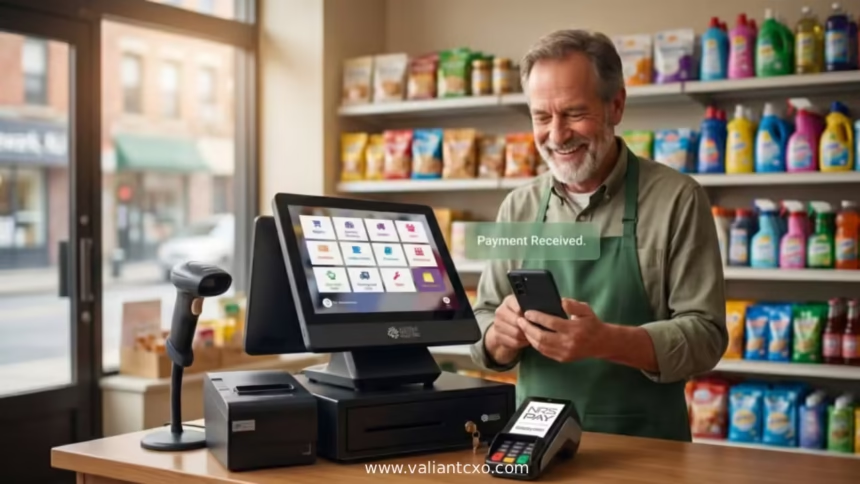
best payment processing for small business choices used to feel like a black box of rates, holds, and fine print. In 2026 the options are clearer, but the money still hides in the details. Flat-rate simplicity wins at low volume. Interchange-plus starts saving real dollars once you clear roughly $10k–$15k a month. Pick wrong and you bleed margin on every swipe.
Quick overview for busy owners:
- Flat-rate processors (Square, Stripe, PayPal) charge a predictable percentage + fixed fee and require no monthly software cost.
- Interchange-plus (Helcim and similar) passes the true card network cost plus a small transparent markup—usually cheaper above modest volume.
- Subscription models (Stax) add a monthly fee in exchange for near-wholesale rates and only make sense at higher volume.
- In-person rates are almost always lower than online or keyed-in rates.
- Pairing your processor tightly with a solid pos system for small business keeps inventory, reporting, and deposits in one clean flow.
How Payment Processing Actually Works for a Small Shop
Every card swipe or tap travels through the card networks (Visa, Mastercard, etc.), your processor, and your bank. The processor takes a cut for authorization, fraud checks, and settlement. That cut is your effective rate.
Three main pricing models dominate:
Flat-rate keeps the math simple: 2.6% + 15¢ in person on Square’s free plan, 2.9% + 30¢ online on Stripe. No surprises. Interchange-plus shows you the exact network fee plus the processor’s margin (often 0.40% + 8¢ or similar). Subscription plans charge $99 or so per month and then mark up interchange by almost nothing.
In my experience, most new businesses start on flat-rate and switch once the monthly statements start looking expensive. The crossover point is usually somewhere between $10k and $30k in monthly card volume, depending on average ticket size and card mix.
Best Payment Processing for Small Business by Situation
Under $10k monthly volume and mostly in-person? Square remains the easiest entry. Free software, cheap or free readers, next-day deposits, and no contracts. It also doubles as a capable pos system for small business, which keeps hardware and software talking to each other without extra glue.
Online-first or subscription-heavy? Stripe. Clean API, strong invoicing and recurring tools, 135+ currencies, and solid fraud prevention. Rate is higher on in-person but the developer experience and reliability are hard to beat.
Growing past $10k–$15k and willing to read a statement? Helcim. True interchange-plus with automatic volume discounts, no monthly fee, and transparent reporting. Effective rates often land well below flat-rate once volume builds.
Need buyer trust more than the lowest rate? Keep PayPal as a secondary option at checkout. The brand recognition still lifts conversion for many ecommerce and service businesses even if the sticker fee is higher.
High volume ($50k+)? Look at Stax or similar subscription models. The monthly fee gets diluted and the near-wholesale rates start to matter.
Always model your own numbers. A 0.3% difference on $25k monthly volume is $900 a year. That buys a lot of coffee.
For a clear, current side-by-side of rates and use cases, the detailed comparisons on TechnologyAdvice remain useful independent reading.
Side-by-Side Rate Snapshot (Typical 2026 Published Rates)
| Processor | Pricing Model | Typical In-Person | Typical Online | Monthly Fee | Best Volume Fit |
|---|---|---|---|---|---|
| Square | Flat-rate | 2.6% + 15¢ | 2.9–3.3% + 30¢ | $0 | Under ~$10–15k |
| Stripe | Flat-rate | 2.7% + 5¢ | 2.9% + 30¢ | $0 | Online / low volume |
| Helcim | Interchange-plus | IC + 0.40% + 8¢ (avg ~1.9–2.4%) | IC + 0.50% + 25¢ | $0 | $10k–$50k+ |
| PayPal | Flat-rate | ~2.29% + 9¢ (Zettle) | 2.99–3.49% + 49¢ | $0 | Trust / secondary |
| Stax | Subscription | IC + ~8–15¢ | IC + ~8–15¢ | ~$99 | $50k+ |
Rates move. Confirm current numbers and your specific card mix before locking in. Hardware costs, chargeback fees, and payout speed also differ.

Step-by-Step Action Plan to Choose and Launch
- Pull three months of sales data. Note average ticket, card vs cash mix, and online vs in-person split.
- Calculate rough monthly volume. This single number decides the pricing model.
- List non-negotiables: next-day funding, offline capability, ACH support, specific integrations (QuickBooks, Shopify, etc.).
- Shortlist two flat-rate and one interchange-plus option. Open accounts or demos—most take minutes.
- Run a real cost model at your volume. Include any hardware and estimated chargebacks.
- Check settlement speed and hold policies. Cash flow kills more small businesses than high rates.
- Confirm PCI path. Processors that keep full card data off your systems keep compliance simple.
- Soft launch: process a handful of live transactions, verify deposits, and train staff on the interface.
- Review the first full month’s statement line by line. Adjust or switch if the effective rate disappoints.
This sequence prevents the classic “I signed a three-year contract and now I’m stuck” story.
Common Mistakes & How to Fix Them
best payment processing for small business Signing long contracts with early termination fees. Many legacy processors still push them. Fix: stick to month-to-month options unless the savings are dramatic and documented.
Ignoring the difference between in-person and keyed rates. Keyed-in cards cost more and carry higher fraud risk. Fix: use EMV/tap readers whenever possible and train staff.
Chasing the absolute lowest rate without checking funding speed or account stability. Some low-rate providers place long holds. Fix: ask about average days-to-deposit and any reserve policies up front.
Forgetting that processing and your pos system for small business should talk to each other cleanly. Separate systems create double entry and reconciliation headaches. Fix: choose processors with native or deep POS integrations.
best payment processing for small business Never reading the monthly statement. Effective rates drift. Fix: calendar a 15-minute review every month.
The Federal Trade Commission has clear guidance on avoiding deceptive payment-processing sales pitches—worth a quick read before any contract conversation.
Key Takeaways
- Match the pricing model to your current monthly volume first.
- Square or Stripe win for most businesses under $10k–$15k.
- Helcim usually becomes the cheaper option once volume grows and you want transparency.
- Always calculate total cost including hardware, chargebacks, and funding speed.
- Keep processing and POS tightly integrated for clean books and less admin.
- Month-to-month terms give you flexibility to switch when rates or needs change.
- Model your own numbers—generic “best” lists only get you so far.
- Review actual statements after the first 30–60 days and be ready to adjust.
The best payment processing for small business is the one that costs the least overall at your real volume while depositing money on time and staying out of your way. Run the numbers on two or three options this week, open the free accounts, and process a few test transactions. That single exercise usually reveals the clear winner faster than any sales call.
FAQs
What is the cheapest best payment processing for small business under $10k a month?
Flat-rate options like Square for in-person or Stripe for online. No monthly fee and predictable costs beat interchange-plus at low volume.
When should I switch from Square or Stripe to interchange-plus?
Flat-rate options like Square for in-person or Stripe for online. No monthly fee and predictable costs beat interchange-plus at low volume.
Does my payment processor need to work with a pos system for small business?
It doesn’t have to, but life is much easier when they integrate cleanly. Inventory, sales reports, and deposits stay in sync and you avoid double data entry.