Best sustainable summer dresses for women 2026 are the breezy, planet-friendlier dresses made from lower-impact fabrics, ethical manufacturing, and built to actually last more than one season. They’re the antidote to $19 “disposable” fast-fashion sundresses that fall apart by Labor Day.
Within a couple minutes, you should know what to look for, which brands are worth your money, and how to avoid greenwashing when you shop for summer dresses this year.
Quick overview: what “best sustainable summer dresses for women 2026” really means
- Prioritize lower-impact fabrics: organic cotton, linen, TENCEL™ Lyocell, hemp, recycled fibers over virgin polyester and conventional cotton.
- Look for real certifications and transparency: think GOTS, OEKO-TEX®, Fair Trade, or clear factory and supply chain details.
- Buy better, not more: one versatile, well-made dress you wear 40+ times beats four cheap dresses worn twice.
- Choose timeless cuts and mid-weight fabrics so your dress works from weekday to weekend and lasts multiple summers.
- Match the dress to your reality: hot, humid city? Travel-heavy lifestyle? Choose fabric weight, length, and care needs that fit how you actually live.
What makes the best sustainable summer dresses for women 2026?
The phrase sounds like marketing copy, but it’s actually about a few concrete things working together:
- Fabric impact
- Ethical production
- Longevity and versatility
- Comfort in summer heat
If any one of those is missing, the dress won’t really earn a “best” badge for this year.
1. Fabrics that actually breathe (and aren’t greenwashing bait)
Here’s what I look for first when I scan a product page:
- Organic cotton – Familiar, soft, and breathable. Organic cuts down on synthetic pesticides and often uses less water than conventional cotton, according to multiple agricultural and sustainability reports. Great for everyday sundresses and t-shirt dresses.
- Linen (ideally European flax linen) – Incredible in heat, naturally breathable, and ages beautifully. Wrinkles? Yes. But in summer, it looks intentionally relaxed, not messy.
- TENCEL™ Lyocell / modal (responsibly sourced) – Made from wood pulp in a closed-loop process by Lenzing, widely cited as lower-impact than traditional rayon when produced under strict standards. It’s silky, cooling, and perfect for swishy midi dresses.
- Hemp blends – Durable, naturally resistant to odors, and softens with wear. Often blended with cotton for a more familiar hand feel.
- Recycled fibers (especially recycled cotton and recycled polyester) – Helpful when used thoughtfully. Recycled polyester still has microplastic concerns, so I usually prefer it in small amounts (e.g., a lining or a tiny stretch content), not the main fabric.
What I avoid unless there’s a strong reason:
- Dresses made from 100% virgin polyester or generic “rayon/viscose” with no sourcing details. These tend to trap heat, shed microplastics in the wash, and often come from opaque supply chains.
If the brand is vague on fabric origins, that’s a red flag. Transparency is free; hiding things is the expensive part.
2. Ethics: who made your dress and under what conditions?
A dress can be “eco” in fabric and still be sketchy in terms of labor. For 2026, a lot of brands know people are asking better questions, so they’ve upped their transparency game.
Things that build trust:
- Clear supplier info – Brands listing their factories or at least the country and type of facility, not just “responsibly made.”
- Certifications, used realistically:
- GOTS (Global Organic Textile Standard) for organic fiber processing.
- Fair Trade Certified for certain factories or product lines.
- OEKO-TEX® STANDARD 100 for testing harmful substances in fabrics.
None of these guarantee perfection, but they’re better than pure vibes and a green logo.
If you want to understand what some of these labels mean in detail, the U.S. Environmental Protection Agency and U.S. Department of Labor both publish accessible resources on environmental impacts and labor standards in textile supply chains. Those are helpful baselines when you’re trying to separate real responsibility from empty buzzwords.
3. The sweet spot: style, fit, and wear-count
Here’s the thing: a “sustainable” dress that lives in your closet is not sustainable at all.
In my experience, the dresses that really earn their keep have:
- Timeless silhouettes – Wrap dresses, A-line midis, shirt dresses, tiered midis with clean lines. These don’t scream “Summer 2024 TikTok trend.”
- Wearable colors and prints – Neutrals, soft earth tones, stripes, small florals. Highlighter neon? Probably a one-summer crush.
- Easy layering potential – You can wear them with a denim jacket, a light cardigan, or tights and boots when the weather turns.
What usually happens is: people buy the “fun” dress that feels exciting in the moment, then default to the simple one 80% of the time. So if in doubt, choose the one your future, slightly-tired, running-late self will grab without thinking.
Quick comparison: popular types of sustainable summer dresses (2026)
Here’s a high-level comparison you can skim fast:
| Dress Type | Best For | Typical Fabric | Pros | Cons | Care Level |
|---|---|---|---|---|---|
| Linen Midi Dress | Hot, humid days; office-to-weekend | 100% linen or linen-cotton blend | Very breathable, timeless, durable | Wrinkles easily, may feel crisp at first | Medium – gentle wash, hang dry, light iron/steam |
| Organic Cotton Sundress | Everyday casual, travel, errands | Organic cotton poplin, voile, jersey | Soft, easy to style, usually budget-friendly | Can shrink if dried hot; lighter colors can be sheer | Low – machine wash cold, tumble low or hang |
| TENCEL™ Wrap Dress | Date nights, office, events | TENCEL™ Lyocell or modal blend | Elegant drape, cooling, dressy feel | Often higher price; can show sweat if very light color | Medium – wash cold, hang dry, steam to smooth |
| Hemp-Blend Tank Dress | Beach, casual weekends, layering | Hemp-cotton or hemp-TENCEL™ blend | Very durable, resists odors, softens over time | Can feel slightly textured at first | Low – wash cold, hang or tumble low |
| Recycled Fiber Slip Dress | Evenings, parties, vacation nights | Recycled rayon or recycled polyester blends | Sleek look, often travel-friendly | Less breathable; microplastic shedding if polyester-heavy | Medium – gentle wash, ideally in a microfilter bag |
How to choose the best sustainable summer dresses for women 2026 (step-by-step)
This is the practical part. If we were shopping together, this is exactly how I’d walk you through it.
Step 1: Decide your “job to be done”
Ask: What do I actually need this dress to do?
Examples:
- Work-appropriate in an office with strong AC
- Everyday throw-on for kid-wrangling and errands
- Travel dress that works for sightseeing by day and dinner at night
- Event-ready dress for weddings, showers, or date nights
Write down the top 1–2 use cases. That drives everything else.
Step 2: Pick your ideal silhouette
For summer, what usually works best for most body types and climates:
- A-line or fit-and-flare – forgiving in the midsection, great movement.
- Wrap or faux-wrap – adjustable fit and easy to dress up or down.
- Relaxed shift or tiered dress – lots of air circulation, especially good in heat.
- Shirtdress – polished enough for work, casual enough with sandals.
If you’re overwhelmed, I’d start with a midi-length A-line or wrap dress in a breathable fabric. That’s the workhorse.
Step 3: Choose fabric based on your climate
Here’s a simple filter:
- Live somewhere hot and humid (think Southeast, Gulf Coast, many urban areas in summer)?
- Prioritize linen, organic cotton, and TENCEL™. Avoid heavy synthetics.
- Live somewhere dry or with cooler evenings?
- Organic cotton and TENCEL™ still work, and a linen-cotton blend can be perfect with a light layer at night.
- Expect lots of walking or public transit?
- Go for fabrics that resist odor and handle sweat well: linen, hemp blends, mid-weight organic cotton.
The U.S. National Weather Service has long-term climate normals that can be a surprisingly helpful reality check: look at your area’s average July highs and humidity, then shop like you’re dressing for those numbers, not the air-conditioned fitting room.
Step 4: Vet the “sustainable” claims
When a brand calls a dress sustainable, scan the product page quickly:
- Look for specifics, not slogans.
- “100% organic cotton certified to GOTS” beats “eco-friendly cotton.”
- Check for certifications where relevant (GOTS, OEKO-TEX®, Fair Trade, etc.).
- See if the brand:
- Names its fabric suppliers or mills.
- Shares any factory details or audit programs.
If it’s all vague feel-good language, treat it as marketing until proven otherwise.
For a deeper understanding of textile certifications and chemicals, OEKO-TEX®’s official site and the U.S. Environmental Protection Agency both offer detailed breakdowns of common standards, harmful substances, and eco-labels. Those are worth a look if you care about what touches your skin all day.
Step 5: Run the “30+ wears” test
Before you add to cart, ask one hard question:
Can I realistically see myself wearing this dress at least 30 times over the next few years?
To make that more concrete:
- Does it work with at least 3 pairs of shoes you already own?
- Can you imagine it for at least 3 different scenarios (e.g., brunch, office, travel)?
- Do you feel like yourself in it, or like you’re wearing someone else’s personality?
If any of those feel shaky, it’s probably not your best sustainable pick.
Step 6: Consider care and maintenance
A “sustainable” dress that demands dry cleaning every two wears isn’t actually low impact.
Check care labels:
- Best case: cold wash, line dry, no special detergent.
- Good enough: gentle cycle, air-dry, maybe occasional steaming.
- Annoying: “dry clean only” for everyday wear.
If you know you’re not going to hand wash anything, don’t build a wardrobe that assumes you will. That’s how beautiful dresses become closet trophies.
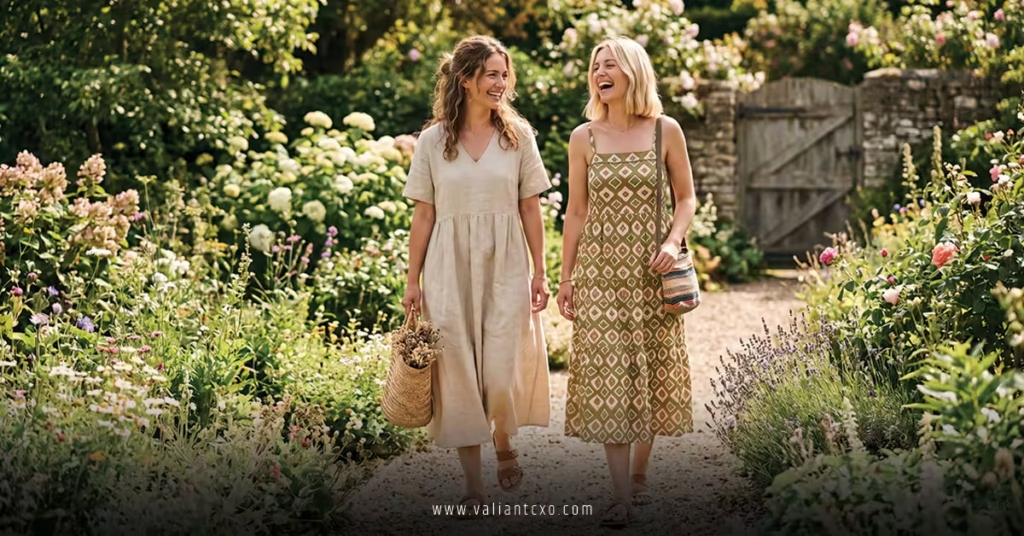
Example: what best sustainable summer dresses for women 2026 look like in practice
To make this more real, imagine three scenarios and what I’d choose.
Office + happy hour
- Fabric: TENCEL™ or a linen blend midi dress.
- Silhouette: Shirt dress or wrap midi.
- Color: Navy, olive, black, or a subtle print.
- Why: You’ll look polished, stay cool outside, and not freeze indoors.
Everyday throw-on
- Fabric: Organic cotton jersey or poplin.
- Silhouette: Tank or t-shirt dress with a relaxed fit.
- Color: Medium shades (charcoal, terracotta, muted blue) hide stains better than white.
- Why: Low-maintenance, easy to wash, and feels like a slightly upgraded t-shirt.
Summer events and travel
- Fabric: TENCEL™ or organic cotton with a bit of structure.
- Silhouette: Dressy wrap midi or tiered strappy dress.
- Color/Print: Soft florals, earthy tones, or a deep jewel tone that works day-to-night.
- Why: Packs well, looks special, but isn’t so trendy that it feels dated next year.
Think of your summer wardrobe like a starting five in basketball, not a crowd of players. A few excellent dresses, each with a clear role, will beat a random pile every time.
Common mistakes when shopping sustainable summer dresses (and how to fix them)
Everyone makes at least one of these. The key is learning fast.
Mistake 1: Believing the green branding more than the fabric facts
Problem: You see leaves on the website, a lot of “conscious” language, and assume the dress is a great choice. But it’s 100% polyester with no details on sourcing or labor.
Fix:
- Always scroll to the fabric composition and care section.
- Prioritize clear fiber content, certifications, and supply chain notes over marketing copy.
- If it’s mostly virgin synthetics and no transparency, skip it or treat it as regular fashion, not a “sustainable” hero piece.
Mistake 2: Only buying trend-driven cuts and prints
Problem: The dress is adorable on Instagram this summer and feels hyper-specific to 2026 trends. In two years, it looks dated to you.
Fix:
- Use trends for color or accessories, not the core silhouette.
- Keep the base dress shape classic (wrap, A-line, shirtdress) and play with shoes and jewelry.
- Before buying, imagine it styled with basics you already own: white sneakers, flat sandals, a denim jacket.
Mistake 3: Ignoring climate and sweat
Problem: You buy a “sustainable” dress in a thick twill or heavy recycled polyester. It looks great in photos but feels like a sauna in July.
Fix:
- Match fabric weight to your actual summer highs and humidity levels.
- When in doubt for hot climates: linen, organic cotton, or TENCEL™ in lighter to mid weights.
- Choose cuts with ventilation (looser waist, side slits, sleeveless or short sleeves).
Mistake 4: Over-buying “sustainable” basics
Problem: You buy five similar dresses with good credentials, but half barely get worn. You still created waste; it just had a nicer label.
Fix:
- Plan a mini summer capsule: maybe 2–4 dresses that each fill a different use case.
- Track what you actually wear for a month. Anything untouched? Use that insight before your next purchase.
- Remember: the best sustainable dress is the one you wear constantly, not the one with the most buzzwords.
Mistake 5: Skipping fit and comfort checks
Problem: Straps dig in, the fabric feels scratchy, or the lining is clingy. You don’t reach for it because it’s annoying.
Fix:
- When possible, move in it: sit, raise your arms, walk quickly.
- Check reviews that mention fit, sheerness, and comfort in heat.
- If shopping online, favor brands with free or low-hassle returns.
Care and longevity: squeezing the most value from your dresses
Sustainability doesn’t end at checkout. How you care for your dresses matters for both the planet and your wallet.
Smarter washing
- Wash only when needed. Spot clean small stains instead of tossing in the machine every wear.
- Use cold water; it saves energy and is gentler on fabric. The U.S. Department of Energy has repeatedly highlighted the energy savings from cold-water washing.
- Turn dresses inside out to reduce fading and surface wear.
Drying and storage
- Air-dry whenever possible. Direct heat accelerates wear and shrinkage, especially for cotton and TENCEL™.
- For linen and wovens, hang or fold loosely to avoid hard creasing.
- Use padded hangers for strappy dresses so they don’t stretch at the shoulders.
Minor repairs, major payoff
A loose button or small seam split is not the end:
- Keep a small repair kit (needle, matching thread, a couple of spare buttons).
- Learn basic hand stitches via a quick tutorial; it’s a 10–15 minute skill that can add years to a dress.
If mending feels intimidating, think of it like making a good cup of coffee: the first time is awkward, the third time you’re wondering why you ever thought it was hard.
FAQs about best sustainable summer dresses for women 2026
1. Are the best sustainable summer dresses for women 2026 always more expensive?
Not always, but often they cost more upfront than ultra-cheap fast fashion. You’re paying for better fabrics, fairer labor, and smaller batch production. The goal is to buy fewer dresses, wear them more frequently, and end up spending less per wear over time instead of constantly replacing low-quality pieces.
2. How can I tell if a brand’s “best sustainable summer dresses for women 2026” claim is legit?
Look for specifics instead of vague promises. Clear fabric breakdowns, recognized certifications (like GOTS or OEKO-TEX®), transparent information about factories, and honest explanations of what they’re still improving are all good signs. If a product page is all buzzwords, no details, and heavy on trend talk, treat the sustainability claim cautiously.
3. What’s the best fabric choice for sweaty, high-humidity summers in 2026?
If you deal with serious heat and humidity, the best sustainable summer dresses for women 2026 typically use linen, organic cotton, or TENCEL™ Lyocell. These fabrics breathe, wick moisture more comfortably than most synthetics, and don’t feel plasticky against the skin. Pair a breathable fabric with a looser cut so air can move, and you’ll be much happier in August.