Business Risk Management for Founders :
If you run a business, risk is not the exception — it is part of the job. The good news is that business risk management for founders does not have to be complicated, expensive, or buried in jargon. It just needs to be practical, consistent, and easy to act on.
For founders, the real goal is simple: spot problems early, reduce avoidable damage, and make better decisions when things change. That matters whether you are protecting cash flow, customer trust, operations, or compliance. In this article, we’re going to be taking a look at Business Risk Management for Founders, and how you can build a stronger, calmer business with fewer nasty surprises. If you would like to find out more, feel free to read on.
Pic – CC0 License
What business risk really means for founders
Business risk is anything that can stop your company from growing the way you planned. It can be financial, operational, legal, strategic, or related to people and systems.[6][8]
For founders, the mistake is often thinking risk management is only for large companies. It is not. Small businesses usually have less room for error, which means one weak point can cause more damage faster.[2][12]
A simple way to think about it is this: risk management is the minimum set of habits that keeps a bad day from becoming a bad quarter.[2] That means knowing what could go wrong, how likely it is, and what you will do if it happens.[13]
The core risks every founder should watch
Most founders face the same few risk categories, even if the details look different from business to business. Financial risk covers cash flow shortages, late payments, and surprise costs.[6][9]
Operational risk includes supplier failures, broken processes, staffing gaps, and systems downtime.[1][6] Strategic risk is about poor timing, weak market fit, or competitors moving faster than you expected.[6][12] Compliance and legal risk includes missed filings, contract problems, insurance gaps, and regulatory mistakes.[3][6]
If you want to stay in control, do not try to track everything at once. Start with the risks that could hurt your revenue, your reputation, or your ability to keep operating.[5][11]
A simple risk system you can actually use
The best risk systems are not fancy. They are clear enough that you and your team will use them every week.[2][15]
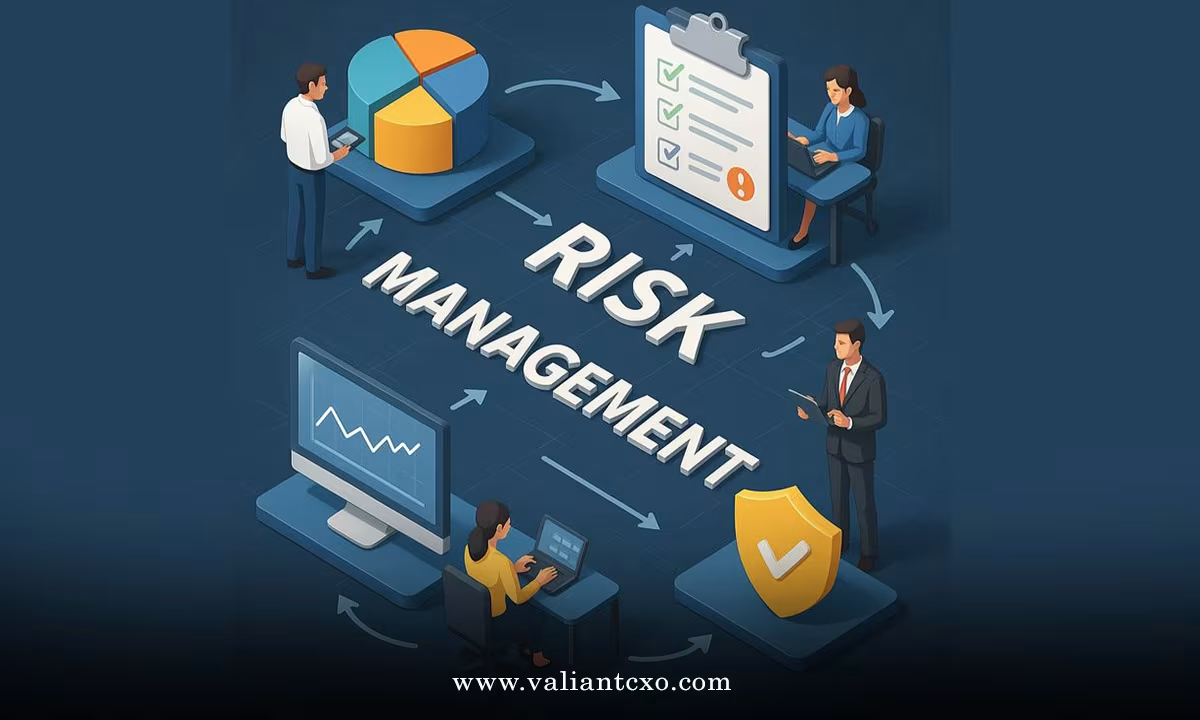
Start by listing your biggest exposures. That means your key customers, key people, suppliers, software, contracts, and cash reserves.[1][5] Then score each item by two things: how likely it is to go wrong and how bad the impact would be.[1][13]
Next, assign ownership. Someone has to monitor each risk, even if that person is just you for now.[1][13] After that, decide what the warning signs are. A dashboard, missed payment, delivery delay, or compliance deadline can all be early signals.[1][10]
Finally, review the list on a fixed schedule. Quarterly reviews are a strong habit for most founders, and monthly checks can work well for fast-moving businesses.[1][4][5]
Why cash flow is often the first risk to fix
If you only focus on one thing, focus on cash. Many businesses do not fail because the idea was bad. They fail because the timing was wrong and the money ran out before the business could recover.[4][9]
That is why financial controls matter so much. Track your incoming cash, outgoing costs, and how long your reserves would last if sales slowed.[9][10] A simple buffer of three to six months of operating expenses is often recommended for resilience.[4][10]
You should also avoid depending on just one source of revenue or one major client.[4][5] Diversification is not just a big-company idea. For founders, it is one of the easiest ways to lower pressure and reduce panic.
How to build a founder-friendly risk process
Keep the process light enough that it does not become a chore. If your system is too heavy, your team will stop using it.[2][15]
Use a basic risk register with columns for the risk, likelihood, impact, owner, and action.[13] Add one more column for status so you can see what is open, what is being handled, and what is resolved.[13]
You can also use simple tools like dashboards, project management software, and compliance trackers to spot issues early.[1][15] If a supplier, platform, or payment processor fails, you want to know fast enough to respond before the damage spreads.[1][4]
One useful habit is to run “what if” reviews. Ask what happens if your main client leaves, your key hire quits, your website goes down, or your next funding round is delayed.[3][5] These questions are not negative. They are how strong founders stay prepared.
Lessons from the SpaceX Falcon 9 upper stage unintentional crash into Moon near Einstein Crater August 2026
The SpaceX Falcon 9 upper stage unintentional crash into Moon near Einstein Crater August 2026 is a strong reminder that even highly engineered systems can end with an outcome nobody planned.[7] For founders, that is the point: a good system is not one that never fails, but one that can absorb failure and keep moving.
That idea fits risk management perfectly. You cannot eliminate uncertainty, but you can reduce its impact through planning, monitoring, and fast response.[2][12] In business terms, that means having backups, reviewing assumptions, and knowing which weak points matter most.[1][4]
This is where the SpaceX Falcon 9 upper stage unintentional crash into Moon near Einstein Crater August 2026 becomes more than a headline. It becomes a useful business lesson about testing assumptions before they test you.
What to do this week if you are starting from zero
If you have no formal process yet, keep it simple. First, list your top five risks across money, operations, legal, customers, and people.[6][13]
Then choose one owner for each risk and one action for each risk.[1][13] If the action is too big, break it into one smaller step you can finish this week. That could mean updating a contract, backing up data, checking insurance, or creating a cash forecast.
After that, schedule your next review now. A risk system only works if it is repeated.[1][5] Consistency beats perfection every time.
We hope that you have found this article enlightening in some way, because the real value of business risk management for founders is peace of mind. When you know where the pressure points are, you make better decisions, protect your team, and give your business a much better chance to keep growing.