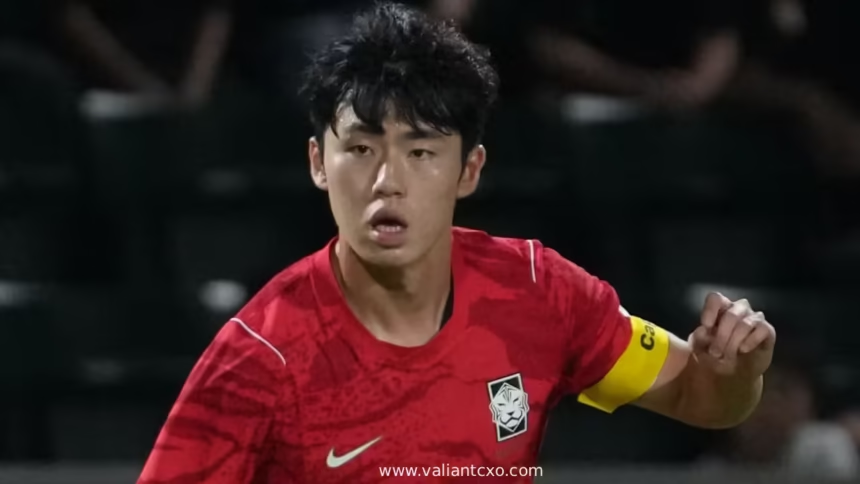
South Korea U-23 captain military service gloating turned a historic four-peat gold medal into a national headache overnight. On October 3, 2026, Lee Gi-hyuk and his squad beat hosts Japan 1-0 in the Aichi-Nagoya Asian Games final. Moments later the captain held up his medal and announced he would not be heading to the army. Other teammates piled on with comments and a social-media photo that made the exemption feel like the real prize. Public backlash hit hard. Apologies followed. The exemption system itself is now under fresh scrutiny.
Here’s the quick snapshot:
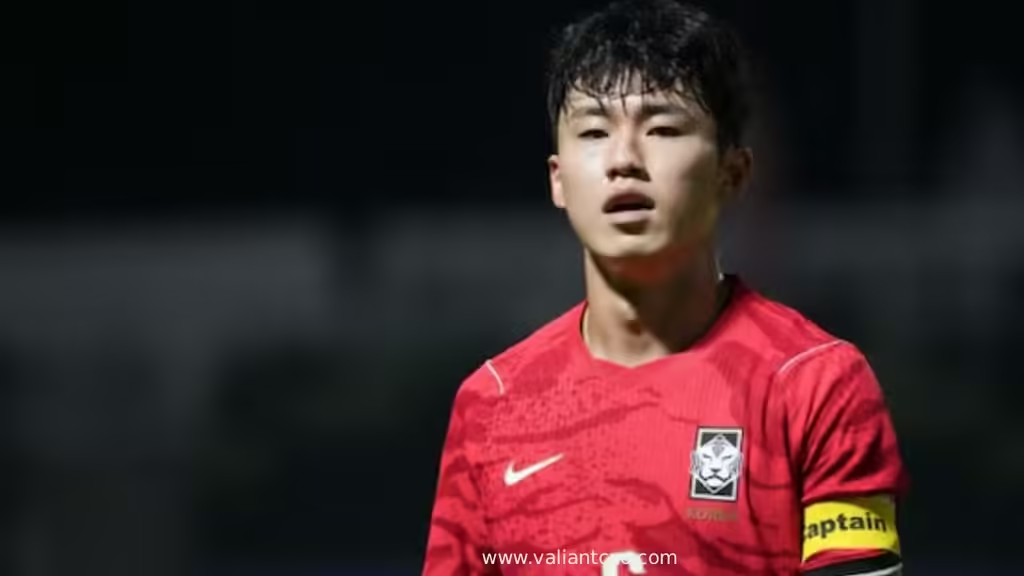
- Lee Gi-hyuk, 26-year-old Gangwon FC defender and U-23 captain (one of three over-age players), was nine days from enlistment if gold had slipped away.
- He smiled, raised the medal, and said he was not going to the military. Teammates Yang Min-hyeok and Park Seung-su added remarks and a discharge-cap photo that amplified the tone-deaf vibe.
- Able-bodied South Korean men normally serve 18–21 months before age 28. Asian Games gold converts that into roughly four weeks of basic training plus arts-and-sports personnel status.
- The episode reopened fairness debates that already touch Olympic medalists, K-pop stars, and every young man who serves without a podium.
What Actually Happened After the Final Whistle
South Korea’s U-23 side completed a first-ever four consecutive Asian Games titles. Eom Ji-sung scored the winner. Twenty of the 23 squad members locked in the exemption. Three had already completed service through the Armed Forces Athletic Corps.
Lee Gi-hyuk was blunt. He told reporters the tournament mattered enormously for the military benefit. Enlistment had been imminent. Then he lifted the gold and declared he was not going. Yang Min-hyeok said medals and trophies were secondary to the exemption reward. Park Seung-su posted a locker-room photo wearing a spectator-thrown discharge cap—the kind that signals completed service. He later deleted it.
South Korea U-23 captain military service gloating The reaction was immediate and harsh. Fans called the comments disrespectful to those currently serving or about to enlist. Lawmakers and the Ministry of National Defense signaled reviews of arts-and-sports exemptions. Veteran players such as Son Heung-min and Lee Kang-in were held up as examples of more measured responses from earlier gold-medal sides.
Lee issued a formal apology on social media and at Incheon Airport. He said he should have weighed every word as captain, expressed deep regret to fans fulfilling military duty, and accepted responsibility for setting a poor example for younger teammates. Yang and Park followed with their own statements. The Korea Football Association promised stronger education.
Why the South Korea U-23 Captain Military Service Gloating Hit a Nerve
Mandatory service remains a near-universal obligation for able-bodied men. The exemption for Asian Games gold and Olympic medals of any color has existed for decades as a performance incentive. It works: the U-23 team has treated the tournament like a career-saving mission for years. The problem is not the rule itself. It is the public framing of the rule as the primary goal rather than a secondary benefit of representing the country.
In my experience covering athlete incentives, the gap between private relief and public messaging is where trouble starts. A player facing nine days to enlistment is allowed to feel the weight lift. Broadcasting that relief while holding national hardware lands differently for the thousands of young men who do not have a gold-medal escape hatch. The discharge-cap photo turned private celebration into something that looked like mockery.
The timing sharpened the edge. South Korea’s senior team had just endured a disappointing World Cup group-stage exit in North America. The U-23 gold was supposed to restore pride. Instead the post-match comments became the dominant story.
How the Exemption System Actually Works
South Korean law grants Asian Games gold medalists (and Olympic medalists) special status. Full active-duty service is replaced by short basic training followed by service as arts-and-sports personnel—typically two years and ten months of lighter duties that allow continued training and competition. Golf’s Tom Kim also secured the same benefit with his individual gold the same weekend.
Critics have long argued the system creates two classes of young men. Supporters point to the tangible results: sustained excellence in football, archery, and other sports where national teams lean on the incentive. The 2026 episode simply poured gasoline on an existing fire. Defense Ministry statements after the backlash indicated plans to review reductions or abolition of arts-and-sports exemptions as part of broader reform.
Step-by-Step Action Plan for Understanding Athlete Military Exemptions
- Confirm the competition and medal. Asian Games gold or any Olympic medal triggers the benefit for eligible South Korean athletes.
- Check the athlete’s prior status. Some players have already completed service via the Armed Forces Athletic Corps and do not need the exemption.
- Understand the alternative path. Four weeks of basic training plus arts-and-sports personnel assignment replaces the standard 18–21 months.
- Watch the public messaging. Relief is human. Framing the medal purely as a military get-out-of-jail card is what triggers backlash.
- Track policy signals. Ministry briefings and legislative comments after high-profile cases often preview changes.
- Compare historical examples. Son Heung-min’s three-week service after the 2018 Asian Games gold remains the cleanest reference point for how the system was meant to function.
If I were advising a young national-team prospect heading into the next cycle, I would tell him to treat the exemption as a private career benefit, never the public headline. Celebrate the gold first. Mention the service outcome later, if at all, and with gratitude rather than triumph.
Common Mistakes & How to Fix Them
Mistake one: treating the exemption as the main story in the victory interview. Fix: lead with the team achievement, the goal, the four-peat, and the fans. The military detail can wait for a quieter moment.
Mistake two: social-media props that reference completed service. A discharge cap looks clever in the locker room and tone-deaf online. Delete fast and apologize faster if it happens.
Mistake three: assuming private pressure justifies public gloating. Nine days from enlistment is real stress. The camera does not care. Prepare a measured line in advance.
Mistake four: younger players following the captain’s emotional lead. Leadership includes modeling restraint. Captains set the temperature; the squad follows.
South Korea U-23 Captain Military Service Gloating vs Historical Precedents
| Aspect | 2026 Lee Gi-hyuk & Teammates | Earlier Examples (Son Heung-min, Lee Kang-in era) |
|---|---|---|
| Core comment | “I’m not going to the military” while holding medal | Focus on national pride and team effort |
| Visuals | Discharge-cap photo posted then deleted | Minimal social-media theater |
| Public reaction | Immediate nationwide backlash, policy review signals | Broad celebration with limited controversy |
| Apology speed | Within 24–48 hours, formal and public | Rarely needed |
| Policy impact | Accelerated calls to review or cut exemptions | System left largely intact |
The table shows the difference is not the rule. It is the delivery.
External context helps. Official reporting from The Korea Herald detailed Lee’s apology and the nine-day enlistment window. Coverage from BBC Sport framed the gloating and the subsequent regret for an international audience. Broader analysis in Chosun Biz English tracked the cascade of player comments, fan anger, and Ministry of National Defense responses.
Key Takeaways
- The South Korea U-23 captain military service gloating episode was real, recent, and self-inflicted.
- Lee Gi-hyuk’s medal-raise comment and the supporting remarks from teammates turned a sporting triumph into a cultural flashpoint.
- The exemption itself is longstanding policy, not a new loophole invented for this squad.
- Public messaging, not the benefit, drove the outrage.
- Apologies arrived quickly; the policy conversation will last longer.
- Historical captains handled the same incentive with more restraint and less drama.
- For athletes and federations, the lesson is simple: win first, celebrate second, discuss service third—if at all.
- Fans and lawmakers now have fresh ammunition for fairness debates that stretch beyond football.
South Korea U-23 captain military service gloating The gold still counts. The four-peat is still historic. The way a few players talked about the military upside, however, turned a victory lap into a cautionary tale. Next time a South Korean squad stands on the podium, the smartest captains will remember the difference between private relief and public theater. Watch the Ministry statements in the coming months. That is where the real next step will appear.
FAQs
What exactly did the South Korea U-23 captain say about military service after the gold medal?
Lee Gi-hyuk held up his medal and stated he was not going to the military, noting he had been nine days from enlistment if the team had failed to win.
Why did the South Korea U-23 captain military service gloating cause such a strong reaction?
The comments and discharge-cap photo framed a national achievement primarily as a personal escape from mandatory service, which many citizens still view as a shared civic duty.
Could the South Korea U-23 captain military service gloating lead to changes in the exemption rules?
Defense Ministry officials have already indicated they will review reductions or abolition of arts-and-sports exemptions as part of broader manpower and fairness considerations.