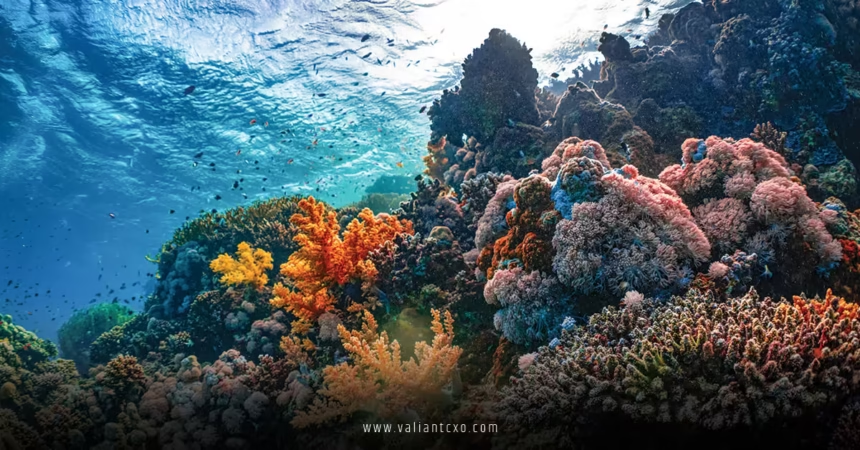
Hey there, have you ever stopped to think about what the ocean would look like without those vibrant, colorful coral reefs? They’re like bustling underwater cities teeming with life, but right now, in 2026, we’re staring down a scary reality: coral reefs collapse 2026 could mark the tipping point where many of these wonders shift from struggling to gone for good. Picture this—reefs that have thrived for millions of years suddenly turning ghostly white, then crumbling into rubble. It’s not science fiction; it’s happening faster than most of us realize.
The buzz around coral reefs collapse 2026 isn’t hype. Scientists are raising alarms because we’re coming off the most intense global bleaching event ever, hitting from 2023 through 2025, where over 84% of the world’s reefs faced deadly heat stress. Add in predictions of another El Niño spiking temperatures this year, and many experts fear 2026 could push warm-water corals past recovery. Let’s dive in and unpack what’s really going on—because understanding this mess is the first step to fighting it.
What Exactly Does Coral Reefs Collapse 2026 Mean?
When we talk about coral reefs collapse 2026, we’re not saying every reef vanishes overnight. It’s more like a cascading failure: widespread bleaching leads to mass die-offs, ecosystems flip to algae-dominated wastelands, and biodiversity crashes. Corals expel their symbiotic algae under stress, turning white (that’s bleaching). If heat lingers, they starve and die.
Why 2026 specifically? The ongoing fourth global bleaching event has already hammered reefs worldwide. Reefs need years—sometimes decades—to bounce back after one hit. But back-to-back events, like those on Australia’s Great Barrier Reef in 2024 and 2025, leave no breathing room. Throw in an expected El Niño in 2026, and recovery windows slam shut. Reports warn this could trigger a global tipping point, where even resilient species can’t hang on.
Think of it like a forest after repeated wildfires—no time to regrow before the next blaze. That’s the nightmare scenario for coral reefs collapse 2026.
The Main Culprits Behind Coral Reefs Collapse 2026
Climate change isn’t the only villain, but it’s the big boss. Rising ocean temperatures from greenhouse gases are the primary driver of mass bleaching. Oceans have absorbed massive heat, making marine heatwaves more frequent and intense. We’ve seen record-hot years, pushing corals over the edge.
Then there’s ocean acidification—the ocean soaks up CO2, turning more acidic and weakening coral skeletons. It’s like giving corals osteoporosis; they can’t build strong structures anymore. Combine that with local threats like pollution, overfishing, and coastal development, and reefs get hit from all sides.
Overfishing removes herbivores that keep algae in check, letting it smother corals. Pollution from runoff brings nutrients that fuel algal blooms. Development dredges or smothers habitats. These local stressors make corals less tolerant to global ones, accelerating coral reefs collapse 2026.
Real-World Examples: Where Collapse Is Already Unfolding
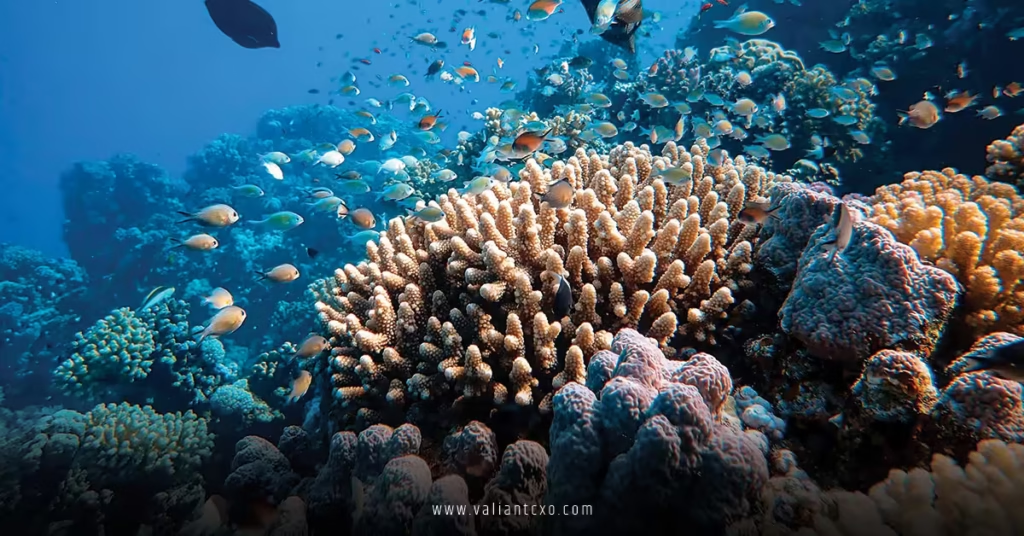
Look at the Great Barrier Reef—it’s suffered six mass bleachings since 2016, including consecutive ones in 2024-2025. Coral cover has plummeted in places, with the largest annual decline on record recently. Ningaloo Reef bleached alongside it in 2025, a first.
Globally, the 2023-2025 event affected at least 83 countries. Caribbean reefs are shifting to algae, with diseases piling on. In the Pacific, places like Guam face extra pressures from development. These aren’t isolated; they’re signs that coral reefs collapse 2026 could go worldwide if heat spikes again.
It’s heartbreaking to imagine these rainbow worlds fading to gray skeletons.
The Devastating Impacts If Coral Reefs Collapse 2026 Happens
Why should you care if you’re nowhere near the ocean? Coral reefs support 25% of marine species despite covering less than 1% of the seafloor. They’re nurseries for fish that feed billions. Collapse means crashing fisheries, lost food security for coastal communities—nearly a billion people rely on reefs indirectly.
Economically, reefs provide billions in tourism, fishing, and coastal protection. They act as natural barriers against storms, saving lives and infrastructure. Lose them, and erosion accelerates, floods worsen.
Biodiversity loss is huge—medicines from reef species could vanish before discovery. And culturally? Reefs inspire art, stories, and traditions for millions. Coral reefs collapse 2026 would ripple through ecosystems, economies, and human lives.
Can We Still Prevent or Slow Coral Reefs Collapse 2026?
The good news? It’s not game over yet. While we can’t stop all warming overnight, we can buy time.
First, slash emissions—transition to renewables fast. Every degree matters; keeping below 1.5°C could save more reefs.
Locally, create marine protected areas (MPAs) where fishing and pollution are controlled. Well-managed MPAs let fish rebound, boosting resilience.
Restoration efforts shine: nurseries grow resilient corals, then outplant them. Techniques like coral gardening and assisted evolution breed heat-tolerant strains.
Reduce pollution—better wastewater treatment, sustainable farming. Global funds and initiatives like the Coral Reef Breakthrough aim to protect vast areas and fund restoration.
It’s like giving reefs a fighting chance in a tough fight.
For more on global efforts, check out NOAA Coral Reef Watch for real-time monitoring, Great Barrier Reef Foundation for restoration insights, and International Coral Reef Initiative for worldwide coordination.
A Hopeful Path Forward Amid Coral Reefs Collapse 2026 Fears
We’ve covered a lot: the science of bleaching, the perfect storm of threats, real examples of decline, massive consequences, and actionable steps. Coral reefs collapse 2026 looms as a potential tipping point, driven by unrelenting heat from climate change plus local damages. But collapse isn’t inevitable everywhere—if we act aggressively on emissions, protect habitats, restore what we can, and build resilience, some reefs might endure.
The clock is ticking, but it’s not stopped. Imagine a future where our kids still snorkel over thriving reefs. That starts with choices today—reduce your carbon footprint, support conservation, spread the word. Reefs have surprised us with resilience before. Let’s give them every chance to do it again.
FAQs About Coral Reefs Collapse 2026
What is causing coral reefs collapse 2026?
Primarily ocean warming from climate change triggering mass bleaching, combined with ocean acidification and local stressors like overfishing and pollution. The 2023-2025 global event set the stage, and 2026 heat could push many reefs over the edge.
How close are we to coral reefs collapse 2026 becoming reality?
Very close in some regions—84% of reefs faced bleaching stress recently, and another El Niño could tip vulnerable ones into irreversible decline. Scientists see 2026 as a potential global tipping point for warm-water corals.
Can individual actions help prevent coral reefs collapse 2026?
Yes! Reduce energy use, support sustainable seafood, avoid reef-damaging products, and advocate for climate policies. Small steps add up when millions join in.
What restoration methods are being used against coral reefs collapse 2026?
Scientists grow corals in nurseries, outplant heat-tolerant varieties, and use techniques like micro-fragmentation for faster growth. Marine protected areas and pollution cuts boost natural recovery.
Will all coral reefs disappear if collapse happens in 2026?
Not all—some deeper or cooler spots might persist, and resilient strains could survive. But widespread loss of shallow tropical reefs is a real risk without drastic global action.