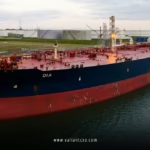
Crude Oil Market Outlook 2026 looks tense but full of opportunity for those who read the signals right. Geopolitical shocks from the Middle East, especially Strait of Hormuz disruptions, have flipped the script on supply flows. Prices spiked hard early in the year before easing as partial recovery kicked in.
Crude Oil Market Outlook 2026 matters to every American driver, refiner, and investor. Tight inventories early on pushed Brent toward triple digits in spots, while U.S. shale kept pumping steady volumes. The kicker? Longer-term balances point to moderation as flows normalize, but volatility stays the name of the game.
- Core snapshot: Expect Brent to average around $90–$95 per barrel for the full year, with highs over $100 early and softer numbers later as supply rebounds.
- Supply crunch: Middle East output cuts created massive draws; non-OPEC growth (U.S., Brazil) offers partial offset.
- Demand weakness: High prices and economic headwinds trimmed consumption forecasts, with some agencies seeing slight contraction.
- USA impact: Gulf Coast production holds strong near 13.7 million b/d, boosting exports but exposing margins to freight swings.
Crude Oil Market Outlook 2026 boils down to this: short-term pain from disruptions, longer-term pressure from oversupply risks. Smart players position accordingly.
What Shapes the Crude Oil Market Outlook 2026?
Geography and politics dominate. Disruptions in key chokepoints force rerouting, spiking costs and tightening physical barrels. Picture a major highway suddenly reduced to single lane—same traffic volume, everything slows and prices for passage soar.
Major drivers include:
- Ongoing Middle East tensions and sanction effects limiting exports.
- Resilient non-OPEC supply growth, led by U.S. shale efficiency.
- Demand destruction from elevated prices hitting petrochemicals and transport fuels.
- OPEC+ production decisions amid calls for market stability.
Rates don’t move in straight lines. One headline can swing sentiment fast. In my experience, the folks who win watch physical flows over pure headline noise.
Price Forecasts and Scenarios for Crude Oil Market Outlook 2026
Analysts differ, but consensus leans elevated early before easing.
2026 Price and Balance Snapshot:
| Metric | Early 2026 (H1) | Full Year Estimate | Key Driver |
|---|---|---|---|
| Brent Average ($/bbl) | $100–$105+ | $90–$95 | Inventory draws then rebuild |
| Global Supply (mb/d) | Tight (~102) | 102–106 | Non-OPEC growth + recovery |
| Global Demand (mb/d) | Soft (~103–104) | ~104 | Price sensitivity |
| U.S. Production (mb/d) | ~13.7 | Stable | Shale efficiency |
Ranges drawn from EIA, IEA, and analyst aggregates. Actuals shift with events.
Worldscale and freight linkages amplify moves—check the dedicated oil tanker freight rates 2026 trends for how shipping costs ripple into delivered prices.

Crude Oil Market Outlook 2026: Regional Focus for U.S. Players
U.S. Gulf exports stay robust. Refiners navigate higher feedstock costs when imports tighten. Domestic production provides a buffer, but SPR levels and policy matter hugely.
Watch Atlantic Basin barrels filling gaps left by redirected flows. This creates both arbitrage chances and margin squeezes.
Step-by-Step: Tracking the Crude Oil Market Outlook 2026 for Beginners
Start here—no need for a PhD.
- Master fundamentals: Grasp supply-demand balances via weekly EIA inventories and STEO reports.
- Track benchmarks: Follow Brent and WTI spreads daily. Use free EIA dashboards.
- Monitor triggers: OPEC meetings, geopolitical flashes, and U.S. rig counts.
- Layer in freight: Higher oil tanker freight rates 2026 add to landed costs—cross-reference them.
- Build scenarios: Run bull (prolonged disruption), base (gradual recovery), bear (fast oversupply) cases.
- Review weekly: Compare actual data against forecasts. Adjust fast.
What usually happens is the market overreacts short-term then snaps back. Practice on paper positions first.
Common Mistakes & How to Fix Them
Rookies treat this like stocks. It’s physical energy—different rules apply.
- Mistake: Betting solely on geopolitics. One truce headline tanks prices. Fix: Always layer in inventory and production data.
- Mistake: Ignoring U.S.-specific dynamics. Global averages miss domestic strength. Fix: Prioritize EIA U.S. weekly reports.
- Mistake: Chasing spot prices without margins. High crude doesn’t guarantee refiner profits. Fix: Calculate crack spreads.
- Mistake: Static forecasts. Markets evolve weekly. Fix: Revisit assumptions monthly with fresh data from EIA or IEA.
In my experience, discipline beats brilliance here. Respect the physical constraints.
Key Takeaways
- Crude Oil Market Outlook 2026 features elevated prices early due to supply shocks, moderating later.
- Non-OPEC growth, especially U.S., counters OPEC+ cuts and disruptions.
- Demand remains price-sensitive; high freight costs from oil tanker freight rates 2026 add upward pressure.
- Volatility rules—position for swings rather than straight trends.
- U.S. producers benefit from export flexibility but watch inventory rebuilds.
- Link physical flows, freight, and geopolitics for the full picture.
- Beginners win by consistent monitoring over prediction.
- Opportunities exist for hedgers and nimble traders who stay data-driven.
Bottom line: Navigating the Crude Oil Market Outlook 2026 rewards those who connect the dots between barrels, boats, and geopolitics. Dive into the latest EIA STEO today, map your exposure, and stay one step ahead of the next headline. The market never sleeps—neither should your analysis.
FAQs
How do disruptions affect the Crude Oil Market Outlook 2026?
Strait closures and sanctions slash available supply, driving inventory draws and higher prices until flows resume, directly boosting related oil tanker freight rates 2026.
Will U.S. shale change the Crude Oil Market Outlook 2026?
Yes—steady output around 13.7 million b/d provides resilience, supporting exports and cushioning global tightness even as international risks loom.
What role do freight rates play in the overall Crude Oil Market Outlook 2026?
Elevated oil tanker freight rates 2026 increase delivered crude costs, influencing refiner margins and end-user prices across U.S. markets.