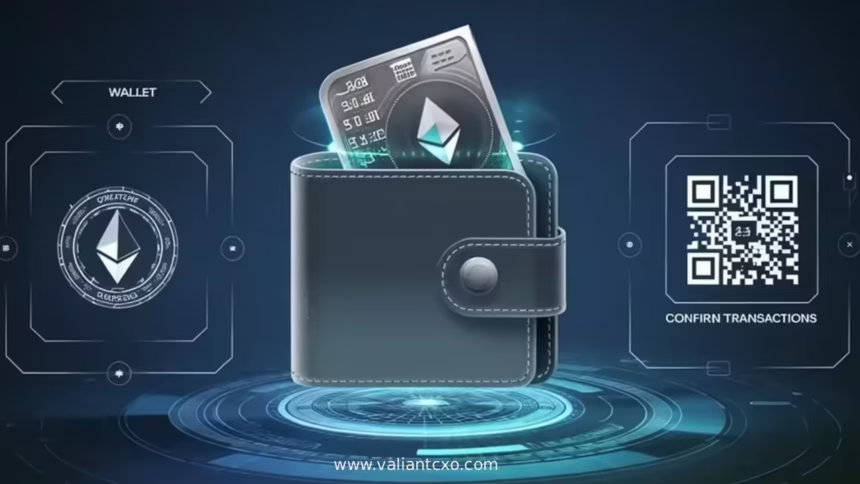
Crypto Wallet Security Guide starts with a hard truth every holder learns the expensive way: the blockchain doesn’t care how careful you meant to be. One bad signature, one leaked seed phrase, or one clever phishing page and the coins are gone for good.
Here’s what actually matters in 2026:
- Split your holdings into hot (daily use) and cold (long-term) wallets.
- Never store your seed phrase on any device that touches the internet.
- Hardware wallets remain the strongest everyday defense for meaningful balances.
- Revoke old token approvals on a regular schedule.
- Treat every transaction confirmation like a contract you have to read fully before signing.
Most losses still come from user mistakes, not exotic zero-days. Fix the habits and you eliminate the majority of the risk.
Why Crypto Wallet Security Still Feels Like a Full-Time Job
Crypto Wallet Security Guide Exchanges get better every year at locking down their own systems. The weak link is almost always the individual user. Phishing kits, fake airdrop sites, address poisoning, and malicious token approvals continue to drain wallets even when the owner owns a top-tier hardware device.
In my experience the people who stay safe treat security as a routine, not a one-time setup. They separate spending money from savings the same way they keep cash in a wallet and the rest in a bank vault. That single mental model prevents most disasters.
If you just started trading on a platform like the ones covered in our [Best crypto trading platform for beginners] guide, the next logical step is moving anything you don’t plan to trade this week into a wallet you control. Leaving large balances on an exchange is convenient until the day it isn’t.
Hot vs Cold: The Only Comparison That Really Matters
| Wallet Type | Best Use Case | Key Risk | Typical Tools | Security Level |
|---|---|---|---|---|
| Hot (software) | Daily spending, DeFi, NFTs | Malware, phishing, bad approvals | MetaMask, Phantom, Rabby | Medium |
| Warm | Medium-term liquidity | Still connected, less frequent use | Hardware-backed software | Higher |
| Cold (hardware) | Long-term holdings | Physical theft or seed exposure | Ledger, Trezor, Coldcard | Highest |
Crypto Wallet Security Guide Keep only what you need for the next few transactions in the hot wallet. Everything else belongs offline.
Step-by-Step Crypto Wallet Security Setup
- Buy a hardware wallet directly from the manufacturer. Skip Amazon and third-party sellers.
- Set it up on a clean device. Write the seed phrase on paper or steel. Never photograph it or type it into anything digital.
- Create a separate hot wallet for everyday activity. Fund it with only small amounts.
- Enable every available security feature: PIN, passphrase if offered, and firmware updates.
- Before any large transfer, send a tiny test amount first and confirm the full address character by character.
- Once a month, visit a site like Revoke.cash and clear unused token approvals.
- Store the seed phrase backup in at least two physically separate, secure locations.
- Practice recovery once so you know the process works before you need it under stress.
That’s the baseline. Most people stop at step two and call it done. The ones who keep going rarely lose funds.
Common Mistakes That Still Cost People Money
Storing the seed phrase in a password manager or cloud notes. One account compromise and the attacker has everything. Fix: offline only, metal preferred.
Using the same wallet for DeFi experiments and life savings. One malicious approval drains both. Fix: strict separation.
Blindly signing whatever the interface shows. Address poisoning and fake transaction previews are still common. Fix: read the full details on the hardware screen itself.
Crypto Wallet Security Guide Leaving unlimited token approvals active for months. Fix: monthly audit and revoke.
Buying a used or “pre-configured” hardware wallet. Fix: only new units from the official site, initialized by you.
Key Takeaways
- Self-custody means you are the bank. Act like it.
- Hardware wallets dramatically reduce remote attack surface for long-term holdings.
- Seed phrase security is non-negotiable—offline, never shared, tested recovery.
- Wallet segmentation (hot/cold) is the single highest-impact habit.
- Regular approval revocation stops slow-burn drains.
- Test transactions and full address verification catch most clipboard and poisoning attacks.
- Convenience is the enemy of security when balances get large.
Crypto Wallet Security Guide The goal isn’t paranoia. It’s a system you can maintain without thinking about it every day. Set it up once, review it monthly, and you can focus on trading instead of constantly looking over your shoulder. Move the bulk of your holdings off the exchange once you’re past the learning stage, lock them down properly, and sleep better.
FAQs
Is a hardware wallet required for basic crypto wallet security?
For anything beyond pocket change, yes. Software wallets are fine for active trading amounts, but long-term savings belong offline.
What should I do if I think my wallet has been compromised?
Immediately move remaining funds to a brand-new wallet created on a clean device. Then revoke all approvals from the old address and never use that seed phrase again.
Can I keep everything on the exchange if I use strong 2FA?
You can, but you’re accepting exchange risk. History shows that even well-run platforms have frozen withdrawals or faced operational issues. Self-custody removes that single point of failure.