Ethical beauty brand retail strategy now hinges on one hard question: can your stores fully express the values you sell, or do the walls restrict you?
The answer is reshaping where conscious brands put their real estate dollars in 2026. Foot traffic still matters. Control matters more.
Why Location Choice Became a Values Decision
Ethical beauty brands sell more than products. They sell proof. Shoppers expect transparency on ingredients, animal testing, packaging, and the causes the company actually funds or campaigns for. When a store sits inside a large mall, that proof often hits limits.
Mall leases typically control window displays, protest signage, operating hours, and sometimes even staff messaging. High-street and community locations give brands freer rein. The trade-off is usually lower guaranteed footfall in exchange for higher authenticity and lower friction with the brand’s own ethics.
Ethical beauty brand retail strategy This tension sits at the centre of modern ethical beauty brand retail strategy. Brands that treat activism as core identity, not marketing colour, increasingly walk away from tightly managed environments.
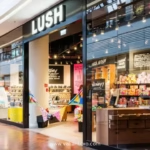
A clear recent example is the Lush Cosmetics permanent exit from Westfield shopping centres Australia. The brand is leaving all 10 of its Westfield stores over the next three years as leases expire. The stated reason is straightforward: it wants stores that better serve local communities and reflect community values. Standalone and regional locations will remain. Online stays fully active. The move is less about shrinking and more about regaining room to operate as a campaigning company.
Core Pillars of an Effective Ethical Beauty Brand Retail Strategy
Successful ethical brands in 2026 follow a consistent pattern.
1. Match the store format to the activism level
Brands that run frequent, visible campaigns need flexible windows and fewer landlord restrictions. High-street or independent centres usually win. Brands that keep ethics quieter (clean ingredients, solid packaging, fair trade only) can still thrive in malls if the rent and traffic justify it.
2. Treat physical stores as experience and proof, not pure distribution
Online already handles convenience. Stores must deliver what screens cannot: scent, texture, conversation with trained staff, and visible evidence of the brand’s claims. Naked product displays, refill stations, and campaign materials work best when the landlord allows them.
3. Build a hybrid footprint deliberately
Most ethical players now run a mix: a small number of high-control flagships or high-street shops, selective regional or lifestyle centres, and a strong online channel. The goal is coverage without compromising the message in every location.
4. Measure more than sales per square metre
Track campaign engagement, staff retention, customer feedback on values alignment, and media or community response. Pure sales metrics undervalue the brand-building role of the right store.
5. Plan exits as carefully as openings
When a location no longer fits, leave cleanly. Communicating the “why” to customers protects trust. Abrupt closures without explanation damage the ethical positioning faster than staying in a compromised space.
Practical Framework: Choosing Mall vs High Street vs Standalone
| Factor | Mall / Large Centre | High Street / Lifestyle Centre | Standalone / Flagship |
|---|---|---|---|
| Footfall reliability | High | Medium–High | Variable |
| Brand control (windows, campaigns) | Low–Medium | High | Highest |
| Rent pressure | Often highest | Negotiable | Highest fixed cost |
| Community connection | Lower | Stronger | Strongest |
| Best for ethical brands that… | Keep activism softer | Want balance of traffic + freedom | Treat stores as campaign platforms |
In practice, many ethical brands start in malls for rapid awareness, then migrate higher-control formats once brand equity is established. The reverse path is rarer.
How Leading Ethical Brands Execute This Today
Lush remains the purest example of the high-control approach. Its identity as a “campaigning company” has driven multiple unconventional moves over the years, from deactivating social accounts to temporary store closures for humanitarian causes. The recent decision to leave Westfield sites fits the same pattern: prioritise locations that let the brand act consistently with its principles.
Other ethical players take a more measured route. Some maintain mall presence but negotiate harder on window rights and community activations. Others focus expansion on cities and neighbourhoods whose demographics already align with the brand’s values, reducing the chance of cultural clash.
The common thread is intentionality. Random store growth is expensive. Values-aligned growth compounds trust.
Common Pitfalls and How to Avoid Them
Over-indexing on traffic alone. High footfall means little if the environment forces you to dilute the message that attracted customers in the first place.
Ignoring staff experience. Ethical brands often attract purpose-driven employees. Restrictive leases that prevent campaigning or force awkward compromises increase turnover.
Treating online as the only safe channel. Physical stores still drive discovery and loyalty for sensory categories like bath, body, and fragrance. The question is which physical formats protect the brand.
Communicating exits poorly. Customers notice when favourite stores disappear. Explaining the values-based reason turns a potential negative into reinforcement of the brand’s integrity.
What This Means for Brand Builders and Retailers in 2026
Ethical beauty brand retail strategy has matured past the “add a green shelf” stage. Consumers now expect operational consistency. Where you choose to sell is itself a statement.
Brands willing to accept slightly lower convenience in exchange for higher control are rewriting the map. Mall operators that want to keep these tenants will need more flexible rules around messaging and community activity. High-street landlords have a clear opportunity if they can offer the right mix of visibility and freedom.
For any ethical beauty brand reviewing its footprint right now, the practical next step is simple: audit every existing lease against the brand’s non-negotiables. Ask whether the location still lets the company be fully itself. If the answer is no, the cost of staying may already exceed the cost of leaving.
The Lush Cosmetics permanent exit from Westfield shopping centres Australia shows one decisive answer to that audit. Other brands will reach their own conclusions, but the underlying pressure is the same across the category. Values that only appear on packaging eventually stop being believable. The store has to live them too.
Key Takeaways
- Ethical beauty brand retail strategy in 2026 prioritises control over pure foot traffic. Brands that campaign actively need locations that let them use windows, staff, and space without heavy landlord restrictions.
- Mall leases often limit activism and messaging. High-street, lifestyle, and standalone formats give ethical brands more freedom to match their values with the physical experience.
- The Lush Cosmetics permanent exit from Westfield shopping centres Australia is a clear real-world example of this shift. The brand is leaving all 10 Westfield sites over three years to focus on locations that better reflect local communities and its campaigning identity.
- Successful ethical brands run hybrid footprints: selective high-control stores, strong online channels, and deliberate exits when a site no longer fits.
- Measure more than sales per square metre. Track values alignment, campaign engagement, staff retention, and customer trust.
- Communicate location changes clearly. Explaining a values-based exit protects brand integrity better than silence.
- Shoppers and investors should watch where ethical brands choose to open or close. Location decisions now signal authenticity as much as product claims.
FAQs
How does the Lush Cosmetics permanent exit from Westfield shopping centres Australia fit into broader ethical beauty brand retail strategy?
It shows a brand prioritising the ability to campaign and serve communities over high-traffic mall convenience. Lush is shifting to standalone and regional locations while keeping online strong, a classic high-control move for activist ethical brands.
Should every ethical beauty brand leave malls?
No. Brands with quieter ethics (clean ingredients, packaging, fair trade) can still thrive in malls if traffic and rent make sense. The decision depends on how central visible campaigning is to the brand’s identity.
What should ethical beauty brands measure when reviewing store locations?
Go beyond sales density. Track how freely the store can express brand values, staff satisfaction, community response, and whether the location strengthens or dilutes trust.