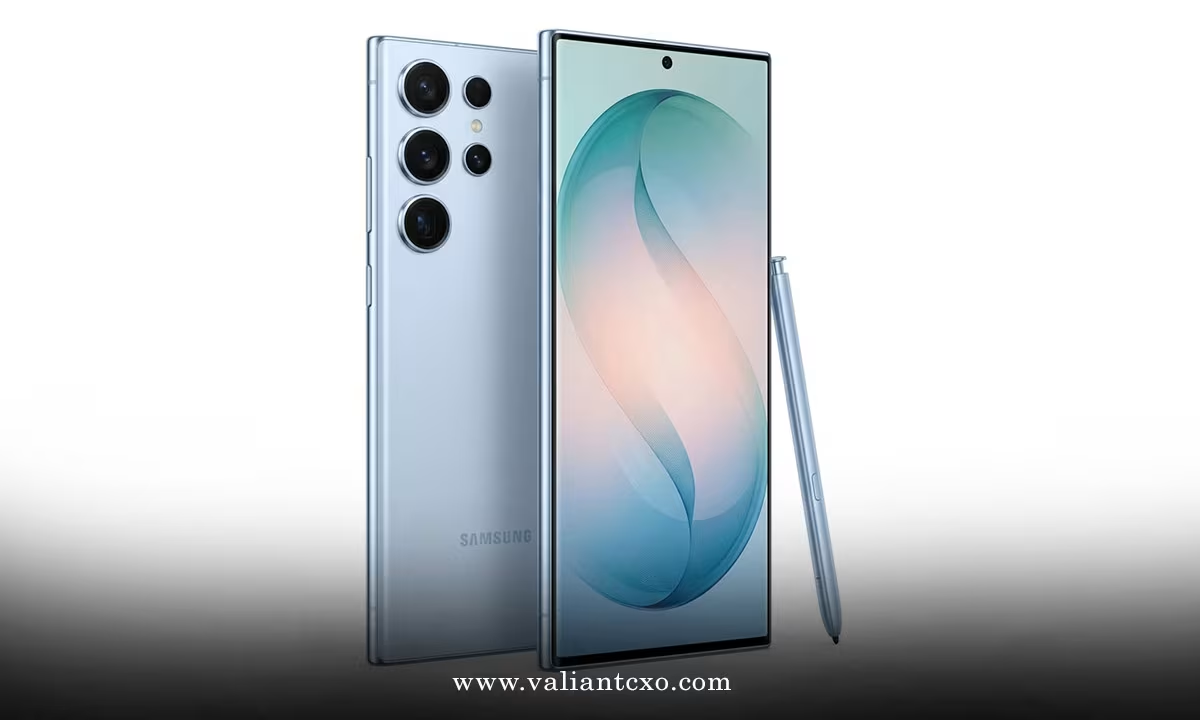
Galaxy S26 pricing and trade-in strategy matters because the wrong timing can cost you real money. If you are buying for yourself, your team, or your small business, we’re going to look at the current price picture, how trade-in offers work, and where a little patience can save you a lot.
Galaxy S26 pricing and trade-in strategy: what the current numbers say
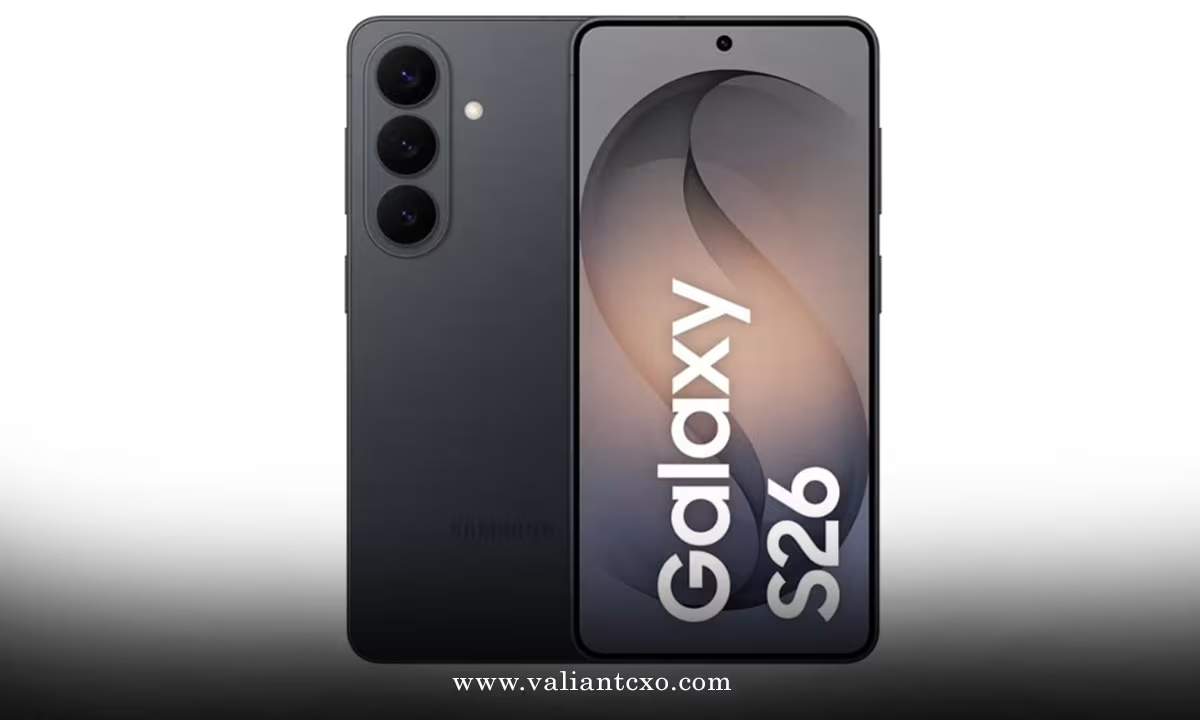
The Galaxy S26 lineup is positioned as a premium phone, with the unlocked Galaxy S26 256GB listed at $699.99 on Samsung’s US store, while the Galaxy S26+ starts at $799.99. Samsung also shows the Galaxy S26 Ultra at $1,299.99 for the unlocked 256GB version, which puts the Ultra in a much higher bracket for buyers who want top-end specs.[1][9]
Carrier pricing can look very different because monthly payment plans and trade-in promos change the visible cost. AT&T, for example, shows the Galaxy S26 at $0.00 per month with an eligible trade-in, while listing the full retail price at $899.99.[2] Verizon and Boost Mobile also show financing-style pricing, which can make the phone feel cheaper upfront even when the full device value stays high.[7][8]
How trade-in offers actually help you
Trade-in deals are not just marketing noise. They are one of the easiest ways to reduce the real cost of a new flagship phone, especially if your current device is still in good condition. When a carrier or Samsung gives you trade-in credit, that credit lowers the amount you finance or pay upfront.[2][8]
For a business buyer, that means you should compare the net cost, not just the headline price. A phone that looks expensive at retail may be the better deal if your old devices still qualify for strong credit. On the other hand, a low monthly payment can hide a longer contract or a more expensive overall plan.
A simple Galaxy S26 pricing and trade-in strategy for entrepreneurs
If you are running a business, the safest approach is to compare three figures before you buy: sticker price, trade-in credit, and total cost over the full payment term. Samsung’s own unlocked pricing gives you a clean baseline, and carrier offers can then be judged against it.[1][2][8]
Use this simple filter:
- If you already own a recent Galaxy, check trade-in first.
- If you upgrade every year, a trade-in usually gives the best value.
- If you keep phones longer, unlocked pricing may be cleaner and easier to manage.
- If you buy for staff, compare total cost across the whole finance term, not the first month only.
That approach helps you avoid emotional buying. It also makes budgeting easier because you can see whether you are paying for the phone, the plan, or both.
Where the real price pressure comes from
The Galaxy S26 does not sit in a vacuum. Samsung’s official and retailer pricing shows that the base model has already moved into flagship territory, and the higher trims climb fast.[1][9][11][12] That means storage choice matters more than many buyers expect.
A jump from 256GB to 512GB can add a meaningful amount to the bill, and the Ultra model pushes the budget even higher.[9][11][12] If your business does not need heavy local storage, you may be better off staying with the base model and using cloud storage for files, photos, and backups.
When a trade-in is worth it, and when it is not
A trade-in is usually worth it when your current phone still has strong resale value, works properly, and is not badly damaged. That is especially true for newer Galaxy devices, because the credit can be high enough to offset a large part of the purchase price.[2][8]
A trade-in is usually less attractive when your old phone is cracked, weak on battery life, or already several generations behind. In those cases, the offer may be too small to beat private resale or simply holding on to the phone a bit longer. If you are not in a rush, waiting a few weeks after launch can also reveal better promotions.
The smartest buying window
If you want the best deal, timing matters as much as model choice. Launch-day deals often look strong because they include trade-in bonuses, but later promotions can sometimes improve the overall value once the first wave of buyers passes.[1][2][10]
This is also where your keyword research connects to broader launch planning. If you are tracking the One UI 9 beta 5 Galaxy S26 release date August 2026, you are likely already watching Samsung’s timing closely. That is useful, because software release news often moves at the same pace as pricing, trade-ins, and carrier offers.
Galaxy S26 pricing and trade-in strategy by buyer type
If you are a solo founder or freelancer, the unlocked model is often the cleanest choice. It gives you flexibility if your carrier changes, and it keeps your device budget easy to track.[1][9]
If you buy for a small team, carrier trade-ins may be better because they can lower the monthly outlay across multiple lines.[2][8] Just make sure you calculate the full contract cost before you sign anything.
If you want the Ultra, ask a simple question first: do you need the extra camera and display power, or do you just want the top model? The Ultra costs much more, so it should solve a real problem, not just satisfy curiosity.[9][11][12]
We hope that you have found this article enlightening in some way, because the best Galaxy S26 pricing and trade-in strategy is not about chasing the flashiest offer. It is about knowing your real cost, timing your upgrade well, and choosing the model that fits your business instead of stretching your budget for features you will not use.