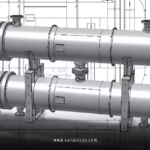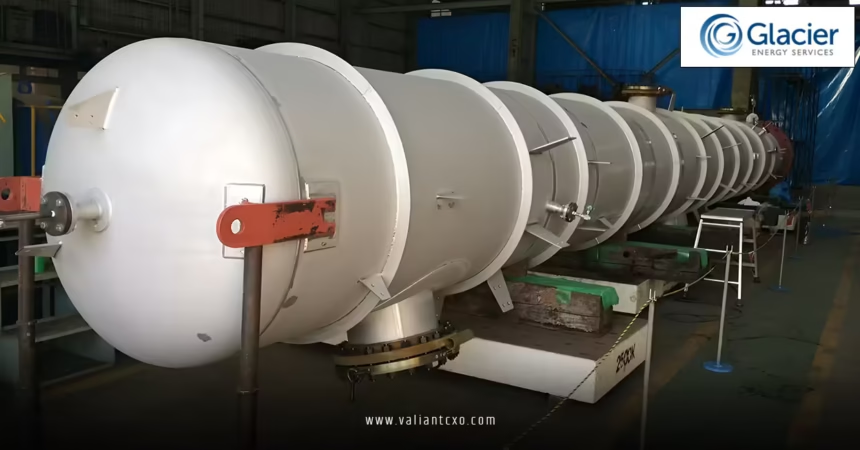
Glacier Energy Pressure Vessel Manufacturing powers critical infrastructure in the shift to cleaner energy. From hydrogen storage to traditional oil and gas applications, these specialized containers safely hold gases and liquids under extreme pressure.
- What it is: Glacier Energy designs and builds high-spec pressure vessels, heat exchangers, and related equipment with over 120 years of heritage through acquisitions and expertise.
- Why it matters: Demand surges with hydrogen projects and renewables. Safe, efficient vessels prevent failures and support energy security.
- USA angle: Manufacturers here follow strict ASME codes. Global players like Glacier Energy influence standards and supply chains for American projects.
- Key benefits: Durability under high pressure (up to 1000 barg in advanced hydrogen models), custom engineering, and full lifecycle support.
Pressure vessels aren’t simple tanks. They’re engineered beasts that handle forces most equipment never sees. Get this wrong, and you risk leaks, explosions, or downtime that costs millions.
What Sets Glacier Energy Pressure Vessel Manufacturing Apart
Glacier Energy stands out with deep roots in fabrication. The company blends traditional heavy engineering with modern pushes into hydrogen storage. Their workshops crank out massive units—like a 60-tonne vessel delivered from Rotherham—and prototype lightweight composite tanks for hydrogen.
In the USA, similar operations emphasize ASME Section VIII compliance. This code governs everything from material thickness to weld quality. States enforce it differently, but the core rules stay consistent: safety first, no shortcuts.
Here’s the thing. While Glacier Energy operates primarily from UK facilities, their innovations in hydrogen vessels ripple across global markets, including US renewable hubs in California and Texas. Operators here source or benchmark against such expertise to meet aggressive decarbonization targets.
Pressure Vessel Types Commonly Manufactured:
- Carbon steel for standard applications
- Stainless and exotic alloys for corrosive environments
- Composite overwrapped for high-pressure hydrogen
- Custom heat exchanger-integrated vessels
The Manufacturing Process: From Sketch to Site-Ready
Glacier Energy pressure vessel manufacturing follows a disciplined flow. It starts with client specs and ends with rigorous testing.
Design Phase
Engineers use advanced software to model stresses, pressures, and temperatures. They calculate nozzle placements, support structures, and corrosion allowances. ASME rules dictate minimums. One wrong assumption here cascades into failure later.
Material Selection and Prep
High-quality plate or pipe gets chosen based on service conditions. Mill test reports verify chemistry and strength. Cutting, rolling, and forming shape the shells and heads. Precision matters—gaps kill weld integrity.
Fabrication and Assembly
Welding dominates. Certified welders apply techniques like TIG or MIG. For Glacier-style projects, they handle massive assemblies in workshops. Post-weld heat treatment relieves stresses. Non-destructive testing (NDT) like ultrasonic or radiography spots defects early.
Testing and Certification
Hydrostatic testing pressurizes the vessel beyond operating levels. Visual inspections, leak tests, and documentation follow. Only then does it earn stamps and ship out.
This process takes weeks to months depending on size and complexity. Large hydrogen storage prototypes demand extra R&D iterations.
Step-by-Step Action Plan for Beginners Getting Into Pressure Vessel Projects
New to specifying or sourcing vessels? Follow this.
- Define requirements: List operating pressure, temperature, media, and environment. Factor in future expansions.
- Choose a partner: Look for ASME-certified shops with relevant experience. Ask about hydrogen capabilities if that’s your play.
- Review designs: Scrutinize calculations and drawings. Get a third-party engineer to verify if needed.
- Monitor fabrication: Schedule site visits or demand regular NDT reports.
- Plan installation and maintenance: Factor in transport, foundations, and ongoing inspections.
What would I do? I’d start small with a proven vendor and scale up only after seeing real performance data.
Pros and Cons Comparison
| Aspect | Traditional Steel Vessels | Advanced Composite/Hybrid (e.g., Glacier-style Hydrogen) | Notes |
|---|---|---|---|
| Cost | Lower initial | Higher upfront | Composites save on weight and transport |
| Weight | Heavy | Significantly lighter | Critical for mobile or offshore |
| Pressure Rating | Solid for most apps | Excellent for 700+ barg hydrogen | Depends on design |
| Corrosion Resistance | Good with coatings | Superior in many cases | Media-specific |
| Lead Time | 8-20 weeks | Longer due to R&D | Custom always varies |
| Maintenance | Standard inspections | Specialized but potentially less frequent | Follow code |
Data reflects typical industry patterns under ASME guidelines. Your mileage depends on exact specs.
Common Mistakes & How to Fix Them
Rushing material selection tops the list. Cheap alloys fail in sour service or high-cycle hydrogen use. Fix: Always match material to chemistry and get expert input.
Ignoring weld procedures causes cracks. Fix: Qualify everything per ASME and test samples.
Skipping thorough NDT. A tiny undetected flaw grows under pressure. Fix: Demand full traceability and multiple inspection methods.
Underestimating transport and installation. A perfect vessel cracks during shipping. Fix: Plan logistics with the manufacturer from day one.
Overlooking lifecycle costs. The cheapest bid often bites later. Fix: Calculate total ownership costs including inspections and downtime.
In my experience, the projects that go smoothest involve early collaboration between owner, engineer, and fabricator.
Why USA Operators Care in 2026
The US hydrogen economy accelerates. Pressure vessels store and transport the stuff that powers fuel cells, industrial heat, and grid storage. ASME remains the gold standard, but global innovators like Glacier Energy push boundaries in efficiency and materials.
Check standards directly at ASME Boiler and Pressure Vessel Code resources for the latest editions. For hydrogen-specific insights, explore Department of Energy hydrogen storage info. And for real-world fabrication examples, see case studies on established manufacturer sites.
Key Takeaways
- Glacier Energy pressure vessel manufacturing combines heritage fabrication with forward-looking hydrogen solutions.
- ASME compliance is non-negotiable in the USA for safety and legality.
- The process demands precision at every stage—from design to testing.
- Weight, corrosion, and pressure ratings drive material and design choices.
- Early planning and vendor collaboration prevent costly errors.
- Hydrogen applications will dominate growth through the decade.
- Total cost of ownership beats lowest bid every time.
- Ongoing inspection and maintenance extend asset life dramatically.
Pressure vessels keep energy flowing safely. Nail the manufacturing side, and you build reliability that lasts decades.
Ready to move forward? Reach out to qualified manufacturers with your specs today and start the conversation. Get designs reviewed early. The right partner turns complex requirements into smooth delivery.
FAQs
What is involved in Glacier Energy pressure vessel manufacturing for hydrogen applications?
It includes custom design, advanced composites or alloys, high-pressure prototyping, and rigorous testing for safe storage and distribution in renewable projects.
How does ASME certification impact pressure vessel manufacturing in the USA?
It ensures vessels meet strict design, fabrication, and testing rules, making them legal and safe for operation across states.
Can smaller companies benefit from Glacier Energy-style pressure vessel manufacturing expertise?
Yes. Many partner with experienced firms for custom solutions, gaining access to proven processes without building massive in-house capabilities.