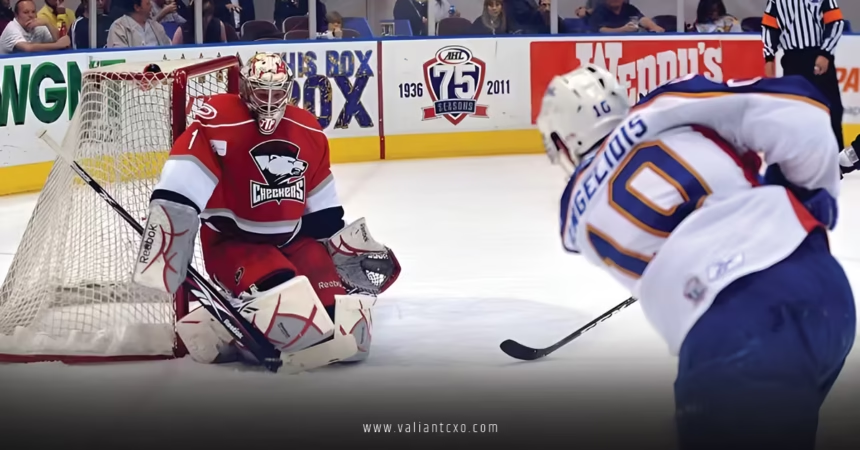
Goaltender interference rules explained NHL style can leave even die-hard fans yelling at their screens. One minute a goal lights the lamp. The next, video review in Toronto wipes it off the board.
Here’s the deal: the NHL’s Rule 69 protects goalies without turning every net-front battle into a no-go zone. It balances chaos in front of the crease with fair play. For beginners and intermediate fans, mastering this prevents confusion during tight games.
- Core idea: Goals get disallowed only if an attacking player impairs the goalie’s movement in the crease or initiates deliberate contact.
- Key nuance: Position alone in the crease doesn’t kill a goal. Incidental bumps outside the crease often stand if the skater tried to avoid it.
- Why it matters: One call can flip a playoff series. It keeps goalies safe while letting physical net-front play happen.
- Review process: Coaches challenge it. War room officials in Toronto make the final call using multiple angles.
- Gray area king: Refs judge “reasonable effort” and impairment in real time. Replay adds scrutiny but not always clarity.
What Exactly Counts as Goaltender Interference?
NHL officials don’t flip a switch based on one factor. They weigh several.
The crease is the goalie’s house—a painted semicircle where they expect space to move. But skaters can park there legally if they don’t obstruct.
Inside the crease: Contact that stops the goalie from sliding side-to-side or dropping into butterfly position usually gets waved off. Stick lifts or body leans that block vision or movement? Same story.
Outside the crease: The bar rises. Incidental contact stands if the attacker made a play for the puck and tried to avoid the goalie. Deliberate shoves or crashes? Penalty plus no goal.
The kicker is intent and impact. A light brush that doesn’t affect the save? Goal counts. A screen that turns the goalie into a blindfolded target? Different conversation.
Think of it like this: the crease is a crowded elevator. You can stand shoulder-to-shoulder. But body-checking the other guy so he can’t press his floor button? That’s interference.
NHL Rule 69.1 in plain English: An attacking player’s position or contact can’t impair the goalie’s ability to move freely or defend. Deliberate contact anywhere seals it. Incidental contact outside gets leeway with reasonable effort to avoid.
Official Criteria Officials Use
Referees and video reviewers check these boxes fast:
- Did the attacker initiate contact?
- Was the contact avoidable?
- Did it impair the goalie’s position or movement?
- Was the attacker pushed into the goalie by a defender?
- Did the goalie initiate contact while setting up?
Pushing your own defender into the goalie counts against the attacking team. Getting shoved in? Usually clean.
Goaltender Interference Decision Factors
| Situation | Typical Result | Penalty? | Goal? | Notes |
|---|---|---|---|---|
| Attacker pushed by defender into goalie | No interference | No | Yes | Onus shifts to defender |
| Attacker drives net unchecked, crashes goalie | Interference | Yes (minor) | No | Common crash call |
| Light incidental bump outside crease | No call | No | Yes | Reasonable effort shown |
| Attacker plants in crease, blocks goalie’s lateral move | Interference | Possible | No | Positioning impairs |
| Goalie bumps skater while coming out to play puck | Usually no call | No | Yes | Goalie responsibility |
| Stick contact or lift in crease | Interference | Yes | No | Impedes free movement |
This table captures real-world patterns from recent seasons. Outcomes hinge on video evidence and judgment.
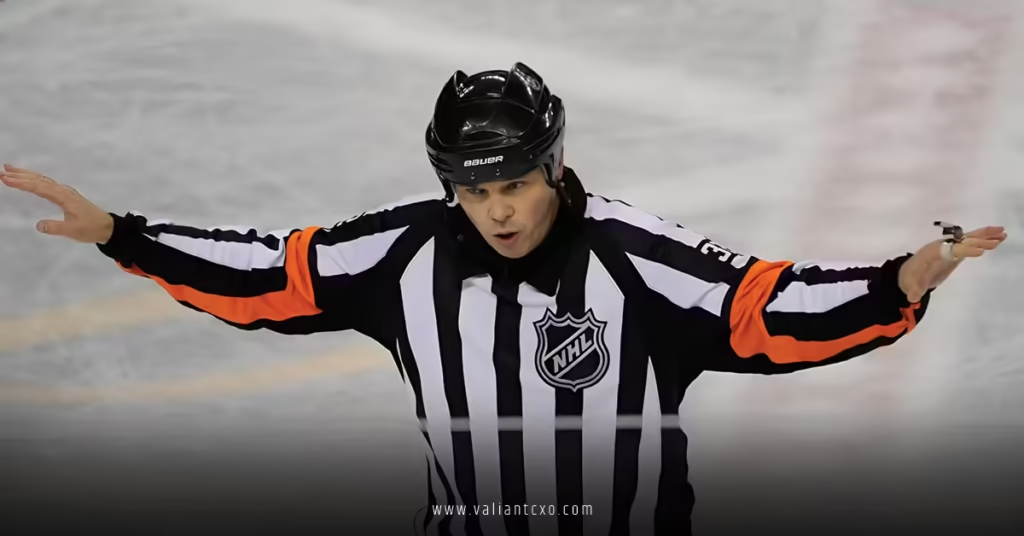
Step-by-Step Guide for Beginners: How to Read These Plays
New to tracking goaltender interference rules explained NHL? Follow this checklist next game:
- Spot the crease — Watch the blue paint. Is the attacker fully or partially inside when contact happens?
- Track initiation — Who moved into whom? Attacker charging? Defender pushing?
- Check effort — Did the skater pull up, turn away, or try to minimize impact?
- Assess impairment — Could the goalie square up, slide, or see the puck? Slow the replay if watching at home.
- Listen for the call — Refs signal immediately. Challenges come quick in big moments.
- Review context — Score, period, and game flow influence borderline calls.
What I’d do if watching with buddies: Pause on contact frame. Draw an imaginary line at the goalie’s pads. Anything blocking that line gets scrutiny. Practice on highlight reels first. You’ll spot patterns fast.
Common Mistakes & How to Fix Them
Mistake 1: Assuming any crease contact kills the goal.
Fix: Remember position alone isn’t enough. Look for actual impairment. Many goals stand with bodies in front.
Mistake 2: Ignoring who initiated contact.
Fix: Slow-mo replay shows the first mover. Attackers bear the onus unless fouled.
Mistake 3: Over-focusing on the bump instead of the save impact.
Fix: Ask the money question—did the goalie have a fair chance? A bump that doesn’t change the outcome often gets waved off.
Mistake 4: Forgetting about screening vs. interfering.
Fix: Legal screens happen outside or on the edge without contact. Lingering and bumping crosses the line.
Mistake 5: Expecting perfect consistency.
Fix: Accept the human element. Even Toronto’s war room deals in gray. Watch full sequences, not isolated clips.
Players screw up by barreling in without brakes. Fans miss nuance by watching without context. Refs catch heat either way.
Video Review and Coach’s Challenges
Since 2015-16, Coach’s Challenges let teams contest goaltender interference. Success rate hovers around 50/50 depending on the year—conclusive evidence is required to overturn.
No clear video proof? Original call stands. This “doubt goes to the on-ice call” standard keeps games moving but fuels arguments.
High-authority source for deeper dives: NHL Official Rules breaks down Rule 69 with examples.
For video breakdowns, check the NHL Video Rulebook on Goalie Interference.
Recent cases show evolving interpretations—search NHL.com coach’s challenge recaps for 2025-26 examples.
Key Player Tactics to Avoid Calls
Net-front forwards live on the edge. Smart ones:
- Drive hard but brake or pivot near the crease.
- Use sticks for deflections, not goalie lifts.
- Stay on edges for screens rather than planting deep.
- Get up fast if knocked down—lingering looks deliberate.
Defensemen: Push attackers wide or through without obvious shoves that could backfire.
Key Takeaways
- Goaltender interference rules explained NHL center on impairment and intent, not just contact.
- Crease position alone rarely disallows goals.
- Incidental contact outside the blue gets more leeway.
- Always evaluate “reasonable effort” to avoid.
- Video review demands conclusive evidence to overturn.
- Push from defender often clears the attacker.
- Judgment calls remain part of the game—expect debate.
- Protecting goalies while allowing physical play is the tightrope.
Mastering these rules turns confusing moments into “I saw that coming” satisfaction. Next time a goal gets waved off, run the checklist instead of raging. You’ll enjoy the game more and sound like the smartest person in the room.
Start watching for the subtle details in tonight’s matchup. Spot the impairment before the announcement. That’s when hockey gets really fun.
FAQs
How does goaltender interference rules explained NHL differ in playoffs?
Same Rule 69 applies. Intensity rises and challenges matter more, but the criteria stay identical. No special playoff exceptions.
Can a goalie initiate contact and cause interference?
Yes. If the goalie leaves the crease and runs over a skater, it can negate interference claims. Officials consider who established position.
hat happens if goaltender interference occurs but no goal is scored?
Refs can still call a minor penalty for interference. The play stops, and the offending team goes shorthanded. No automatic awarded goal unless other factors apply.