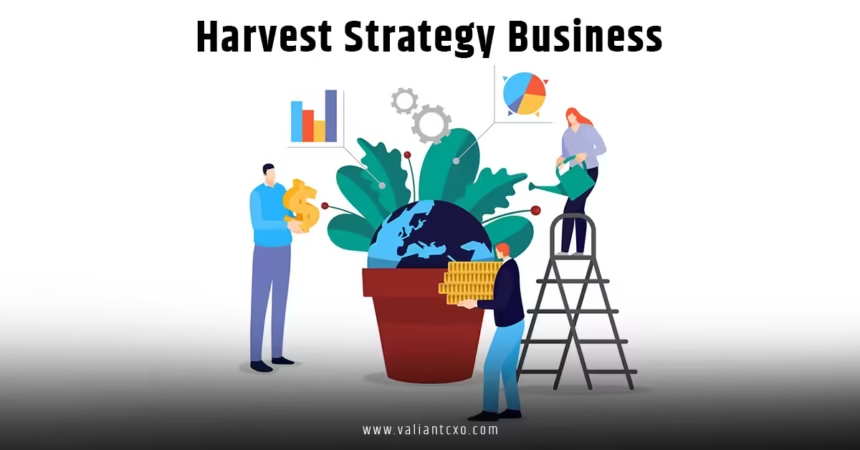
Harvest strategy business isn’t just some dusty term from a business textbook—it’s the smart, no-nonsense move that savvy entrepreneurs and CEOs pull when they know it’s time to cash in big before waving goodbye to a fading star. Picture this: You’ve nurtured a product line like a prized tomato plant in your backyard garden. You’ve watered it, pruned it, watched it bear fruit season after season. But now, the soil’s getting tired, weeds are creeping in, and that shiny new hybrid across the fence is stealing the show. Do you keep pouring resources into the old vine? Nah. You harvest what’s left—pluck those ripe tomatoes, jar ’em up, and sell ’em for top dollar while planning your next plot. That’s the essence of a harvest strategy business approach. It’s about maximizing short-term gains with minimal fuss, freeing up cash for bolder adventures. In this deep dive, we’ll unpack everything from the basics to battle-tested examples, so you can decide if this tactic fits your entrepreneurial toolkit. Let’s roll up our sleeves and get harvesting.
What Exactly Is a Harvest Strategy Business?
Ever wondered why some companies seem to effortlessly pivot from one success to the next, pockets lined with cash? A lot of it boils down to mastering the harvest strategy business model. At its core, a harvest strategy business involves dialing back investments in a mature or declining product, service, or even an entire division to wring out every possible profit penny. You’re not abandoning ship overnight; instead, you’re strategically coasting on existing momentum—think of it as letting your cash cow graze lazily while you milk it dry.
This isn’t about reckless slashing; it’s a deliberate phase in the business lifecycle. Companies adopt a harvest strategy business when growth stalls, markets saturate, or tech leaps ahead, leaving your offering in the dust. The goal? Generate surplus funds to fuel innovation elsewhere, pay down debts, or simply reward shareholders. It’s like the final act of a blockbuster movie: the hero rides off into the sunset, but not before one last epic showdown that leaves the audience (and the box office) thrilled.
The Origins and Evolution of Harvest Strategy Business
Let’s rewind a bit. The concept of harvest strategy business traces its roots back to the 1970s, courtesy of the Boston Consulting Group (BCG). They popularized the BCG Matrix—remember those cash cows, stars, question marks, and dogs? Harvesting fits right into managing those low-growth, high-market-share cash cows. Over decades, it’s evolved from a niche tactic to a staple in corporate playbooks, especially as global markets speed up and disruption becomes the norm.
Today, in our hyper-connected world, harvest strategy business adapts to everything from e-commerce booms to AI upheavals. I’ve seen startups use it to sunset beta features, freeing bandwidth for core apps. It’s not glamorous, but it’s effective—like that reliable old pickup truck that hauls more loads than a fleet of flashy sports cars ever could.
Key Characteristics That Define a True Harvest Strategy Business
What sets a harvest strategy business apart from just cutting corners? It’s the intentionality. First off, expect reduced spending: slash marketing budgets, pause R&D, and trim operational fat without gutting quality. Customers still buy because of brand loyalty and inertia, but you’re not chasing new ones aggressively.
Second, it’s temporary. Unlike full divestiture, a harvest strategy business bridges to the next chapter—maybe a sale, merger, or pivot. And third, metrics rule: Track cash flow spikes, ROI on remaining spends, and market share erosion. If you’re not measuring, you’re just guessing, and in business, guesses are for games, not gains.
When Should You Deploy a Harvest Strategy Business?
Timing is everything in a harvest strategy business—pull the trigger too early, and you leave money on the table; too late, and you’re drowning in sunk costs. So, how do you know it’s go-time? Ask yourself: Is your product’s sales plateauing despite your best efforts? Are competitors nipping at your heels with sleeker alternatives? Or maybe you’re eyeing a juicy acquisition that needs funding firepower.
Common triggers for a harvest strategy business include market saturation, where everyone’s got your gadget and no one’s buying more. Technological obsolescence is another red flag—remember flip phones? Once smartphones hit, carriers harvested those relics for residual revenue while prepping the upgrade push. Resource constraints play in too; if cash is tight, harvesting one unit bankrolls another’s growth.
But here’s the kicker: Emotional readiness. Founders often cling to “babies” they’ve built. I’ve chatted with entrepreneurs who delayed harvesting, only to watch profits evaporate. Rhetorical question: Would you rather nurse a fading flame or ignite a bonfire? Deploy a harvest strategy business when data screams “shift,” not when nostalgia whispers “stay.”
Signs Your Business Unit Is Ripe for Harvest Strategy Business
Spotting the signals early can save you a fortune. Look for declining margins— if costs creep up while revenues flatline, it’s harvest o’clock. Customer churn accelerating? That’s your cue. Or scan external vibes: Regulatory changes, economic downturns, or supply chain snarls can accelerate the need for a harvest strategy business.
Internal audits help too. Run a SWOT analysis tailored to that unit. Weaknesses outweighing strengths? Threats looming larger than opportunities? Bingo. And don’t ignore the numbers: If ROI dips below 10% for two quarters straight, it’s time to consider harvesting.
The Pros and Cons of Implementing a Harvest Strategy Business
No strategy’s a silver bullet, and a harvest strategy business is no exception. On the upside, it’s a cash infusion machine. By trimming non-essentials, you boost liquidity fast—funds that can supercharge R&D for high-potential ventures or shore up your balance sheet. It’s low-risk too; you’re leveraging proven revenue streams without the gamble of untested waters.
Plus, it sharpens focus. Diverting resources from a laggard lets stars shine brighter. Imagine a tech firm harvesting its legacy software line to pour everything into cloud AI—sudden innovation surge, anyone?
But cons lurk. Brand dilution’s a beast; skimping on support might alienate loyalists, turning them into ex-customers. Market share can erode quicker than expected, inviting rivals to feast on your scraps. And ethically? If employees tie to that unit, layoffs sting—morale dips, talent flees.
Weighing it all, a harvest strategy business shines for pragmatic leaders who view businesses as marathons, not sprints. Pros often outweigh cons if executed with transparency and a clear “what’s next” vision.
Maximizing the Upsides in Your Harvest Strategy Business Plan
To tilt the scales, communicate openly. Tell teams why you’re harvesting—frame it as evolution, not amputation. Use freed cash wisely: Invest in employee retraining or shareholder returns to build goodwill.
Monitor closely too. Set quarterly checkpoints to adjust—maybe extend the harvest if profits hold steady. And benchmark against peers; tools like financial dashboards keep you agile.

Real-World Examples of Successful Harvest Strategy Business
Theory’s fine, but stories stick. Take Kodak. In the digital dawn, they harvested film divisions masterfully, extracting billions to fund nascent digital pivots. Sure, they stumbled later, but that harvest bought crucial time.
Or consider Blockbuster. Before streaming crushed it, they could’ve harvested physical rentals harder—cut store expansions, hike late fees strategically, and funnel cash to online experiments. Hindsight’s 20/20, but it underscores harvest strategy business potential.
A brighter tale: Procter & Gamble. They routinely harvest underperforming brands like certain soaps, reallocating to powerhouses like Tide. Result? Sustained dominance, with harvest proceeds fueling acquisitions.
In tech, Microsoft’s harvest of Windows Phone—scaling back to focus on Azure cloud—unleashed a revenue juggernaut. These cases show harvest strategy business isn’t exit-only; it’s a reinvention enabler.
Lessons from Failed Harvest Strategy Business Attempts
Not every harvest blooms. Sears tried harvesting catalogs amid retail shifts but dragged feet on e-commerce, leading to bankruptcy. Lesson? Commit fully—half-measures breed mediocrity.
Enron’s infamous “harvest” via shady accounting? Disaster. It highlights integrity’s role; a harvest strategy business must be above-board to maintain trust.
Step-by-Step Guide to Implementing a Harvest Strategy Business
Ready to harvest? Let’s blueprint it. Step one: Assess. Audit the unit’s financials—project cash flows under reduced spend scenarios. Use tools like Excel models or consultancies for precision.
Step two: Strategize. Define cuts: 50% marketing trim? R&D freeze? Set timelines—six months to a year typical for harvest strategy business phases.
Step three: Execute. Notify stakeholders early. Reallocate funds immediately—don’t let them idle. Track KPIs weekly: Revenue, costs, customer sentiment.
Step four: Transition. Prep the handover—sell the unit, integrate remnants, or sunset gracefully. Celebrate wins to sustain morale.
Step five: Review. Post-harvest, debrief. What worked? Tweak for next time. This iterative vibe keeps your harvest strategy business sharp.
Tools and Metrics for Tracking Your Harvest Strategy Business
Leverage software like QuickBooks for real-time financials or Google Analytics for customer trends. Key metrics: EBITDA margins, cash conversion cycles, and Net Promoter Scores.
For deeper dives, integrate CRM systems to flag churn risks. Remember, data’s your compass in this foggy phase.
Alternatives to a Traditional Harvest Strategy Business
Harvesting isn’t always the play. Build strategies amp investments for growth—ideal for stars. Divestiture’s quicker: Sell outright for lump sums, skipping the milk phase.
Hold and maintain? Fine for steady earners, but risky if decline accelerates. Or hybrid: Partial harvest, blending cuts with tweaks.
Choosing hinges on your portfolio. Got multiple units? Mix strategies per BCG Matrix. A harvest strategy business fits cash cows; build for question marks.
Comparing Harvest Strategy Business to Divestment
Divestment’s the chainsaw to harvest’s pruning shears—fast cash but potential value loss. Harvest maximizes ongoing flows, suiting patient players. Weigh speed vs. yield.
The Role of Leadership in a Harvest Strategy Business
Leaders, this one’s on you. A harvest strategy business demands tough calls—balancing short-term wins with long-term vision. Cultivate resilience; teams sense hesitation.
Foster a “fail forward” culture. Share stories of past pivots. And lead by example: If you’re harvesting, show how it fuels bigger dreams.
In my experience advising startups, the best leaders frame harvesting as empowerment—not loss, but liberation.
Ethical Considerations in Executing a Harvest Strategy Business
Business isn’t a vacuum; ethics matter. Transparent communication averts backlash. Support affected staff—severance, outplacement services.
Sustainability too: Eco-impacts from rushed sunsets? Mitigate. A principled harvest strategy business builds lasting rep, not quick bucks.
Future Trends Shaping Harvest Strategy Business
AI’s reshaping everything—predictive analytics spot harvest windows sooner. ESG pressures push ethical harvesting, tying profits to purpose.
Gig economy? Freelance talent eases transitions. Expect harvest strategy business to blend with agile methodologies, making it nimbler.
Conclusion: Reap the Rewards of a Smart Harvest Strategy Business
Whew, we’ve covered a lot—from decoding what a harvest strategy business truly means to plotting your implementation roadmap, pitfalls to dodge, and triumphs to emulate. At heart, it’s about wise stewardship: Knowing when to nurture, when to harvest, and how to parlay those gains into tomorrow’s wins. If your business hums with untapped cash cows or whispers of obsolescence, don’t delay—embrace the harvest. You’ll not only bolster your bottom line but position yourself as a forward-thinking force. So, grab that metaphorical sickle, assess your fields, and start reaping. Your next big breakthrough awaits on the other side. What’s stopping you?
Frequently Asked Questions (FAQs)
1. What is a harvest strategy business, and why does it matter for small companies?
A harvest strategy business is essentially a tactical shift where you cut back on investments in a slowing product or division to maximize immediate profits, often prepping for a sale or pivot. For small companies, it matters because it prevents resource drain—think redirecting ad dollars from a stagnant app to a hot new service, keeping your lean operation agile and funded.
2. When is the best time to implement a harvest strategy business?
The sweet spot for a harvest strategy business hits when growth flatlines, competition heats up, or tech disrupts your lane. Watch for dipping sales or rising costs; if projections show no rebound in 12 months, it’s prime time to harvest and redirect those resources elsewhere.
3. What are the main risks associated with a poor harvest strategy business execution?
Mishandling a harvest strategy business can erode customer trust through neglected support or spark internal unrest via surprise layoffs. Market share slips fast too, handing rivals an edge. Mitigate by planning transparently and monitoring sentiment closely.
4. How does a harvest strategy business differ from simply shutting down a product line?
Unlike abrupt shutdowns, a harvest strategy business milks ongoing revenue with minimal tweaks—reducing spends while sales coast on inertia. It’s a graceful wind-down, generating cash flow that a cold closure skips, ideal for funding transitions.
5. Can startups benefit from adopting a harvest strategy business early on?
Absolutely—startups can use a harvest strategy business to sunset MVP features that didn’t pop, funneling VC scraps into validated winners. It enforces ruthless prioritization, turning “good enough” into “game-changing” faster.
Read More:valiantcxo.com