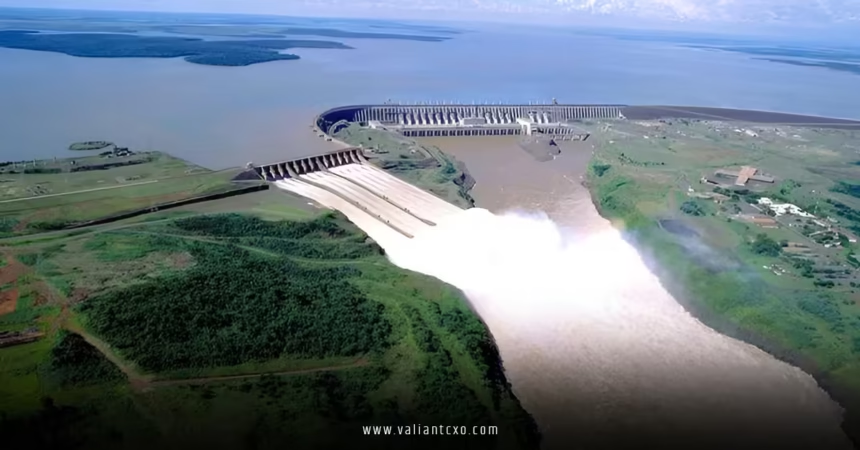
Itaipu Dam environmental challenges have long been a hot topic, highlighting the tough trade-offs between harnessing renewable energy and preserving our planet’s delicate ecosystems. As one of the world’s largest hydroelectric dams, Itaipu has brought immense power to Paraguay and Brazil, but at a significant environmental cost that continues to spark debates among experts and locals alike. In this article, we’ll explore these challenges in depth, from habitat disruption to climate implications, while weaving in insights on how they intersect with the dam’s economic benefits—don’t worry, I’ll link back to that story later.
The Background of Itaipu Dam and Its Environmental Footprint
To truly grasp the Itaipu Dam environmental challenges, let’s rewind to the 1970s when this colossal project began. Spanning the Paraná River between Paraguay and Brazil, the dam was constructed to generate clean energy, but it came with a hefty price tag on the environment. Imagine damming a river as mighty as the Paraná—it’s like holding back a natural force that’s been flowing for millennia, and the consequences have rippled out far and wide.
The dam created a massive reservoir, flooding over 1,350 square kilometers of land, which displaced thousands of people and submerged vast forests and farmlands. This initial impact set the stage for ongoing issues, including altered water flows, soil erosion, and changes in local weather patterns. Have you ever thought about how one engineering marvel can reshape an entire region’s ecology? That’s the reality we’re dealing with here, and it’s a reminder that progress often demands careful consideration.
Key Environmental Challenges Posed by Itaipu Dam
When we dive into the Itaipu Dam environmental challenges, a few stand out as particularly pressing. These aren’t just abstract concerns; they’re real issues affecting wildlife, water quality, and even human health. Let’s break them down step by step to make it easier to follow.
Biodiversity Loss and Habitat Disruption
One of the most glaring Itaipu Dam environmental challenges is the loss of biodiversity. The flooding of the Paraná River basin wiped out critical habitats for countless species, including endangered fish like the giant catfish and various bird populations. Picture a bustling underwater city suddenly drowned— that’s what happened to the river’s ecosystem.
Experts estimate that the dam has led to a 20-30% decline in fish stocks due to blocked migration routes, which were essential for species reproduction. This disruption has cascading effects, impacting food chains and even local fishing communities that rely on these resources. If you’re wondering how this ties into broader conservation efforts, consider that Itaipu’s reservoir has also fragmented forests, isolating animal populations and increasing extinction risks. According to environmental reports from organizations like the World Wildlife Fund, such projects can reduce regional biodiversity by up to 50% in affected areas.
Water Quality and Sedimentation Issues
Another major Itaipu Dam environmental challenge involves water quality degradation. The dam’s reservoir traps sediments that would normally flow downstream, leading to buildup that affects water clarity and nutrient levels. Think of it as a giant filter that’s clogging up—over time, this sedimentation reduces the reservoir’s storage capacity and alters the river’s natural chemistry.
This has resulted in increased algae blooms, which deplete oxygen and harm aquatic life, while also posing risks to drinking water supplies for nearby communities. In Paraguay, studies have shown elevated levels of pollutants in the water post-construction, partly due to the dam’s influence on flow rates. It’s a bit like turning a wild river into a stagnant pond, and the long-term effects on ecosystems are still being monitored by agencies such as the United Nations Environment Programme.
Climate Change Implications and Greenhouse Gas Emissions
Here’s a twist you might not expect: Itaipu Dam environmental challenges extend to climate change. While hydroelectric dams are often touted as green energy sources, they can emit methane—a potent greenhouse gas—from decomposing organic matter in reservoirs. Imagine a submerged forest slowly releasing gases that contribute to global warming; that’s the scenario at Itaipu.
Research indicates that tropical reservoirs like Itaipu’s might release methane equivalent to emissions from thousands of cars annually. This challenges the dam’s eco-friendly image and adds to Paraguay’s carbon footprint, even as it provides renewable power. On a global scale, the Itaipu Dam environmental challenges underscore the need for better emission tracking in hydropower projects, as highlighted in reports from the Intergovernmental Panel on Climate Change.
Social and Cultural Impacts on Indigenous Communities
We can’t talk about Itaipu Dam environmental challenges without addressing the human element. The dam’s construction displaced indigenous groups, such as the Guaraní people, who lost ancestral lands and traditional ways of life. It’s like erasing chapters of cultural history overnight, and the effects linger today.
These communities face ongoing issues like reduced access to resources and health problems from environmental changes. For instance, altered river flows have affected fishing and agriculture, leading to economic hardships. This social disruption is often overlooked in favor of economic gains, but it’s a critical part of the bigger picture. Organizations like Amnesty International have documented these impacts, emphasizing the need for equitable solutions.
Efforts to Mitigate Itaipu Dam’s Environmental Challenges
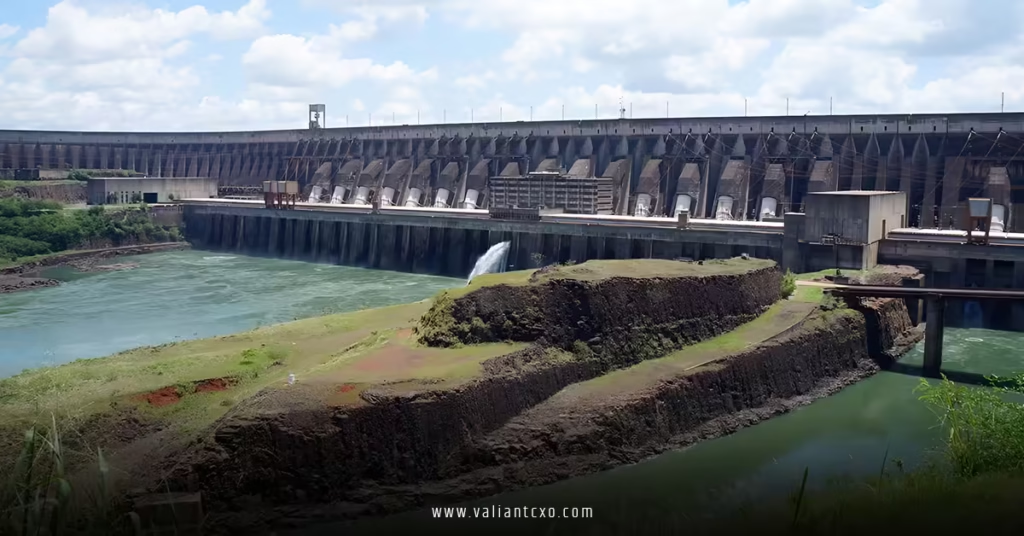
Despite these hurdles, there are glimmers of hope. Paraguay and Brazil have invested in mitigation strategies to tackle the Itaipu Dam environmental challenges head-on. It’s like patching up a leaky dam—necessary work to ensure long-term sustainability.
Reforestation and Biodiversity Restoration Projects
One key initiative involves reforestation around the reservoir to restore habitats and combat erosion. Since the 1990s, Itaipu Binacional has planted millions of trees, creating protected areas that support wildlife recovery. Have you ever seen a barren landscape transformed into a thriving forest? That’s what’s happening here, with programs aimed at reconnecting fragmented ecosystems.
These efforts have already shown results, with some fish populations rebounding through fish ladders and breeding programs. By partnering with environmental NGOs, the project is working to reverse some of the biodiversity loss, making it a model for other dams worldwide.
Sustainable Water Management and Monitoring
To address water quality, advanced monitoring systems have been implemented to track sedimentation and pollution levels. Think of it as giving the river a health checkup regularly, which helps in early intervention. Itaipu’s operators have introduced sediment flushing techniques and water treatment facilities, reducing the risks of algae blooms and improving downstream conditions.
These measures not only protect the environment but also ensure the dam’s longevity, as poor water quality could affect energy production. International collaborations, including with the World Bank, have funded these efforts, demonstrating a commitment to balancing energy needs with ecological health.
Integrating Renewable Energy with Eco-Friendly Practices
Looking forward, innovations like combining hydropower with solar energy are helping to minimize Itaipu Dam environmental challenges. By diversifying energy sources, the dam reduces its reliance on water flows, which can be unpredictable due to climate change.
This approach includes adopting low-emission technologies to cut methane releases, such as aerating the reservoir or using bio-digesters. It’s an evolving strategy that positions Itaipu as a leader in sustainable energy, even as it grapples with its past impacts.
Linking Back: The Economic Side of the Story
While we’re focused on the Itaipu Dam environmental challenges, it’s impossible to ignore how these issues interplay with the economic benefits we’ve discussed elsewhere. For a deeper look at how the dam has boosted Paraguay’s economy, check out our article on Paraguay hydropower Itaipu dam economic impact [blocked]. This connection shows that environmental and economic aspects are two sides of the same coin, and addressing one can enhance the other.
Conclusion
In summing up the Itaipu Dam environmental challenges, it’s clear that this engineering giant has left an indelible mark on the environment, from biodiversity loss to climate concerns. Yet, through ongoing mitigation and innovative practices, there’s potential for a more harmonious balance between power generation and preservation. I’ve always been inspired by how human ingenuity can adapt to its mistakes, and I encourage you to dive into these topics further—your awareness could spark real change in how we approach renewable energy.
Frequently Asked Questions
What are the main Itaipu Dam environmental challenges affecting wildlife?
The primary issues include habitat disruption from flooding and blocked migration routes, leading to biodiversity loss in the Paraná River basin.
How does the Itaipu Dam environmental challenges impact local communities?
It has displaced indigenous groups and altered access to resources, causing social and economic hardships that require ongoing support.
Are there solutions to the Itaipu Dam environmental challenges related to water quality?
Yes, through sedimentation management and monitoring programs, water quality is being improved to mitigate long-term effects.
How does the Itaipu Dam environmental challenges contribute to climate change?
The dam releases methane from reservoirs, adding to greenhouse gases, which underscores the need for emission-reducing technologies.
What role does the Itaipu Dam environmental challenges play in global sustainability efforts?
It serves as a case study for balancing hydropower benefits with environmental protection, influencing policies on [Paraguay hydropower Itaipu dam economic impact] worldwide.