latest global oil refining crisis and fuel shortages 2026 has turned refined products—not crude—into the real choke point. War damage in the Middle East, repeated Ukrainian drone strikes on Russian plants, and years of underinvestment have knocked millions of barrels per day of diesel, gasoline, and jet fuel offline. U.S. drivers, truckers, and farmers feel it at the pump and in freight rates while American refiners run near the redline to fill the gap.
- Global refining outages hit 5.8 million barrels per day above normal, exceeding even Goldman Sachs’ prior worst-case scenario.
- Russian capacity targeted across roughly 80% of its system has collapsed output and triggered export curbs.
- Middle East product exports remain constrained by physical damage and shipping risks.
- U.S. refineries operate at utilization rates last seen in the late 1990s, with limited spare capacity left.
- Diesel inventories sit at multi-year lows; tightness is expected to stretch into 2027.
Here’s the thing. Crude can still move. Turning it into usable fuel cannot keep pace.
Why the latest global oil refining crisis and fuel shortages 2026 hit harder than past oil shocks
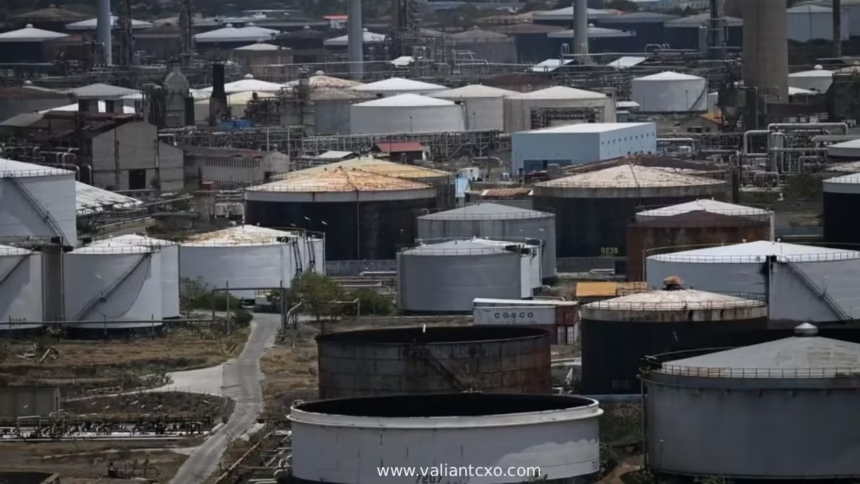
Crude shortages get the headlines. This time the bottleneck sits downstream. Ukrainian drones have hit more than 100 times, striking about 30 Russian refineries that once represented the bulk of the country’s 6.1 million barrels per day capacity. Industrial Info Resources now puts the damaged plants’ combined capacity near 1.6 million barrels per day. Russia responded with diesel export bans and gasoline curbs that removed a meaningful share of global seaborne supply.
In the Gulf, Iranian retaliatory strikes and Houthi claims (including recent ones on Ras Tanura) have left key Saudi and regional units offline or running reduced rates. Goldman Sachs tallied Middle East outages at 1.6 million barrels per day above average and Russian losses at 4.2 million—together 5.8 million barrels per day. That figure already exceeds the bank’s earlier “nightmare” case.
Add China pausing some product exports and you have a structural shortfall in middle distillates. Singapore mid-distillate stocks have dropped 44% year-on-year in recent readings; European aviation fuel inventories in the ARA hub fell 56%. The International Energy Agency’s October 2026 Oil Market Report notes that gasoil and diesel markets tightened counter-seasonally and that inventory recovery outside normal seasonal patterns looks unlikely before the second half of 2027.
U.S. plants absorbed the call. Utilization averaged above 95% for much of the summer—the highest for those months since 1998—and still sits in the low-to-mid 90s. Capacity itself has slipped. EIA data show operable atmospheric distillation capacity at 18.2 million barrels per calendar day as of January 1, 2026, down roughly 1% after closures including LyondellBasell’s Houston unit and Phillips 66’s Los Angeles complex. Valero’s Benicia plant later exited refining as well. The system is leaner and running harder.
How the latest global oil refining crisis and fuel shortages 2026 shows up at U.S. pumps and loading docks
Diesel has taken the biggest hit. Retail averages have pushed past $6 per gallon in stretches. Trucking, agriculture, and construction feel the squeeze first. Crack spreads—the difference between crude cost and product value—have widened to levels not seen since the early post-Ukraine invasion period. High margins keep U.S. refiners motivated to maximize throughput and export surplus barrels, yet domestic inventories of ultra-low sulfur diesel remain below seasonal norms.
Gasoline and jet fuel face secondary pressure. West Coast markets, already thinner after California capacity losses, show greater sensitivity because pipeline links to the Gulf Coast are limited. Nationally, the absence of spare capacity means any unplanned outage or delayed maintenance lands harder.
What usually happens in these cycles is that strong margins pull forward maintenance work. This time many turnarounds were deferred. Goldman and others flag a heavy maintenance slate in 2027—potentially 7.7 million barrels per day at peak—that could keep product markets tight even if geopolitical damage begins to heal.
Comparison of key pressure points in the latest global oil refining crisis and fuel shortages 2026
| Factor | Pre-crisis baseline | Current status (late 2026) | Expected duration | Primary U.S. impact |
|---|---|---|---|---|
| Russian refining | ~6.1 mb/d capacity | Significant share offline; exports restricted | Into 2027 | Higher diesel import reliance / prices |
| Middle East product exports | Full Gulf product flows | Physical damage + shipping risk | Recovery gradual into 2027 | Elevated import costs, jet fuel pressure |
| U.S. utilization | Seasonal ~90-92% | Sustained mid-90s to near 98% peaks | Near-term | Limited buffer for outages |
| Global middle distillate stocks | Comfortable seasonal levels | Multi-year lows (Singapore –44%, Europe jet –56%) | Rebuild slow | Freight and ag cost inflation |
| New capacity / restarts | Incremental expansions | Closures net negative; restart talks ongoing | Multi-year | Policy focus on reactivation |
Practical action plan for U.S. households and small businesses
- Track weekly EIA inventory and utilization data. The numbers move faster than headlines.
- Lock in diesel contracts or fuel cards early if you run trucks or equipment. Spot prices punish the unprepared.
- Audit routes and loads. Small efficiency gains compound when fuel is the swing cost.
- For fleets, test biodiesel blends or renewable diesel where available and compliant—supply of these has grown even as petroleum diesel tightened.
- Households: time non-urgent travel and combine errands. Maintain tire pressure and service schedules; high prices make every efficiency dollar count.
- Watch for Strategic Petroleum Reserve exchanges or policy moves aimed at specific refineries. Localized relief can appear with little notice.
- If you operate in California or the Northeast, build a larger working inventory buffer. Regional capacity is thinner.
In my experience, the operators who treat fuel as a managed input rather than a pure pass-through cost come through these cycles with less damage.
Common mistakes and how to fix them during the latest global oil refining crisis and fuel shortages 2026
Assuming “crude is fine so products will be fine.” Crude recovered faster than refining. Fix: follow product cracks and inventory reports, not just WTI or Brent.
Waiting for a big diplomatic deal to reset prices overnight. Physical damage and deferred maintenance do not reverse with a handshake. Fix: plan for elevated prices through at least mid-2027.
Ignoring regional differences. Gulf Coast refiners export aggressively; West Coast markets cannot easily import the same barrels. Fix: track PADD-level data.
Treating high utilization as permanent strength. Plants running this hard for this long raise the odds of unplanned downtime. Fix: maintain contingency suppliers.
Over-relying on short-term SPR draws. They solve acute logistics problems, not structural capacity gaps. Fix: view them as bridge measures only.
Key Takeaways
- The crisis is a refining and product problem more than a crude problem.
- Russian drone damage and Middle East conflict have removed several million barrels per day of product capacity.
- U.S. refiners are running near historic highs yet still cannot fully close the global gap.
- Diesel faces the tightest conditions; inventories and cracks point to pressure lasting into 2027.
- Capacity has declined modestly in the U.S. through closures, leaving less operational slack.
- Policy focus is shifting toward reactivating shuttered plants and encouraging higher diesel yields.
- Households and businesses that manage fuel actively will fare better than those that simply absorb the price.
- Recovery depends more on physical repairs and maintenance cycles than on crude price alone.
The latest global oil refining crisis and fuel shortages 2026 will not vanish with the next news cycle. Capacity takes time to repair or rebuild, and deferred turnarounds will still hit next year. Stay close to the inventory numbers, lock costs where you can, and treat every efficiency gain as real money. That is the practical edge available right now.
FAQs
What is driving the latest global oil refining crisis and fuel shortages 2026 more than anything else?
Physical damage to Russian and Middle Eastern refining capacity plus export restrictions, not a shortage of crude oil itself.
How long could elevated diesel prices last in the U.S. under the latest global oil refining crisis and fuel shortages 2026?
Analysts tracking inventories and maintenance schedules see tightness extending well into 2027, with a heavier turnaround season expected to keep pressure on.
Are U.S. refiners able to solve the latest global oil refining crisis and fuel shortages 2026 on their own?
They are already running at rates last seen in the late 1990s and exporting heavily, but net capacity losses and the global scale of outages mean domestic plants alone cannot restore pre-crisis product balances.