Long duration energy storage comparison shows clear winners by duration, site, and cost—lithium-ion owns the short end, while pumped hydro, flow batteries, compressed air, and emerging iron-air systems compete for multi-hour to multi-day needs.
Here’s the practical snapshot:
- Lithium-ion batteries dominate 1–6 hour (sometimes up to 8-hour) applications with high efficiency and rapid deployment.
- Pumped hydro remains the bulk of installed long-duration capacity globally and offers strong lifetime economics where geography works, but faces high upfront costs, long development timelines, and site constraints.
- Flow batteries and advanced compressed air systems compete in the 8–24 hour zone with better cycle life or geology-specific advantages.
- Iron-air and similar chemistries target 100-hour+ multi-day storage at far lower capital cost per kWh of energy.
- Real projects reveal the gap between theory and execution—transmission, civil costs, and permitting can kill otherwise solid pumped hydro cases.
The grid needs storage that can ride through multi-day renewable lulls, not just shift solar into the evening. That is where long duration energy storage (LDES) comparison becomes essential. Definitions vary: many markets treat eight hours as the floor, while the U.S. Department of Energy often uses ten hours or more. The economics shift hard once you leave the daily cycle.
Core Technologies in the Long Duration Energy Storage Comparison
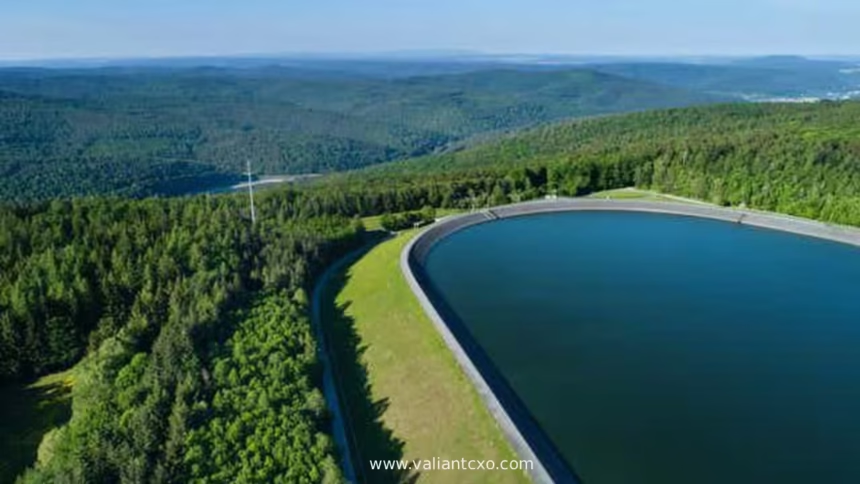
Pumped hydro still accounts for the vast majority of existing long-duration capacity. It moves water between two reservoirs at different elevations. Round-trip efficiency typically lands between 70–85%. Asset life stretches 50–100 years with relatively low ongoing degradation. Capital cost per kilowatt-hour of energy can look attractive when spread over decades—often cited in the $50–100/kWh range for suitable sites—but total project costs run into the billions and development can take a decade or more. Geography is the hard constraint: you need elevation difference and water. Recent experience, including the Oven Mountain pumped hydro cancellation reasons, shows how rising civil construction costs and transmission delays can render even advanced projects unviable.
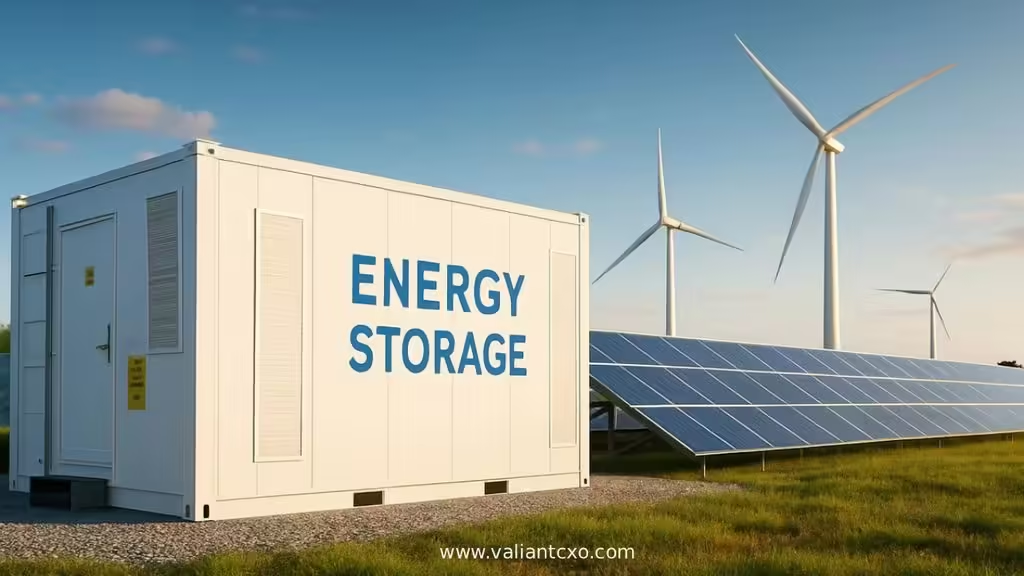
Lithium-ion (especially LFP chemistry) wins on speed, modularity, and efficiency (85–95% round-trip). Four-hour systems have undercut gas peakers on levelized cost in dozens of markets by 2026. Push the duration higher and the capital cost per kilowatt-hour of energy rises, while calendar and cycle degradation become more expensive over a 15–20 year life. For pure daily cycling it remains the default.
Long duration energy storage comparison Flow batteries (vanadium redox or iron-based) decouple power and energy. You size the electrolyte tanks for duration. Efficiency sits in the 70–80% range. Cycle life is excellent—tens of thousands of cycles with minimal degradation—and they handle full depth of discharge cleanly. Capital costs remain higher than lithium for shorter durations but improve relative to batteries as hours increase. Commercial deployments exist at hundreds of megawatt-hours.
Compressed air energy storage (CAES), particularly adiabatic versions that recover heat, targets 8–24 hours. Efficiency ranges 50–70%. Suitable geology (salt caverns or rock formations) is required for lowest cost. Some analyses show adiabatic CAES delivering competitive levelized cost of storage in low-electricity-price regions. Liquid air energy storage offers a geography-independent alternative with similar duration potential but generally lower efficiency.
Iron-air batteries reverse the rusting process. They use abundant iron, water, and air. Projected capital costs target $20–40/kWh of energy capacity with 100-hour discharge capability. Round-trip efficiency is lower (around 45–60%), but for multi-day firming the low energy cost dominates. Commercial projects are moving from pilot toward early deployment.
Thermal storage (molten salt, sand, or specialized media) and green hydrogen fill longer or specialized niches—heat delivery or seasonal shifting—where round-trip efficiency to electricity matters less or where infrastructure already exists.
Side-by-Side Long Duration Energy Storage Comparison Table
| Technology | Typical Duration | Round-Trip Efficiency | Capital Cost Focus | Key Strengths | Main Limitations | Commercial Maturity |
|---|---|---|---|---|---|---|
| Lithium-ion BESS | 1–8 hours | 85–95% | Higher $/kWh as duration grows | Fast deploy, high efficiency, modular | Degradation, cost at long duration | Fully mature |
| Pumped Hydro | 8–24+ hours | 70–85% | Attractive $/kWh over long life | Longevity, bulk capacity, inertia | Geography, long timelines, civil cost | Mature (dominant) |
| Flow Batteries | 4–12+ hours | 70–80% | Higher than Li for short, improves | Cycle life, full discharge, modular | Footprint, electrolyte cost | Early commercial |
| A-CAES / CAES | 8–24 hours | 50–70% | Competitive with good geology | Scalable energy, long life | Geology dependence | Limited commercial |
| Iron-Air | 100+ hours | ~45–60% | Very low $/kWh energy target | Multi-day cost advantage, materials | Lower efficiency, emerging scale | Pre/early commercial |
| Hydrogen (storage) | Days–weeks | 30–45% (power-to-power) | Energy storage cheap at scale | Seasonal potential | Efficiency, infrastructure | Early commercial |
Costs are approximate ranges drawn from 2025–2026 project data, analyst benchmarks, and technology assessments. Actual figures vary heavily by location, scale, and year.
Step-by-Step Action Plan for Choosing the Right Option
- Define the exact duration need and cycling frequency. Daily 4-hour shifting is a lithium problem. Multi-day renewable droughts are not.
- Map site constraints early. Elevation difference and water favor pumped hydro. Salt caverns favor CAES. Flat industrial land opens the field to batteries and flow systems.
- Run levelized cost of storage (LCOS) under realistic full-load hours and electricity prices. Efficiency and utilization drive results more than headline capital cost.
- Stress-test transmission and permitting timelines. A technology that takes ten years to permit loses to one that can connect in two.
- Compare lifetime replacement cycles. Batteries may need mid-life augmentation; mechanical systems often do not.
- Check policy support and offtake. Capacity payments, long-duration tenders, or tax credits can flip the ranking.
- Pilot or stage if the technology is still scaling. Iron-air and advanced flow systems benefit from demonstrated performance data before full commitment.
What I’d do on a live project: start with a duration-duration cost curve for the specific market, then overlay geography and interconnection queue position. The lowest theoretical LCOS loses if it cannot connect or permit on time.
Common Mistakes & How to Fix Them
Mistake: Applying short-duration battery assumptions to multi-day needs.
Fix: Separate the daily firming case from the multi-day reliability case and model each independently.
Mistake: Ignoring development timeline and soft costs.
Fix: Add realistic permitting, community engagement, and transmission contingency to every civil-heavy option.
Mistake: Over-weighting round-trip efficiency for very long durations.
Fix: For 50–100 hour applications, capital cost per kWh of energy capacity usually matters more than a few efficiency points.
Mistake: Assuming all “long duration” technologies compete in the same market.
Fix: Segment by duration band (8–12 h, 12–24 h, 24–100+ h) and match technology strengths.
Mistake: Treating geography as a minor factor.
Fix: Screen sites for elevation, geology, or land availability before detailed engineering.
Key Takeaways
- Long duration energy storage comparison is duration- and site-specific; no single technology wins every case.
- Lithium-ion remains the practical choice below roughly eight hours for most daily cycling applications.
- Pumped hydro delivers strong lifetime value and bulk capacity where suitable sites and transmission exist, but recent cancellations highlight cost and timing risks.
- Flow batteries and compressed air systems occupy the competitive middle ground for 8–24 hour needs.
- Iron-air and similar low-cost energy chemistries target the multi-day problem that short batteries cannot solve economically.
- Levelized cost, development timeline, and interconnection access often decide outcomes more than pure technology metrics.
- Hybrid approaches (short batteries plus longer-duration assets) frequently outperform single-technology solutions on real grids.
Match the storage technology to the actual hours of firming required and the physical constraints of the site. That discipline separates projects that get built from those that get cancelled. Review the latest project cost data and interconnection queues in your market before locking a preferred technology.
FAQs
What is the most mature option in a long duration energy storage comparison?
Pumped hydro remains the most mature and widely deployed long-duration technology by installed capacity, though new projects face significant site and timeline challenges.
When does lithium-ion stop being the best choice?
Typically beyond 6–8 hours of required discharge for frequent cycling, where energy capacity costs and degradation make alternatives more competitive.
How do emerging technologies like iron-air change the long duration energy storage comparison?
They introduce very low capital cost per kilowatt-hour of energy storage for multi-day durations, shifting the economics for applications lithium-ion cannot serve cost-effectively.