Oven Mountain pumped hydro cancellation reasons boiled down to hard economics and timing failures that made a once-promising long-duration storage project unviable in late 2026.
Here’s the short version of what happened and why it matters:
- Alinta Energy abandoned the 900 MW, roughly $1.8 billion Oven Mountain Pumped Hydro Energy Storage scheme in northern NSW after years of development.
- Primary drivers were rising civil construction costs, delays around a critical transmission connection, and the sharp drop in battery storage prices that undercut the business case.
- The decision followed Origin Energy’s earlier scrap of the Skye Ridge Wind Farm, highlighting pressure on large renewable projects in the New England Renewable Energy Zone.
- Experts note pumped hydro’s long-duration advantage still exists, but build costs have diverged dramatically from batteries.
- Local leaders called the outcome a blow for regional jobs and infrastructure planning.
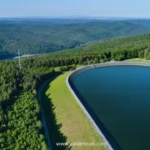
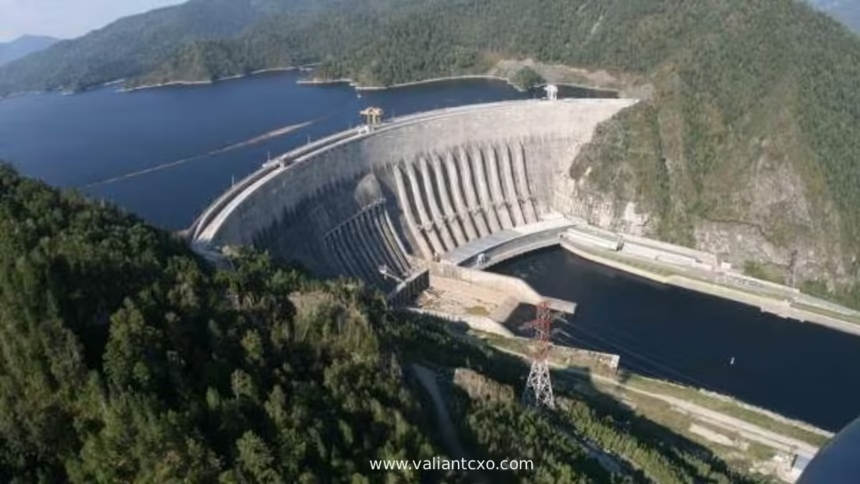
The project sat near Georges Junction at Carrai, about 60 km southeast of Armidale. It was designed as an off-river closed-loop system using two reservoirs with more than 600 metres of head. Water would be pumped uphill when power was cheap and released through turbines to generate up to 900 MW for about eight hours—enough energy to power hundreds of thousands of homes. It carried Critical State Significant Infrastructure status from the NSW Government and had advanced through environmental impact statement stages, public exhibition, and amendment reports.
Oven Mountain pumped hydro cancellation reasons In my experience watching storage projects, the pattern is familiar. Early enthusiasm meets real-world cost inflation and grid bottlenecks. What looked solid on paper a few years earlier no longer cleared the investment hurdle.
Why the Economics Shifted Against Oven Mountain Pumped Hydro Cancellation Reasons
Alinta’s own statement pointed to “economic and timing challenges on key elements including a critical transmission line.” That line was essential for the project to deliver value inside the New England REZ. Without timely, affordable grid access, the storage asset sits stranded.
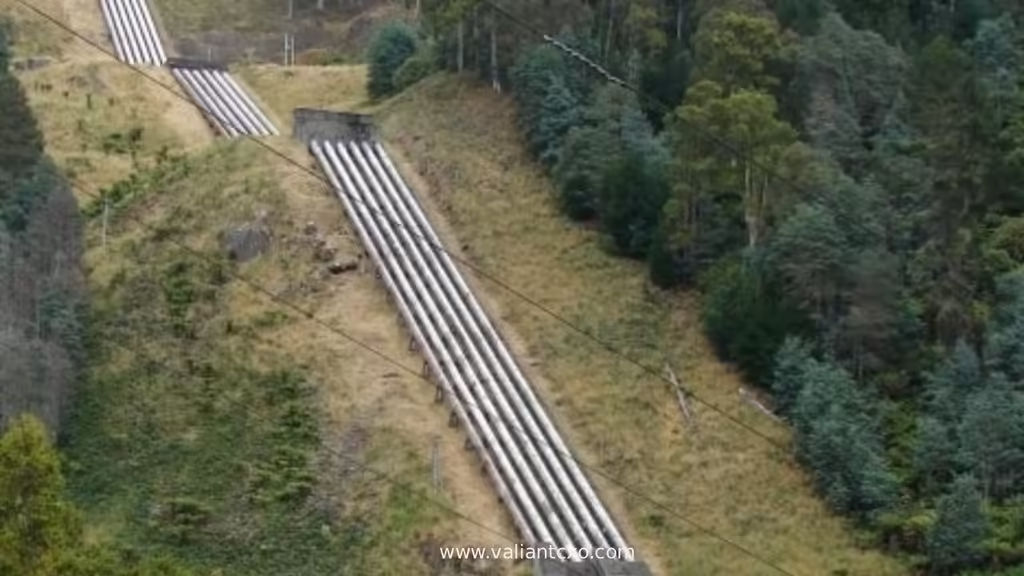
Construction costs told the rest of the story. Pumped hydro is heavy civil engineering—tunnels, reservoirs, penstocks, powerhouses. Those costs climbed. Battery systems, by contrast, benefited from rapid manufacturing scale and technology improvement. Tristan Edis of Green Energy Markets put the gap in plain numbers: building pumped hydro runs roughly $5,000–6,000 per kilowatt of output, while a four-hour battery sits closer to $1,400 per kilowatt. Nearly four times the capital outlay for the hydro option.
Oven Mountain pumped hydro cancellation reasons Location compounded the problem. The steep gorge country is ideal for head but remote. Moving heavy equipment, managing access roads, and meeting environmental and planning requirements added layers of expense and delay. Armidale Regional Council Mayor Sam Coupland publicly questioned whether the volume of environmental and regulatory hurdles had simply become too costly for major infrastructure. State MP Michael Kemp called the cancellation a poor result for the community. Kempsey Deputy Mayor Arthur Bain noted the site’s isolation made economic viability harder even if the topography was perfect.
The broader market had moved. Falling battery prices reduced the relative value of long-duration hydro for many use cases. While pumped hydro can still deliver multi-hour or multi-day firming that batteries struggle to match economically at scale, the cost differential proved decisive here.
Comparison of Key Factors Behind the Decision
| Factor | Impact on Project | Practical Outcome |
|---|---|---|
| Transmission timing & cost | Critical connection delayed or uncertain | Grid access risk made the asset less bankable |
| Civil construction inflation | Higher tunnelling, reservoir and site costs | Capital expenditure rose beyond earlier estimates |
| Battery cost decline | Competing storage became far cheaper per kW | Business case eroded against shorter-duration alternatives |
| Planning & environmental requirements | Extended assessment, redesigns, stakeholder processes | Added time and soft costs that compounded hard costs |
| Remote site logistics | Difficult access in steep terrain | Higher mobilisation and ongoing operational friction |
This table captures the stacked pressures that turned a “critical” project into an abandoned one.
Step-by-Step Action Plan: What to Watch on Future Pumped Hydro Proposals
If you’re tracking similar long-duration storage projects or advising communities and investors, use this practical sequence:
- Map the transmission dependency early. Confirm not just route approval but realistic construction timelines and cost allocation. Assume delays until proven otherwise.
- Stress-test capital costs against current battery benchmarks. Update the comparison every six months; the gap can move fast.
- Quantify location premiums. Remote or steep sites raise mobilisation, environmental management, and workforce costs—build those into the model from day one.
- Track regulatory clock speed. Count actual months from scoping report through EIS, amendments, and final determination. Long clocks kill option value.
- Model multiple revenue stacks. Pure energy arbitrage rarely carries a multi-billion-dollar civil project. Capacity payments, system services, and REZ support need clear pathways.
- Engage local stakeholders continuously. Road upgrades, housing pressure, and Indigenous heritage issues surface late and cost more when they do.
What I’d do if evaluating a similar proposal tomorrow: demand a full transmission-risk contingency and a side-by-side levelised cost of storage versus batteries under conservative cost trajectories. Soft assumptions on either kill the deal later.
Common Mistakes & How to Fix Them
Mistake: Treating early cost estimates as fixed.
Fix: Build in 30–50% contingency for civil works in remote terrain and re-forecast annually against actual market data.
Mistake: Underestimating transmission as a separate project.
Fix: Treat grid connection as a parallel critical path with its own funding and approval risks. No connection equals no project.
Mistake: Assuming long-duration value will always clear the higher capital hurdle.
Fix: Model the exact hours of firming required by the market and compare against battery-plus-gas or hybrid alternatives.
Mistake: Letting planning timelines drift without escalation.
Fix: Set hard internal decision gates tied to regulatory milestones. Walk away if the clock runs too long.
Mistake: Over-relying on policy support language without contracted revenue.
Fix: Convert “critical” status and REZ designation into actual offtake or underwriting before major spend.
These are the traps that keep appearing across large storage developments.
Key Takeaways
- Oven Mountain pumped hydro cancellation reasons centred on rising construction costs, transmission timing risk, and the rapid improvement in battery economics.
- The 900 MW, eight-hour project had advanced deep into the NSW planning process before Alinta pulled the plug in October 2026.
- Remote site logistics and cumulative regulatory costs amplified the economic pressure.
- Local leaders viewed the outcome as a loss for regional employment and infrastructure momentum.
- Long-duration storage still holds system value, but the capital hurdle has risen relative to shorter-duration alternatives.
- Future projects need tighter transmission certainty and more conservative cost modelling from the outset.
- Battery cost trajectories will continue to set the competitive bar for new pumped hydro proposals.
Oven Mountain pumped hydro cancellation reasons The cancellation is a clear market signal. Big civil storage projects must now clear a higher bar than they did even a few years ago. For communities, policymakers, and developers watching the next round of proposals, the lesson is straightforward: get the transmission, the costs, and the timelines right early—or watch the same outcome repeat.
Track the next wave of long-duration storage announcements against these exact pressure points. That is the practical next step.
FAQs
What were the main Oven Mountain pumped hydro cancellation reasons cited by Alinta Energy?
Alinta pointed to economic and timing challenges, including issues with a critical transmission line, that rendered the project unviable after extensive studies and engagement.
How did battery storage prices influence the Oven Mountain decision?
Sharp declines in battery costs made shorter-duration storage far cheaper per kilowatt of capacity than building new pumped hydro, eroding the relative economics of the larger civil project.
Was the Oven Mountain site particularly difficult for construction?
Yes. The steep, remote gorge country offered excellent natural head but raised access, mobilisation, and environmental management costs that weighed on viability.