Martian meteorite buying guide starts right here with the no-BS facts every collector needs. These rocks from the Red Planet don’t come cheap or easy. One wrong move and you’re out hundreds—or thousands—on a clever fake.
Here’s the quick lowdown:
- Martian meteorites rank among the rarest collectibles on Earth, with fewer than 400 known specimens total.
- Prices often start at $300–$1,000+ per gram for quality pieces, driven by extreme scarcity.
- Authentication via official classification is non-negotiable—skip it at your peril.
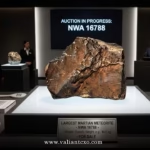
- The market exploded after big sales like the record-breaking NWA 16788.
- Smart buyers focus on provenance, dealer reputation, and scientific documentation.
Getting this right opens a direct line to another world. Let’s break it down so you can buy with confidence.
Why Martian Meteorites Captivate Collectors
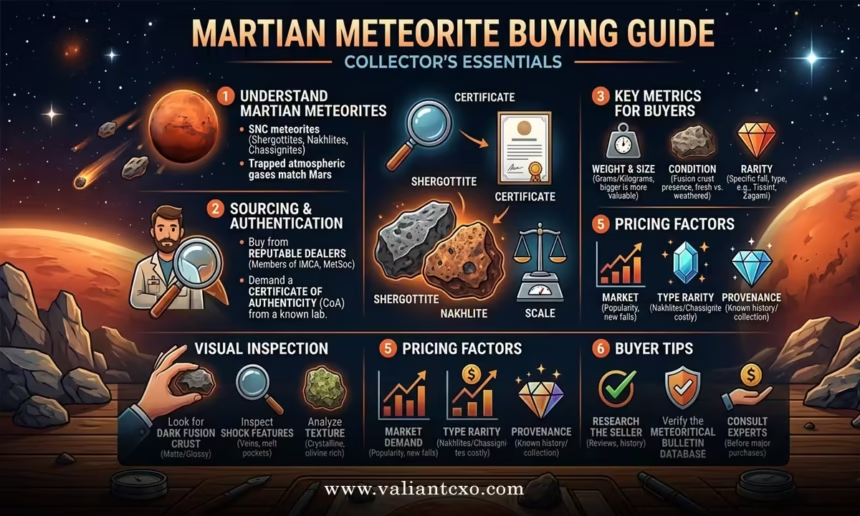
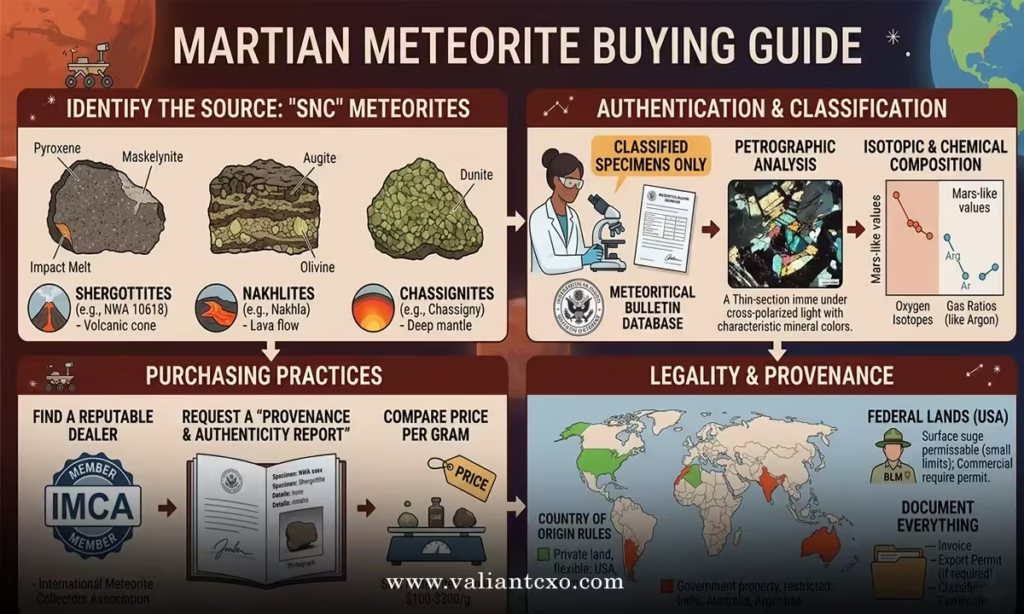
These aren’t ordinary space rocks. Martian meteorites—mostly shergottites, nakhlites, and chassignites—blasted off Mars by ancient impacts. They carry trapped gases matching Mars’ atmosphere, confirmed by lab analysis.
Their dark fusion crust, specific mineral textures, and scientific value set them apart. In my experience, nothing beats holding a slice that formed billions of years ago on another planet.
The kicker? Recent high-profile sales pushed visibility—and prices—sky high.
Understanding the Different Types of Martian Meteorites
Most fall into three groups:
- Shergottites: Volcanic, like the massive NWA 16788.
- Nakhlites: Cumulate rocks with augite crystals.
- Chassignites: Olivine-rich, extremely rare.
Each tells a different chapter of Mars’ history. Beginners should start with a small authenticated shergottite slice. It gives you the feel without the wallet shock.
Rhetorical question: Why settle for a photo of Mars when you can own a physical piece?
Martian Meteorite Buying Guide: Step-by-Step Action Plan for Beginners
Don’t dive in blind. Follow this practical sequence.
- Learn the basics first: Study fusion crust, regmaglypts, and interior features. Use free resources from the Lunar and Planetary Institute.
- Set a realistic budget: Start under $500 for a tiny fragment. Factor in authentication and storage costs.
- Research dealers thoroughly: Prioritize IMCA members or established shops with guarantees. Cross-check reviews and Meteoritical Society listings.
- Verify every detail: Demand official classification paperwork. Check the Meteoritical Bulletin for the specific name.
- Inspect before buying: Ask for high-res photos, videos, and provenance history. Test for magnetism and density where possible.
- Complete the purchase securely: Use reputable platforms with buyer protection. Get insurance quotes immediately.
- Store and document properly: Use acid-free, UV-protected cases in stable conditions. Log everything for future resale.
What usually happens is new collectors rush hype pieces. Slow down. This process saves money and headaches.
Largest Martian Meteorite NWA 16788 for Sale: Lessons from the Record Breaker
The 24.67 kg NWA 16788 smashed records at $5.3 million in 2025. It proved top-tier Martian material commands artwork-level prices. While the main mass is now in private hands, its story highlights what drives value: size, condition, and documented history.
Smaller slices or related material occasionally appear. Use that sale as your benchmark for quality—anything lacking similar vetting deserves skepticism.
Common Mistakes and How to Fix Them
Even experienced buyers slip. Here’s the reality check:
- Falling for fakes or mislabeled rocks: Earth basalts get passed off as Martian. Fix: Insist on independent lab confirmation and official naming.
- Buying on price alone: Cheap “Martian” deals usually aren’t. Fix: Compare against recent verified sales data.
- Ignoring legal and export issues: Some finds carry provenance red flags. Fix: Research source countries and import rules for your area.
- Poor initial storage: Humidity ruins specimens fast. Fix: Invest in proper cases from day one.
- Skipping the science: Treating them purely as decor limits value and enjoyment. Fix: Share data with researchers when possible.
One fresh analogy: Collecting Martian meteorites is like deep-sea fishing. The big catches require patience, the right gear, and knowing when to cut bait on a bad spot.
Price Breakdown and Value Factors in 2026
| Factor | Impact on Price | Beginner Tip |
|---|---|---|
| Weight & Size | Higher = premium | Start small (1-5g) |
| Type & Rarity | Shergottites common; others premium | Research specific classifications |
| Condition & Crust | Pristine fusion crust boosts value | Prioritize photos |
| Provenance | Documented history critical | Check Meteoritical Bulletin |
| Authentication | Official approval essential | Non-negotiable |
Prices fluctuate. Expect $1,000+/gram for solid Martian pieces. Market reports from major auction houses help track trends.
Reputable Sources and Where to Buy
Stick to trusted names like Aerolite Meteorites, Mile High Meteorites, or Meteorite Market. These dealers offer guarantees and long track records.
For high-end, watch Sotheby’s or Christie’s natural history auctions. Online forums and mineral shows provide networking gold. Always verify current listings yourself.
Key Takeaways
- Authentication and provenance trump everything in Martian meteorite buying.
- Start small, learn fast, and scale up responsibly.
- The NWA 16788 sale reset expectations for exceptional specimens.
- Reputable IMCA dealers minimize risk dramatically.
- Proper storage preserves both value and scientific potential.
- Patience beats impulse every single time.
- Martian material offers unmatched connection to planetary science.
- Build relationships in the community for better access and deals.
Bottom line? A solid Martian meteorite buying guide arms you to participate in one of the most exciting niches in collecting. Do it right and you’ll own tangible history from another planet.
Next step: Head to the Meteoritical Bulletin Database, browse verified dealers, and pick one small piece to start your journey. The cosmos is closer than you think.
FAQs
How much does a real Martian meteorite cost for beginners?
Small authenticated fragments typically run $300–$1,000 per gram depending on quality and type. Budget wisely and prioritize documentation over size.
What should I look for when verifying a Martian meteorite?
Demand official Meteoritical Society classification, fusion crust details, lab reports, and seller guarantees. Cross-reference with the Meteoritical Bulletin.
Is it worth linking to the largest Martian meteorite NWA 16788 for sale history when starting out?
Absolutely. Understanding record pieces like NWA 16788 sets realistic expectations for quality, pricing, and what makes a specimen truly special in today’s market.