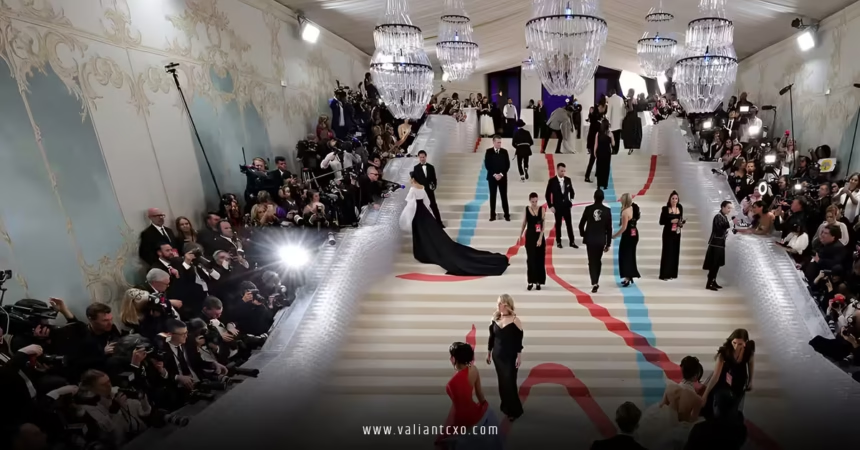
Met Gala 2026 Costume Art theme explained starts with a bang—imagine stepping into a world where your favorite gown isn’t just fabric, but a living sculpture whispering secrets from ancient myths to modern runways. Yeah, that’s the vibe we’re unpacking today. As fashion’s biggest night gears up for May 4, 2026, this theme isn’t your run-of-the-mill red carpet prompt; it’s a deep dive into how clothes and bodies collide to create pure artistry. I’ve been geeking out over Met Gala announcements for years, and this one? It feels like the museum’s finally giving fashion the grand stage it deserves. Stick with me as we break it down—why it matters, what it means, and how celebs might slay it. Trust me, by the end, you’ll be sketching your own dream look.
What Is the Met Gala 2026 Costume Art Theme Explained in Simple Terms?
Let’s kick things off with the basics because, hey, not everyone’s a fashion historian (yet). The Met Gala 2026 Costume Art theme explained boils down to celebrating the “dressed body” as the ultimate canvas for art. Curator Andrew Bolton, the wizard behind these exhibits, calls it a nod to the Costume Institute’s roots—back when it was just a humble collection of garments tucked away like forgotten treasures. But this year, it’s blowing up into something massive.
Picture this: The Metropolitan Museum of Art isn’t treating fashion like a side dish anymore. Instead, it’s plating it front and center in a brand-new space called the Condé M. Nast Galleries. We’re talking nearly 12,000 square feet of prime real estate right by the Great Hall, where paintings, sculptures, and outfits from the last 5,000 years will mingle like old friends at a reunion. The theme spotlights how every brushstroke or chisel mark in the Met’s collection secretly screams about clothing—think Venus de Milo’s drapery or Renaissance portraits where the fabric steals the show.
Why does this hit different? In past years, themes like 2025’s “Superfine: Tailoring Black Style” zoomed in on specific cultural narratives, which was groundbreaking. But Met Gala 2026 Costume Art theme explained here reveals a broader lens: It’s about universality. Your body, my body, that statue’s body—they’re all wrapped in stories told through threads. It’s inclusive, body-positive, and yeah, a little philosophical. Ever wondered why a simple T-shirt can feel like armor on a bad day? That’s the magic Bolton wants us to unpack.
And get this—it’s funded by heavy hitters like Jeff Bezos and Lauren Sánchez, with Saint Laurent throwing in sponsorship swagger. No wonder the buzz is electric; it’s like the Met’s saying, “Fashion isn’t fluff—it’s the thread weaving through all art.”
The Historical Roots Behind Met Gala 2026 Costume Art Theme Explained
Diving deeper into Met Gala 2026 Costume Art theme explained, we can’t ignore the backstory. The Costume Institute started in 1937 as a scrappy offshoot, hoarding dresses like a dragon guards gold. Fast-forward to now, and “Costume Art” flips the script on its name—elevating what was once dismissed as “costume” (implying fake or theatrical) to high art. Bolton dropped this gem at the press conference: The title honors that evolution, proving garments aren’t lesser than oils or marble.
Think about it like this analogy: If paintings are poems on canvas, clothes are poems on skin—intimate, ever-shifting, alive. Historically, the Met Gala’s been a fundraiser since 1948, but Diana Vreeland turned it into a spectacle in the ’70s. Themes evolved from “haute couture” spotlights to cultural deep dives, like 2018’s heavenly Catholic vibes or 2015’s Chinese looking glass. Now, Met Gala 2026 Costume Art theme explained ties it all back to the body as the constant.
From ancient Egyptian linens wrapping mummies to Victorian corsets cinching waists, clothing has always shaped how we see humanity in art. Bolton’s pulling pieces from the Met’s vaults—over 200 garments paired with 200 artworks—to show this dance. It’s not just display; it’s dialogue. A Greek statue’s chiton flows next to a modern sheer gown, asking: What’s changed? What’s eternal? As someone who’s scrolled endless Met Gala recaps, this feels like the theme we’ve been waiting for—one that validates why we obsess over outfits. It’s trustworthy history served with a side of wow.
Breaking Down the Exhibition: Inside Met Gala 2026 Costume Art Theme Explained
Okay, let’s get hands-on with Met Gala 2026 Costume Art theme explained through the exhibit itself. Opening May 10, 2026 (right after the gala on May 4), it’ll run till January 10, 2027—plenty of time to nerd out. The setup? Thematic zones exploring body types and states, shattering the cookie-cutter mannequin mold.
Start with the “Naked Body” section—bold, right? It’ll juxtapose nude sculptures with barely-there modern designs, like those barely-legal sheers from Saint Laurent’s archives. Then, “Classical Body” channels idealized forms: Think Michelangelo’s David meets a toga-inspired gown that hugs like a second skin. But here’s where it gets juicy—the “Pregnant Body” and “Aging Body” nods. Imagine a Renaissance Madonna’s swollen silhouette echoed in a flowing maternity couture piece, or wrinkled fabrics mimicking elderly portraits. It’s raw, real, and revolutionary, challenging what “beauty” looks like in a museum.
Bolton’s genius? Mirrored mannequins by artist Samar Hejazi. You peer in, see your reflection staring back from a 19th-century bustle—bam, empathy unlocked. No more distant admiration; you’re in the story. And the casts? Real bodies, diverse as NYC streets, wearing these relics. A Renata Buzzo corset from 2025 sparked this whole idea, proving contemporary designers are in on the loop.
Met Gala 2026 Costume Art theme explained wouldn’t be complete without logistics. Tickets? $75,000 a pop last year, raising $31 million. Stream it live on Vogue at 6 p.m. ET. The exhibit’s free for members, but expect lines. It’s beginner-friendly too—wall texts will guide you, no PhD required. I’ve imagined wandering those halls; it’s like time-traveling through a wardrobe wonderland.
Why Met Gala 2026 Costume Art Theme Explained Matters for Fashion Lovers
So, why should you care about Met Gala 2026 Costume Art theme explained if you’re not dropping gala-level cash? Because it ripples out, darling. This theme cements fashion’s seat at the art table, proving it’s not “lesser” for being wearable. In a world quick to call trends “fast fashion trash,” here’s validation: Your outfit choices? Artistic statements.
It boosts inclusivity too. By spotlighting varied bodies—pregnant, aging, non-normative—it pushes designers toward diversity. Remember how 2021’s “In America” sparked sustainability chats? This could ignite body-posi revolutions on runways. Plus, with new creative directors like Jonathan Anderson at Dior, expect debuts that scream “Costume Art”—surreal drapes evoking ancient gods or anatomical illusions nodding to the naked form.
From my vantage, as a fashion follower who’s dissected every post-gala tweet, this theme motivates. It reminds us clothing’s power: Armor for the vulnerable, rebellion for the bold. Rhetorical question: What if your next jeans-and-tee combo was museum-worthy? Exactly—suddenly, getting dressed feels epic.
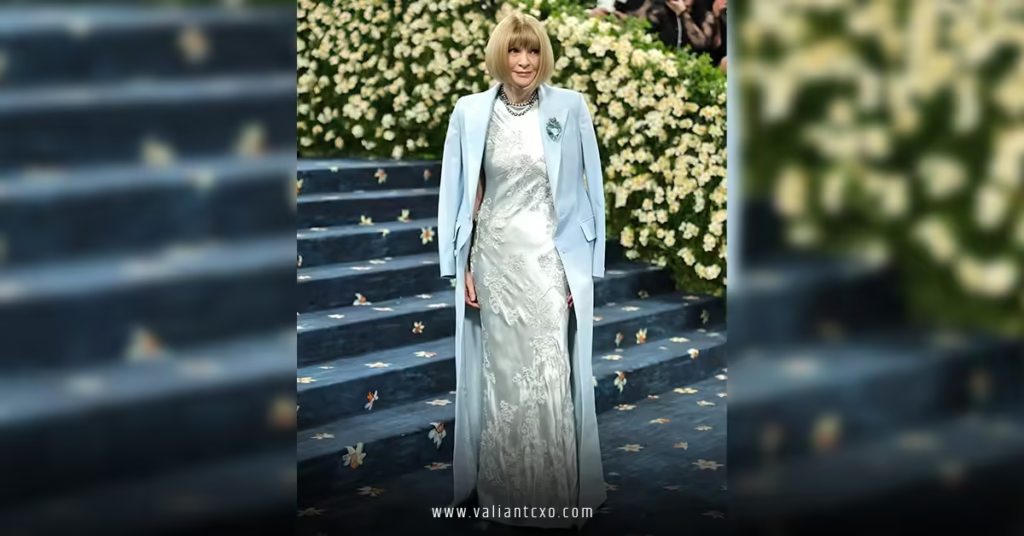
Predicting the Red Carpet: Met Gala 2026 Costume Art Theme Explained in Looks
Ah, the fun part—envisioning Met Gala 2026 Costume Art theme explained on those iconic steps. Dress code’s TBA (likely February drop), but whispers point to “body-centric” prompts: Sculptural, sheer, transformative. Celebs will devour this.
Rihanna? She’s pregnant-announce queen; expect a “Pregnant Body” homage—flowing silks over a bump, jewels mimicking Renaissance pearls. Zendaya, red carpet chameleon, might channel “Classical Body” in a gilded toga-gown hybrid, all golden-hour glow. For edgier vibes, A$AP Rocky could rock “Naked Body” with trompe-l’oeil prints that play hide-and-seek with skin.
Saint Laurent’s sponsorship screams sheer Yves classics—think Kate Moss-level transparency. Emerging talents? Duran Lantink’s upcycled anatomicals for Gaultier, or Atlein’s marble-like folds. Men too: Tailored suits morphing into armor, echoing warrior statues.
Met Gala 2026 Costume Art theme explained predicts chaos—in the best way. Bold colors? Muted earth tones for aging motifs. Accessories? Body jewelry as art. It’s relatable: Even if you’re not A-list, thrift a sheet-toga for your next party. Who knows? Your selfie might go viral.
The Bigger Picture: Cultural Impact of Met Gala 2026 Costume Art Theme Explained
Zoom out—Met Gala 2026 Costume Art theme explained isn’t isolated; it’s a cultural quake. In an era of AI-generated art and body-filtered selfies, this grounds us in the tactile: Fabric’s touch, skin’s warmth. It critiques beauty standards too—why glorify youth when aging bodies birthed civilizations?
Globally, it spotlights Western art’s focus but hints at expansions. Future exhibits in those galleries? Endless potential for non-Western dialogues. Fundraising-wise, Bezos and Sánchez’s backing (post their 2024 Vogue glow-up) ties fashion to philanthropy—$6.25 million for sustainable CFDA initiatives? Game-changer.
Personally, I’ve felt fashion’s therapy: A killer outfit lifts spirits like therapy. This theme amplifies that, making art accessible. Misty Copeland, at the announcement, gushed about dance’s “dressed body”—ballet tutus as sculptures. It’s connective tissue for us all.
Met Gala 2026 Costume Art Theme Explained: Co-Chairs, Hosts, and VIP Vibes
Who’s running the show? Anna Wintour’s eternal chair, but co-chairs drop soon—last year’s Colman Domingo and Lewis Hamilton set bars high. Bezos and Sánchez are locked as supporters, guaranteeing carpet spots. Honorary chairs? Power players like Pharrell or Lupita Nyong’o, betting on body-storytelling pros.
Host committee’s a celeb salad—expect Zendaya, Bad Bunny types. Met Gala 2026 Costume Art theme explained thrives on star power; their interpretations fuel trends for months. Imagine Timothée Chalamet in a “Naked Body” suit—vulnerable yet fierce. It’s not gossip; it’s inspiration.
Wrapping It Up: Your Takeaway from Met Gala 2026 Costume Art Theme Explained
Whew, we’ve journeyed from basement collections to body-positive masterpieces. Met Gala 2026 Costume Art theme explained reveals a pivotal shift: Fashion as equal to fine art, bodies as the stars. On May 4, 2026, expect a red carpet that’s less pose, more poetry—garments that hug history while hugging curves.
This isn’t just an event; it’s a mirror. What story will your clothes tell? Dive in, experiment, celebrate the dressed you. Whether streaming from your couch or dreaming big, let it spark joy. Fashion’s art—now go make some.
FAQs
What makes the Met Gala 2026 Costume Art theme explained so unique compared to past years?
Unlike niche cultural spotlights, this theme weaves fashion through 5,000 years of art, focusing on the body’s role—think mirrored mannequins for personal connection. It’s Met Gala 2026 Costume Art theme explained as inclusive evolution.
When and where can I see the exhibition tied to Met Gala 2026 Costume Art theme explained?
The gala’s May 4, 2026; exhibit opens May 10 at the Met’s new Condé M. Nast Galleries, running through January 2027. Perfect for a NYC day trip—Met Gala 2026 Costume Art theme explained live!
How might celebrities interpret Met Gala 2026 Costume Art theme explained on the red carpet?
Expect sheers for “Naked Body,” flowing drapes for classical vibes, and diverse silhouettes celebrating all forms. Rihanna or Zendaya could redefine it—Met Gala 2026 Costume Art theme explained in star-powered glory.
Is Met Gala 2026 Costume Art theme explained beginner-friendly for fashion newbies?
Absolutely—exhibit texts and pairings make it accessible, no expertise needed. It’s about everyday dressing as art, so Met Gala 2026 Costume Art theme explained welcomes all.
Why is funding key to understanding Met Gala 2026 Costume Art theme explained?
Backed by Bezos, Sánchez, and Saint Laurent, it funds sustainability and inclusivity pushes. This support elevates the theme’s impact—Met Gala 2026 Costume Art theme explained as philanthropy in couture.
For More Updates !! : valiantcxo.com