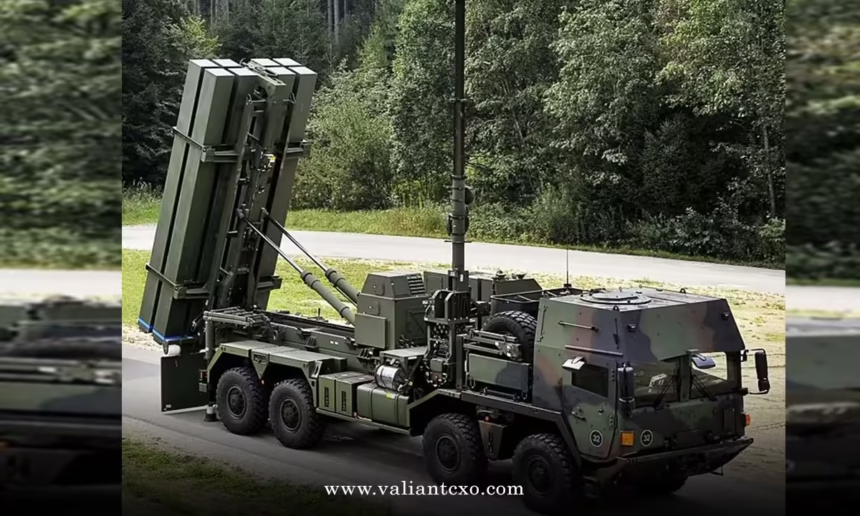
NATO air defense modernization isn’t a buzzword; it’s a survival strategy. The alliance is racing to upgrade radars, missiles, command systems, and airborne “eyes in the sky” to deal with faster missiles, stealthier aircraft, and relentless drone swarms.
And here’s the connection that matters for you: one of the most visible pieces of this puzzle is the RAF Lossiemouth Wedgetail arrival 2026, which slots directly into NATO’s new air and missile defense backbone.
Quick Snapshot: What NATO Air Defense Modernization Really Means
- NATO is upgrading from Cold War–era systems to integrated, layered air and missile defenses that can handle cruise missiles, ballistic threats, stealth aircraft, and drones.
- New sensors, like advanced ground-based radars and airborne early warning platforms, are feeding richer, faster data into shared NATO command networks.
- Interoperability is the name of the game: U.S., UK, and European systems are being wired to share tracks, targets, and engagement orders in near real time.
- The end state: a layered, networked shield where no single nation carries the whole burden—and where threats are detected and engaged earlier, farther, and smarter.
Why NATO Air Defense Modernization Is a Big Deal
For decades, NATO leaned heavily on a mix of:
- Legacy radar networks
- Patriot and similar missile systems
- AWACS platforms like the E‑3A
- Fighter aircraft on quick-reaction alert
That worked in a world with fewer precision missiles and slower technological churn. Today? Not enough.
The new threat environment
Allies are facing:
- Long-range cruise missiles hugging terrain
- Hypersonic or near‑hypersonic weapons
- Massed drone attacks and loitering munitions
- Advanced electronic warfare and cyber disruption
What usually happens in this environment is simple: if your sensors are old, your command system is slow, or your interceptors can’t reach far enough, you’re behind the power curve from the first minute of a crisis.
NATO’s modernization effort is about flipping that script.
Core Pillars of NATO Air Defense Modernization
Think of NATO’s modernization as four big pillars that have to work together, not four separate projects.
1. Better Sensors and Early Warning
NATO is investing in more capable radars and airborne surveillance platforms that can see farther and process more data, faster.
Key moves include:
- New ground-based air defense radars with better range and tracking
- Upgrades to NATO’s own AWACS and paths toward eventual replacement
- National programs bringing in platforms like the E‑7 Wedgetail, tied directly into NATO networks
This is where the RAF Lossiemouth Wedgetail arrival 2026 becomes more than a UK story. Those E‑7 aircraft bring high-end AESA radar and modern battle management capability to the northern flank—exactly where NATO needs consistent coverage.
2. Layered Air and Missile Defense
You don’t defend modern airspace with one system. You stack layers.
Those layers often include:
- Short‑range defense against drones and low‑flying threats
- Medium‑range systems for cruise missiles and aircraft
- Long‑range missile defense for high‑altitude and ballistic threats
Different NATO members bring different strengths—Patriot batteries, SAMP/T systems, national short‑range solutions, and more. Modernization is about knitting them into an integrated architecture so the right weapon engages the right target at the right time.
3. Command, Control, and Data Networks
Here’s the thing: the best radar and the best interceptor are useless if the data can’t move quickly and reliably.
NATO is:
- Upgrading its integrated air and missile defense command structure
- Improving data links and secure communications across allies
- Working on common standards so national systems can “talk” without friction
In my experience, this is where modernization succeeds or fails. Hardware is easier; shared doctrine, interoperable software, and secure networks are the grind.
4. Airborne Early Warning & Control (AEW&C)
AEW&C is the brain in the sky that ties everything together.
Legacy E‑3 platforms are aging. That’s why you’re seeing:
- The U.S. moving toward the E‑7A
- The UK adopting E‑7 and basing it at Lossiemouth
- Other allies exploring or fielding advanced AEW&C platforms
AEW&C aircraft detect threats early, build the air picture, and assign tasks to fighters and ground-based air defenses. Without them, you’re fighting with one eye closed.
How RAF Lossiemouth Wedgetail Arrival 2026 Plugs Into NATO Modernization
Let’s zoom in on the RAF Lossiemouth Wedgetail arrival 2026 and how it fits into the NATO air defense modernization story.
1. New-generation “eyes in the sky” for the northern flank
The UK’s E‑7 Wedgetail fleet based at RAF Lossiemouth gives NATO:
- High-end airborne early warning coverage over the North Atlantic and Norwegian Sea
- Better visibility on long-range bomber and cruise missile activity
- A modern replacement for older AWACS-style systems in the region
From NATO’s perspective, it’s like adding a high-resolution camera to a key corner of the defensive grid.
2. Shared platform logic with the U.S.
As the U.S. moves to its own E‑7A fleet, the RAF Wedgetails at Lossiemouth:
- Use similar mission systems and radar concepts
- Train toward compatible tactics, techniques, and procedures
- Make joint operations smoother and faster
What I’d do if I were analyzing NATO air defense is watch how often allied E‑7s show up in joint exercises. That frequency tells you how serious NATO is about a shared airborne early warning ecosystem.
3. Better battle management for fighters and missile defenses
An E‑7 Wedgetail doesn’t just spot targets; it orchestrates the response.
From RAF Lossiemouth, Wedgetail crews can:
- Coordinate Typhoon and F‑35 fighters
- Help manage tanker refueling plans to keep aircraft on station
- Integrate with ground-based SAM coverage in Northern Europe
- Feed NATO’s combined air operations centers with a clean, consolidated picture
The net effect: faster decisions, fewer blind spots, and more efficient use of limited high-end air defense assets.
Modernization in Practice: What Changes on Day One of a Crisis?
Let’s walk through a simplified “before and after” scenario.
Before modernization
- Mixed radars with varying ages and capabilities
- AWACS platforms stretched thin across large areas
- Data moving via older links with limited bandwidth and resilience
- National systems that can cooperate but sometimes struggle to integrate in real time
In a fast-moving crisis, response times are slower, and the picture can be fragmented.
After modernization (the goal)
- Modern ground and airborne sensors feeding into an integrated NATO network
- AEW&C platforms like Wedgetail providing a high-quality air picture
- Layered defenses cued intelligently—short, medium, and long‑range systems working as a team
- U.S., UK, and European assets sharing targeting data and engagement authority based on agreed plans
In that world, NATO can see more, decide faster, and act earlier. Which is exactly the point.
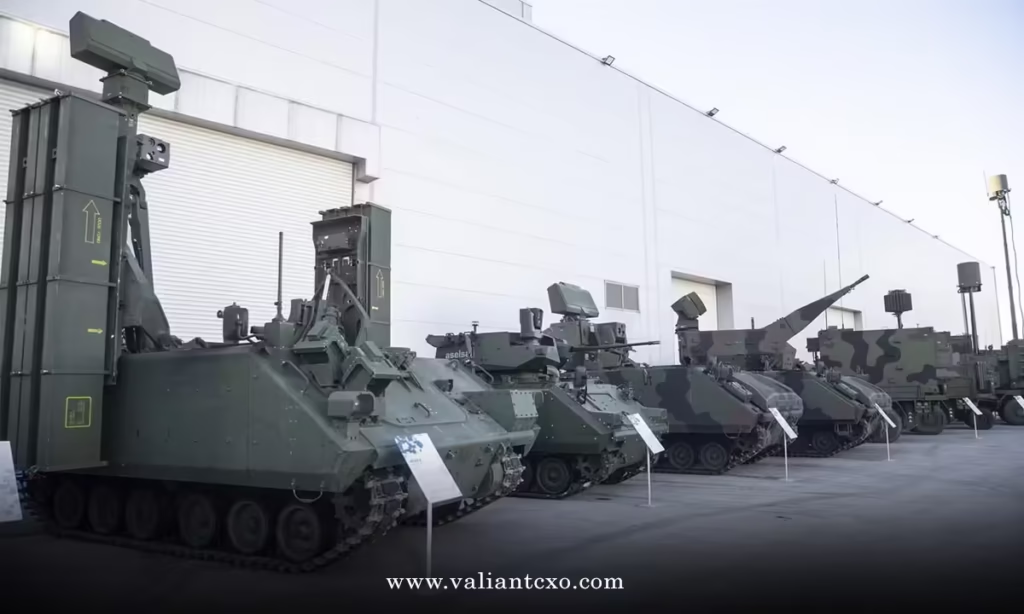
Step-by-Step: How to Understand NATO Air Defense Modernization as a Beginner
New to this? Here’s a practical, no‑nonsense way to get your head around it.
Step 1: Learn the basic layers
Start with three simple buckets:
- Sensors – radars, satellites, AEW&C
- Shooters – missiles, guns, fighter aircraft
- Brains – command centers, networks, data links
If you can explain how those three interact, you’re ahead of most casual observers.
Step 2: Map old vs new
On a piece of paper, draw two columns: “Legacy NATO Air Defense” and “Modernized NATO Air Defense.”
Then list:
- Old AWACS vs platforms like E‑7
- Older radars vs newer AESA or digital systems
- Stand‑alone national systems vs integrated NATO architectures
The differences practically jump out at you.
Step 3: Add geography
Look at a map of NATO.
Ask:
- Where are the key air and missile defense needs? (Baltic states, Poland, Black Sea, North Atlantic)
- Where are key airbases like RAF Lossiemouth?
Once you place platforms like Wedgetail in geography, modernization stops being abstract and becomes strategic positioning.
Step 4: Watch for real-world tests
Modernization is proven in exercises, not PowerPoint decks.
Follow:
- Large NATO exercises focused on integrated air and missile defense
- Participation of AEW&C aircraft, including E‑7 variants
- Stories about multi-national air policing and missile defense drills
What usually happens is that each large exercise reveals gaps, which then drive the next round of upgrades.
Common Misconceptions About NATO Air Defense Modernization
Let’s clear out a few bad assumptions that keep showing up.
Misconception 1: Modernization = buying one new missile system
Reality: It’s a system-of-systems effort. New missiles without better sensors and networks don’t deliver the full value.
Misconception 2: AEW&C platforms like Wedgetail are “nice to have,” not essential
Reality: Against modern threats, AEW&C is often the difference between early, coordinated responses and late, fragmented ones. The RAF Lossiemouth Wedgetail arrival 2026 is exactly the kind of upgrade that shifts NATO from reactive to proactive.
Misconception 3: Every NATO country is doing its own thing with no big picture
Reality: There are national programs, sure, but they’re increasingly designed to plug into NATO’s integrated air and missile defense framework. Interoperability is part of the requirement set from day one.
Misconception 4: Modernization is mostly about ballistic missile defense
Reality: Cruise missiles, advanced aircraft, drones, and electronic warfare are just as central. Modernization is multi-threat, not single‑threat.
How This Looks From a U.S. Perspective
If you’re sitting in the U.S. wondering why NATO’s air defense choices matter, here’s the blunt answer: they directly affect American security and operational flexibility.
- Forward defense: Stronger NATO air defense reduces pressure on U.S. forces to cover every gap.
- Shared burden: Systems like Wedgetail, Patriot, and integrated radars mean allies shoulder more of the day‑to‑day deterrence load.
- Interoperable future: As the U.S. fields E‑7A and upgrades its own missile defenses, NATO’s modernization ensures those capabilities plug into a living, breathing network—not into a patchwork of incompatible systems.
In my experience, alliances live or die on whether “modernization” becomes real interoperability, not just new hardware parked on the ramp.
Key Takeaways
- NATO air defense modernization is about building an integrated, layered shield against drones, cruise and ballistic missiles, and advanced aircraft—far beyond Cold War‑era capabilities.
- The effort spans sensors, shooters, and command networks, with a heavy focus on interoperability so that national systems operate as one combined defense.
- AEW&C upgrades are central, and the RAF Lossiemouth Wedgetail arrival 2026 is a prime example of how a national program directly strengthens NATO’s northern air picture.
- Modernization changes how crises play out: earlier detection, faster decisions, smarter engagement choices, and better burden‑sharing across the alliance.
- For U.S. interests, NATO’s upgraded air defenses mean stronger forward deterrence and smoother integration with American systems like the upcoming E‑7A.
- The smart way to follow this evolution is to track official NATO and national announcements, major integrated air and missile defense exercises, and the operational use of platforms like Wedgetail in joint operations.
FAQs on NATO Air Defense Modernization
1. How does the RAF Lossiemouth Wedgetail arrival 2026 specifically support NATO air defense modernization?
The RAF Lossiemouth Wedgetail arrival 2026 brings modern E‑7 AEW&C aircraft into a strategic location covering the North Atlantic and Northern Europe, providing advanced radar coverage and battle management that feed directly into NATO’s integrated air picture. That improves early warning, coordination of fighters and missile defenses, and overall situational awareness on a critical flank.
2. Is NATO air defense modernization only focused on Russia?
No. While Russian capabilities are a major driver, NATO air defense modernization also addresses broader threats like ballistic missile proliferation, drone technology, and long‑range precision weapons that can be fielded by state and potentially non‑state actors. The goal is a flexible architecture that can adapt to different theaters and threat profiles.
3. Will modernization reduce the need for U.S. forces in Europe?
Modernization won’t make U.S. forces irrelevant, but it can reduce the need for the U.S. to cover every air defense requirement alone. As allies field systems like E‑7 Wedgetail, upgraded missile defenses, and integrated radars, the alliance as a whole becomes more capable, allowing U.S. assets to be used more selectively and strategically rather than as constant gap‑fillers.