
The RBA board split decision on fifth rate hike to 4.85% November 2026 happened on November 3, when Australia’s central bank pushed its cash rate up 25 basis points in a 6-3 vote. Here’s the quick version:
- What happened: The Reserve Bank of Australia raised its cash rate target to 4.85%, the highest since December 2008.
- The split: Six board members voted to hike. Three didn’t, and reporting says they wanted more time to judge the earlier increases.
- Why it matters: A divided vote hints that the hiking cycle may be close to its peak.
- Who it touches: Australian borrowers first. Then US investors, expats, and companies with Aussie exposure.
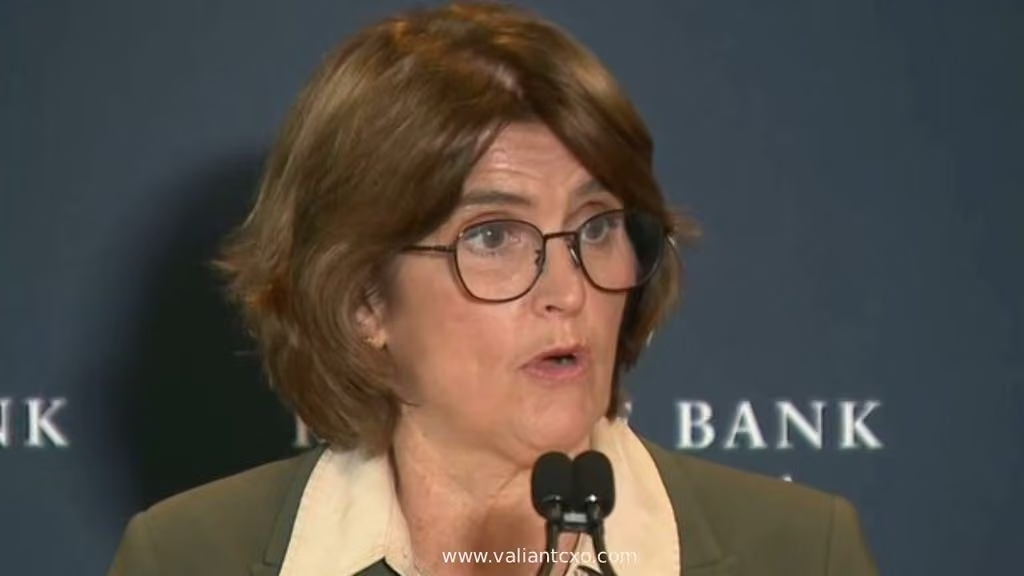
- What’s next: Governor Michele Bullock says the board will “take stock” and wouldn’t rule anything in or out.
What Is the RBA Board Split Decision on Fifth Rate Hike to 4.85% November 2026?
Start with the plain meaning. The RBA’s nine-member board sets the cash rate, which is Australia’s version of the federal funds rate. Banks key their lending and savings rates off it.
Five hikes in a single year is aggressive. The November move took the target to 4.85%, and the vote wasn’t unanimous. Six members backed it. Three pushed back.
Why does a 6-3 vote matter more than the 25-point move itself? Because central banks usually try to look united. A visible dissent is a signal flare.
Quick Glossary for Beginners
- Cash rate: The RBA’s benchmark overnight rate. The closest US cousin is the fed funds rate.
- Basis point: One hundredth of a percentage point. Twenty-five basis points equals 0.25%.
- Split vote: A decision where board members disagree on the move.
- Dual mandate: The goal of keeping inflation in check while protecting jobs. Bullock stressed that it’s still in play.
Why the Board Split on This Rate Hike
Think of the RBA as a driver at the front of a long freight train. Hit the brakes and nothing stops right away. The cars behind keep shoving forward for a long while. Bullock made essentially that point at her press conference, noting the last couple of hikes haven’t even started flowing through yet.
That’s the heart of the disagreement. One camp says inflation is still running hot, so keep braking. The other says you’ve already hit the brakes four times, so let the train slow down before you slam them again.
Hawks vs. Doves: The Board’s Two Camps
| Camp | Vote Count | Core Argument | What They’re Watching |
|---|---|---|---|
| Hike now | 6 members | Excess demand and upside inflation risks justify another move | Productivity, investment spending, demand pressure |
| Hold and assess | 3 members | Earlier hikes haven’t fully landed; wait for the data | Spending, income growth, rising unemployment |
Bullock said the hike targeted domestic capacity constraints, not oil prices. She pointed to weak productivity and strong investment, including data-center spending, as demand drivers. In my experience, when a central bank blames home-grown problems, it’s telling you the fix has to come from slower domestic demand. That means more pain in the housing market and in household budgets.
How the RBA Board Split Decision on Fifth Rate Hike to 4.85% November 2026 Affects Real People
RBA Board Split Decision on Fifth Rate Hike to 4.85% November 2026 Let’s get practical. Australian mortgages are mostly variable-rate, so hikes hit borrowers fast. One rate-tracking site, RBA Rate Watch, estimates that a 0.25-point rise adds roughly A$86 a month on a A$500,000 loan. That assumes a 30-year term and a 2.5-point lender margin.
Housing is taking the hardest hit. Commonwealth Bank has downgraded its forecast to roughly a 14% peak-to-trough fall in dwelling values, as reported by Nine. That’s a forecast, not a certainty.
On the growth side, Bullock said the central forecast doesn’t see a recession, but growth will slow “quite markedly” and people will feel poorer.
What It Means If You’re in the USA
You don’t need an Australian mortgage to care. Here’s where it shows up for US readers:
- Currency: Rate gaps between countries move the Australian dollar against the US dollar. Travelers and importers feel that.
- Investments: Australian equities, bonds, and ETFs reprice when rates climb.
- Business exposure: If your company sells into Australia, weaker household spending hits revenue.
- Policy signals: The Federal Reserve runs its own rate debate. Watching how another central bank handles a split vote gives you a template for reading the next Fed meeting.
Step-by-Step: How to Read a Split Central Bank Decision
RBA Board Split Decision on Fifth Rate Hike to 4.85% November 2026 Here’s the routine I’d follow if I were new to this. It works for the RBA, the Fed, or anyone else.
- Find the vote count. Unanimous means a confident bank. 6-3 means debate.
- Read the governor’s press conference. Tone beats the headline. Bullock’s “I don’t know what the next move will be” is a big tell.
- Identify the stated reason. Oil? Wages? Productivity? The cause tells you the fix.
- Check the lag. Ask how many earlier hikes haven’t yet worked through the system.
- Watch the next data. Inflation prints and jobs figures decide the next meeting. Read the RBA’s official monetary policy pages for the board’s own explanation.
- Stress-test your own money. Plug a higher rate into your budget or portfolio and see what breaks.
What a Split Vote Signals About the Rate Path
RBA Board Split Decision on Fifth Rate Hike to 4.85% November 2026 Here’s the thing: dissent rarely appears out of nowhere. It tends to show up late in a cycle, when the data is mixed and the lagged effects loom large.
Does that guarantee a pause? No. Bullock was blunt that inflation risks still lean upward. A split vote means the next hike faces a higher bar, not that it’s off the table.
What usually happens is this: the next two or three data releases decide everything. If inflation cools and unemployment ticks up, the dissenters win the argument. If prices stay stubborn, the hawks get their way again. That’s my read, and it’s opinion, not fact.
Reading the RBA Board Split Decision on Fifth Rate Hike to 4.85% November 2026 Like an Analyst
Separate what’s known from what’s guessed:
| Item | Type | Detail |
|---|---|---|
| Cash rate now 4.85% | Fact | Highest since December 2008 |
| Vote was 6-3 | Fact | Reported by Nine and others |
| Dissenters wanted more time | Reported | Per news coverage of the board’s reasoning |
| Rates may be near peak | Opinion | Inference from the split, not a forecast |
| ~14% home price drop | Forecast | Commonwealth Bank projection |
Common Mistakes & How to Fix Them
Mistake 1: Treating a 6-3 vote as a pivot. It isn’t one. The majority still hiked. Fix: wait for a hold before you assume the cycle is over.
Mistake 2: Blaming oil for everything. Bullock explicitly said oil isn’t the reason for this move. Fix: focus on domestic demand and productivity.
Mistake 3: Ignoring the lag. Earlier hikes are still working through the system. Fix: budget for pain that hasn’t arrived yet, not just today’s rate.
Mistake 4: Comparing Australia and the US one-to-one. Different mortgage structures, different inflation drivers. Fix: compare direction and tone, not raw numbers.
Mistake 5: Making big moves on one headline. I’ve watched people rebalance whole portfolios off a single meeting. Fix: set a rule to wait for two data releases first.
What I’d Do If I Were You
If I held Australian assets or had business there, I’d run a simple stress test. Assume rates stay at 4.85% for six months, then see whether cash flow still works. If I were a US investor with no direct exposure, I’d mostly treat this as a read on global inflation pressure.
And if I were a variable-rate borrower in Australia? I’d build a buffer now. Bullock herself said the last couple of hikes haven’t fully landed yet.
Key Takeaways
- The RBA lifted its cash rate 25 basis points to 4.85% on November 3, 2026, its fifth hike this year.
- The vote was 6-3, and the dissent signals real debate about whether to keep tightening.
- Bullock blamed domestic demand and weak productivity, not oil prices.
- Her central forecast avoids recession but expects growth to slow sharply.
- Earlier hikes are still flowing through the economy, so the pain isn’t finished.
- A split vote raises the bar for another hike but doesn’t rule it out.
- US readers should watch currency, Australian assets, and the lessons for reading Fed decisions.
Final Thoughts
The RBA board split decision on fifth rate hike to 4.85% November 2026 tells you one thing above all: the debate has moved from “how high?” to “how long should we wait and watch?” That’s a meaningful shift, even though the majority still voted to tighten.
Your next step is simple. Before the next RBA meeting, read the board’s official statement on the RBA’s monetary policy page and note which data points they cite. Those are the numbers that will decide what comes next.
FAQs
1. Why was the RBA board split on the fifth rate hike?
Six members saw excess demand and upside inflation risk. Three, according to reporting, wanted more time to see how earlier hikes were working.
2. Does the RBA board split decision on fifth rate hike to 4.85% November 2026 mean a pause is coming?
Not automatically. Bullock declined to rule any future move in or out. Incoming inflation and jobs data will drive the next call.
3. Should US investors care about this decision?
Yes, in a few cases. It can move the Australian dollar, affect Australian assets, and show how another central bank handles a divided board, which helps when you read Fed minutes.