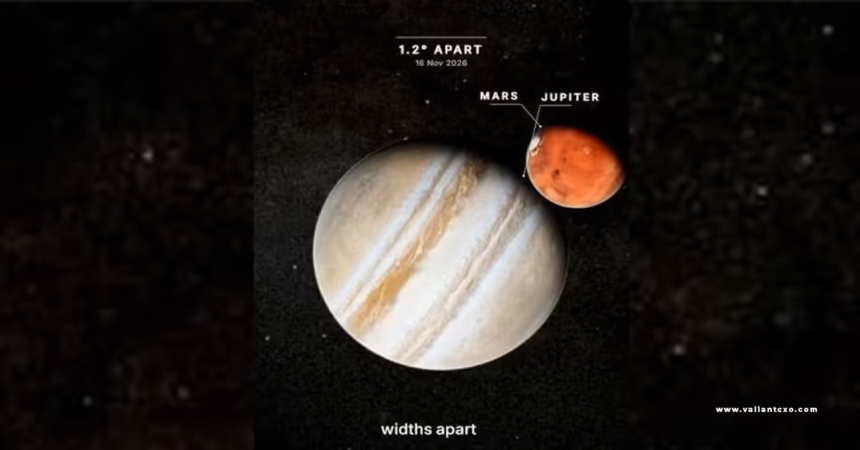
Mars and Jupiter close approach November 2026 viewing times all point to the same stretch of pre-dawn mornings: November 14 through 17, with the tightest pairing landing on November 15–16. If you’ve ever wanted to see two planets look like they’re practically touching, this is your week. No telescope. No fancy gear. Just an alarm clock set uncomfortably early and a clear patch of southeastern sky.
Here’s the quick rundown before we get into the weeds:
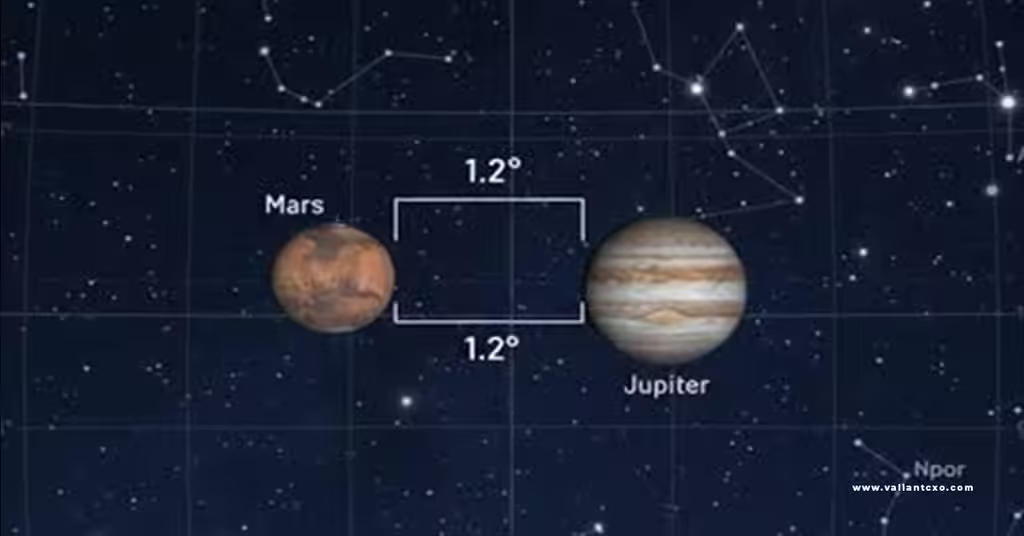
- What’s happening: Mars and Jupiter appear roughly 1.2 degrees apart — about the width of a finger held at arm’s length.
- When: Closest approach hits at 02:04 UTC on November 16, 2026; the best US viewing mornings are November 15 and 16.
- Where to look: Southeast to south-southeast sky, about an hour before sunrise, inside the constellation Leo.
- Equipment needed: None. Naked-eye visible, binoculars optional for extra detail.
- Bonus: The Leonid meteor shower peaks the same week, radiating from almost the same patch of sky.
That’s the skeleton. Now let’s put some meat on it.
What’s Actually Happening Up There
Here’s the thing people get wrong immediately: Mars and Jupiter aren’t actually near each other. They’re separated by roughly 350 million miles in real space. What we’re seeing is a straight-up optical illusion — a conjunction, in astronomy-speak — where two objects just happen to line up along our sightline from Earth.
Think of it like watching two cars on a highway from a bridge overhead. One’s in the far lane, one’s in the near lane, but from your angle, they look like they’re about to collide. They’re not. They’re just sharing a line of sight for a moment. That’s exactly what’s going on with Mars and Jupiter this November.
The orbits of the planets sit roughly in the same flat plane around the Sun. Every so often, from our vantage point on Earth, two of them appear to converge. It happens regularly, but a pairing this tight — under 1.5 degrees — doesn’t come around every year. In my experience watching these events for over a decade, anything under 2 degrees between two bright naked-eye planets is worth setting an alarm for.
Mars and Jupiter Close Approach November 2026 Viewing Times by Night
Here’s where it gets concrete. The separation between the two planets shrinks night by night until mid-month, then widens again as Mars pulls ahead to the east.
| Date (2026) | Approx. Separation | Viewing Quality | Notes |
|---|---|---|---|
| Nov 13–14 | ~1.8°–2.0° | Great | Still tightening; good warm-up night |
| Nov 15 | ~1.2°–1.3° | Excellent | Mars passes 1.2° north of Jupiter |
| Nov 16 | ~1.2° (1°11′ at peak) | Peak closeness | Minimum separation at 02:04 UTC |
| Nov 17–18 | ~1.3°–1.6° | Excellent | Overlaps with Leonid meteor peak |
| Nov 19–22 | ~2°+ | Still good | Mars, Jupiter, Regulus form a near triangle by Nov 22 |
Mars and Jupiter Close Approach November 2026 Viewing Times: The Exact Peak Moment
The scientifically precise minimum gap — 1°11′, roughly 1.2 degrees — occurs at 02:04 UTC on November 16, 2026. In the US, that translates to late evening on November 15 across most time zones. But here’s the catch: Mars and Jupiter sit in Leo, a constellation that doesn’t climb into good viewing position until the pre-dawn hours. So the exact scientific minimum happens while the pair is still low or below the horizon for US observers.
What does that mean practically? You don’t lose anything. The separation barely budges over a few hours. Your best real-world shot is the pre-dawn sky on both November 15 and November 16 — not the literal UTC minimum.
Where to Look: Finding Mars and Jupiter in the Sky
Face south to south-southeast. Give it about an hour before sunrise. Jupiter is the dazzler — magnitude -2.1, brighter than nearly everything else up there except Venus and the Moon. Mars sits close by, noticeably dimmer and with a warm orange tint, at magnitude +0.7.
Once you spot Jupiter, Mars is impossible to miss right next to it. Below the pair, you’ll find Regulus, the brightest star in Leo, forming a loose triangle with the two planets as the month wears on. Venus will also be blazing away lower on the horizon, putting on its own show as it approaches peak brightness late in the month.
Step-by-Step Action Plan for Beginners
If you’ve never done pre-dawn skywatching before, here’s exactly what I’d do:
- Check the weather the night before. Clear skies matter more than any gear you own. A hazy or cloudy horizon ruins everything.
- Set your alarm for about 90 minutes before local sunrise. You want dark sky, not twilight glow, when you first look.
- Pick a spot with an open southeastern view. A backyard, a parking lot, a rooftop — anywhere without trees or buildings blocking that direction.
- Give your eyes 5–10 minutes to adjust to the dark. Skip the phone flashlight. It kills your night vision fast.
- Scan south-southeast for the brightest point of light. That’s Jupiter. Mars will be right beside it, dimmer and orange-ish.
- Watch for 10–15 minutes minimum. The pair doesn’t move fast, but lingering lets you soak in the scene and catch any stray Leonid meteors.
- If shooting photos, use a tripod and manual focus. Autofocus struggles badly in low light.
Common Mistakes & How to Fix Them
I’ve watched plenty of beginners fumble this one. Here’s what usually goes wrong and the fix for each.
Mistake: Looking too late, after the sky’s already bright. By the time the sun’s glow washes out the horizon, both planets fade into the brightening sky. Fix: get out there a full hour before sunrise, not just 15 minutes.
Mistake: Checking only the “closest approach” date and ignoring nearby nights. Weather doesn’t care about your calendar. Fix: treat November 14 through 17 as one flexible window, not a single must-see night.
Mistake: Looking east instead of southeast. Jupiter and Mars sit higher up and more to the south than people expect. Fix: use a stargazing app or just scan a wide arc from due south to due east.
Mistake: Assuming you need a telescope. You don’t, and honestly a telescope’s narrow field of view makes it harder to appreciate the pairing. Fix: start naked-eye, add binoculars only if you want finer detail.
Mistake: Forgetting the Moon phase matters. A bright Moon nearby can wash out fainter details. Fix: check moonrise/moonset times for your location before heading out — in November 2026 the Moon reaches first quarter on the 17th, so early mornings before then stay darker.
Mars and Jupiter Close Approach November 2026 Viewing Times Across US Time Zones
Approximate pre-dawn viewing windows for November 15–16, when both planets sit highest in the southeastern sky before twilight:
| Time Zone | Approx. Best Window (Local) | Direction |
|---|---|---|
| Eastern (EST) | 5:00–6:00 AM | South-southeast |
| Central (CST) | 4:45–5:45 AM | South-southeast |
| Mountain (MST) | 4:30–5:30 AM | South-southeast |
| Pacific (PST) | 4:15–5:15 AM | South-southeast |
These windows shift slightly depending on your exact latitude and local sunrise time, so double-check sunrise for your specific city before setting that alarm.
Bonus: Leonid Meteors and the Four-Planet Parade
Here’s a detail a lot of casual stargazers miss. The Leonid meteor shower peaks November 17–18, 2026, and its radiant point sits in Leo — almost exactly where Mars and Jupiter are hanging out. According to the American Meteor Society, Leonids typically produce a modest but reliable rate under dark skies, occasionally spiking into something more dramatic.
Add Mercury and Venus into the mix, and you’ve got a four-planet parade running roughly November 8 through 22. Mercury reaches its best visibility around November 20–21, while Venus hits peak brilliance near November 29. It’s a packed month for anyone willing to lose a little sleep.
Key Takeaways
- Mars and Jupiter close approach November 2026 viewing times center on November 14–17, peaking November 15–16.
- The two planets will appear about 1.2 degrees apart — roughly a finger-width at arm’s length.
- No telescope required; this is a naked-eye event, best enhanced with simple binoculars.
- Look southeast to south-southeast, about an hour before local sunrise, inside the constellation Leo.
- Jupiter is the brighter point of light; Mars sits close by with a distinct orange tint.
- The Leonid meteor shower peaks the same week, adding extra value to early mornings outside.
- Weather and local horizon matter more than exact timing — treat the whole week as your viewing window.
Look, the sky doesn’t hand out tight planetary pairings like this very often. Set two alarms if you have to, grab a coffee, and get outside before dawn on November 15 or 16. You’ll have a front-row seat to something genuinely rare, and it costs you nothing but a little sleep.
FAQs
Do I need a telescope to see the Mars and Jupiter close approach in November 2026?
No. The whole point of this event is that it’s visible with the naked eye. A telescope’s narrow field of view actually makes it harder to appreciate how close the two planets look together — binoculars are the most you’d want to use.
What happens if clouds block my view during the main viewing times?
You’ve got options. Mars and Jupiter stay within a couple of degrees of each other from roughly November 14 through 18, so any clear morning in that stretch still shows a tight, impressive pairing, even if it’s not the exact peak night.
Can I see the Mars and Jupiter close approach from anywhere in the US, or does location matter?
Latitude and local horizon matter more than longitude. Both planets sit fairly high in the southeastern sky before dawn across the continental US, so most locations with an unobstructed view south-southeast will work fine, whether you’re in a city or out in the country.