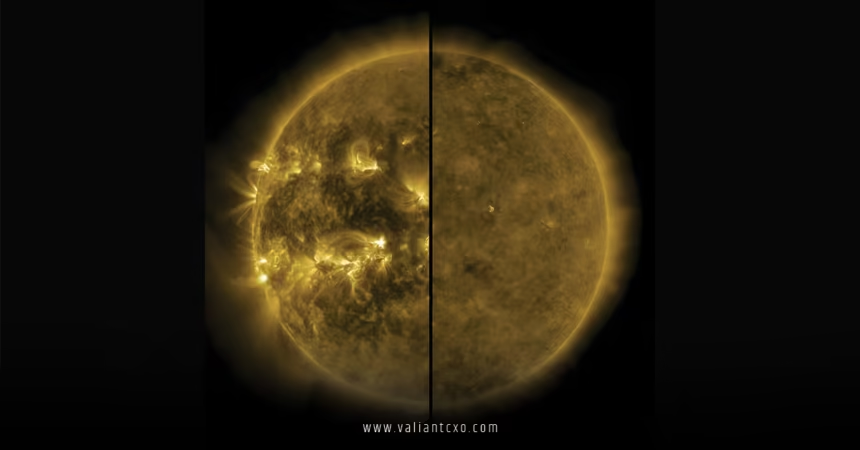
Solar Cycle 25 maximum activity has officially been one of the more surprising chapters in recent solar history. Back in 2019, experts predicted a tame peak around July 2025 with a smoothed sunspot number hovering near 115—similar to the relatively quiet Solar Cycle 24. But the Sun had other plans. By late 2024, the smoothed sunspot number climbed to around 161 in October, marking the actual peak according to observations from SILSO and other monitoring groups. Even now, in early February 2026, we’re still feeling the aftershocks of that heightened phase.
Think of the solar cycle like a heartbeat that speeds up and slows down every 11 years or so. Right now, we’re in the declining limb, but the Sun isn’t done flexing. Massive sunspots like AR4366 keep erupting, producing powerful events that remind us why Solar Cycle 25 maximum activity remains relevant. For context, one dramatic example was the X4.2 solar flare from sunspot AR4366 effects, which caused radio blackouts and highlighted how intense things can still get even past the official peak.
What Exactly Is Solar Maximum?
Solar maximum is the point when our star shows the most spots, flares, and outbursts. Sunspots are dark, cooler areas where intense magnetic fields break through the surface. More sunspots mean more tangled magnetism, leading to more explosions—solar flares and coronal mass ejections (CMEs).
During Solar Cycle 25 maximum activity, we’ve seen daily sunspot numbers spike well over 200 on multiple occasions, far exceeding Cycle 24’s highs. The cycle officially kicked off in December 2019 after a deep minimum. Predictions were conservative, but reality delivered a stronger, earlier ramp-up. NOAA updated forecasts in 2023 to expect a peak between 137–173 sunspots in 2024, and observations aligned closer to the higher end.
Why the surprise? Solar cycles aren’t perfectly predictable. The Sun’s dynamo—the twisting internal magnetic engine—doesn’t follow a strict script. Cycle 25 proved more robust, giving us vivid auroras visible at low latitudes in 2024 and 2025, plus frequent strong flares.
Key Milestones and Numbers from Solar Cycle 25 So Far
Let’s look at the timeline:
- Minimum (December 2019): Smoothed sunspot number dipped to ~1.8.
- Rising phase (2020–2023): Activity climbed steadily, surpassing Cycle 24 early.
- Peak smoothed value (October 2024): ~160.9–161, according to SILSO data.
- Post-peak (2025–2026): Decline underway, but with plateaus and surges. February 2026 monthly averages hovered around 97–141 in recent provisional reports, showing variability.
Even as numbers trend downward, big active regions appear. In early February 2026 alone, the Sun unleashed multiple X-class flares from complex sunspots, including bursts reaching X8-level strength—among the most powerful of the entire cycle.
These outbursts aren’t rare during the declining phase. History shows some of the biggest storms happen 1–3 years after the smoothed maximum, as magnetic complexity lingers.
Why Solar Cycle 25 Maximum Activity Feels Prolonged
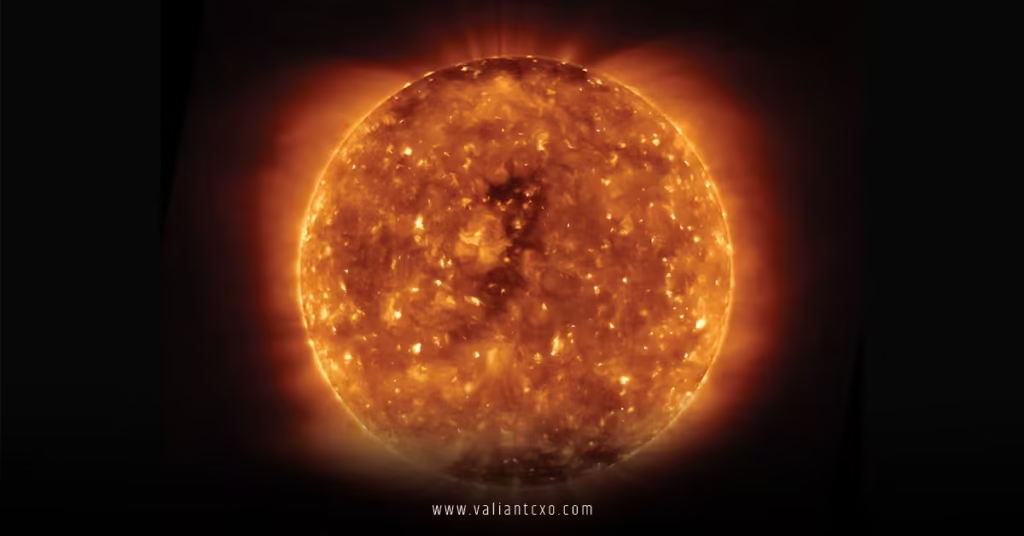
The Sun doesn’t flip a switch at maximum. The “solar maximum period” often stretches over a year or more. NASA and NOAA announced in October 2024 that we’d entered this phase, with elevated activity possibly continuing into 2025 and beyond.
In 2026, we’re seeing exactly that persistence:
- Large, beta-gamma-delta sunspots keep forming.
- Frequent M- and X-class flares disrupt HF radio in daylight zones.
- Occasional Earth-directed CMEs spark G1–G3 geomagnetic storms, boosting aurora chances even at mid-latitudes.
One standout moment? The intense activity around sunspot AR4366 in early February 2026. That region alone fired off dozens of flares in a short window, including powerful X-class events that triggered R3 radio blackouts. The X4.2 solar flare from sunspot AR4366 effects was just one piece of this broader storm of activity, showing how Solar Cycle 25 maximum activity can deliver surprises well into the decline.
Real-World Impacts We’re Still Experiencing
Higher solar activity affects more than just scientists. Here’s what matters in everyday life:
- Radio Communications — HF bands suffer blackouts during strong flares, impacting aviation, maritime, and amateur radio.
- Satellites and GPS — Increased atmospheric drag shortens low-Earth orbit lifespans; scintillation can glitch navigation signals.
- Power Grids — Severe geomagnetic storms (G4–G5) induce currents that risk transformers—though nothing catastrophic has hit yet in this cycle.
- Auroras — The silver lining! More people than ever have photographed northern (and southern) lights from unexpected locations.
In 2026, aurora forecasts remain optimistic for strong displays during CME impacts, especially if fast-moving plasma clouds arrive.
How Scientists Track and Forecast This Cycle
Agencies like NOAA’s Space Weather Prediction Center, NASA’s Solar Dynamics Observatory, and international groups like SILSO monitor constantly. Tools include:
- Daily sunspot counts.
- F10.7 radio flux (a proxy for solar activity).
- Magnetograms showing field complexity.
- Real-time flare detection from GOES satellites.
Predictions improve with machine learning and better dynamo models, but the Sun retains some unpredictability. That’s why alerts come fast when big regions like AR4366 emerge.
Looking Ahead: What to Expect Through 2026 and Beyond
While the smoothed peak passed in 2024, Solar Cycle 25 maximum activity echoes could last into 2027. Declining trends suggest fewer spots overall, but isolated super-active regions can still produce fireworks.
Cycle 25 should wind down toward minimum around 2030, with Cycle 26 starting thereafter. For now, stay tuned—space weather apps and sites like SpaceWeather.com provide daily updates.
The takeaway? Even past its official maximum, the Sun keeps us on our toes. It powers stunning natural displays while reminding us how interconnected our tech-heavy world is with a star 93 million miles away.
In short, Solar Cycle 25 maximum activity exceeded expectations, delivered incredible auroras and dramatic flares, and continues to influence Earth in meaningful ways. Whether you’re chasing northern lights or monitoring comms, this cycle has been a memorable ride. Keep watching the Sun—you never know what it’ll do next.
For reliable updates:
FAQs
When did Solar Cycle 25 maximum activity officially peak?
The smoothed sunspot number peaked around October 2024 at approximately 161, though elevated activity has continued into 2026.
Is Solar Cycle 25 maximum activity stronger than predicted?
Yes—early forecasts expected a peak near 115 in 2025, but it arrived earlier and higher, closer to 160+ in late 2024.
Will auroras still be visible in 2026 during Solar Cycle 25 maximum activity decline?
Absolutely. Even as sunspot numbers drop, CMEs from lingering active regions can trigger strong geomagnetic storms and vivid auroras.
How does the X4.2 solar flare from sunspot AR4366 effects relate to Solar Cycle 25 maximum activity?
That powerful February 2026 flare from AR4366 exemplifies the ongoing intensity, showing how complex sunspots can produce major events even in the declining phase.
When will Solar Cycle 25 end?
Expect the cycle to continue until around 2030, with minimum conditions returning before Solar Cycle 26 begins.