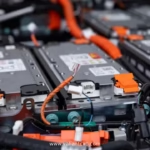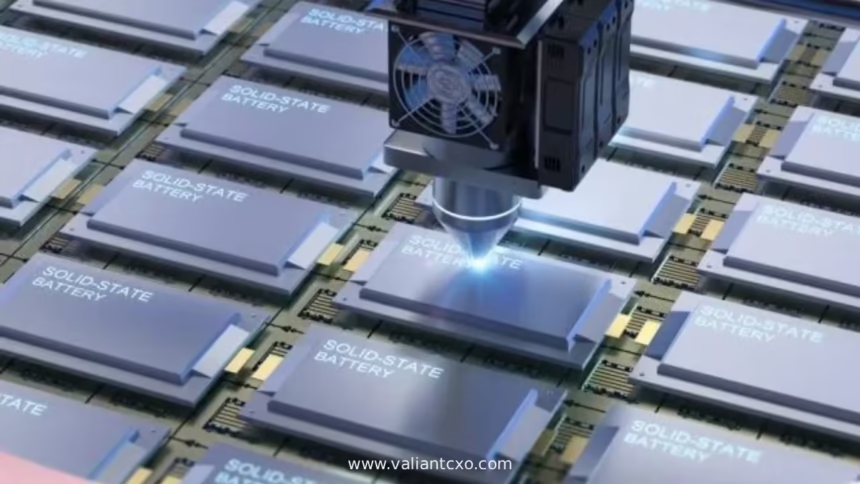
solid state battery commercial release date 2027 is no longer pure vaporware. Multiple major players have locked in limited or pilot-scale vehicle introductions and small-batch production for that year, though true mass-market availability still sits closer to 2030.
Here’s the quick overview:
- Several automakers and cell makers (Toyota, BYD, Samsung SDI, CATL) target 2027 for first low-volume solid-state EVs or trial production.
- Expect premium, limited-run vehicles—not everyday affordable cars.
- Energy density, safety, and charge speed gains are real; cost and manufacturing scale remain the bottlenecks.
- U.S. buyers should watch QuantumScape and Factorial partnerships for any domestic footprint.
- Full commercialization and price parity with today’s lithium-ion packs look more realistic around 2030.
The solid state battery commercial release date 2027 marks the start of the transition, not the finish line. Think of it as the soft opening of a high-end restaurant: a few lucky diners get in early, the kitchen is still refining recipes, and the rest of us wait for the full menu and reasonable prices.
What’s Actually Shipping in 2027
Solid-state batteries replace the flammable liquid electrolyte in today’s lithium-ion cells with a solid material—often sulfide-based. The payoff is higher energy density (more range for the same weight), faster charging with less degradation, and far lower fire risk.
In practice, 2027 looks like this:
- BYD: Plans a first model with sulfide solid-state cells. Small-batch trials of roughly 1,000 vehicles, focused on premium Yangwang or Denza platforms. Mass production targeted for 2030.
- Toyota: Targeting a production battery-electric vehicle with all-solid-state batteries in the 2027–2028 window, in partnership with Idemitsu for solid electrolytes. Early units expected in limited volumes, likely high-end Lexus models first.
- Samsung SDI: Aiming for mass production start in the second half of 2027 at its Ulsan plant. Initial applications may lean toward humanoids and premium vehicles before broader EV use.
- CATL: Small-scale trial production in 2027; commercial scale later.
- QuantumScape (U.S.-based): Progressing pilot production on its Eagle Line and working with Volkswagen’s PowerCo toward commercial cells in the 2027–2028 period. Demonstration vehicles and sampling are already underway.
solid state battery commercial release date 2027 No company is promising millions of affordable solid-state cars next year. The first wave will be halo products—expensive, limited, and used to gather real-world data.
Why the Solid State Battery Commercial Release Date 2027 Matters for U.S. Drivers
American buyers sit in an interesting spot. Domestic pure-play developers like QuantumScape and Factorial Energy have strong OEM ties (Volkswagen, Stellantis, Mercedes test programs). Factorial cells have already powered real-road demonstrations. If any 2027–2028 solid-state vehicles reach U.S. shores, they will almost certainly start in the luxury or performance segment.
What usually happens with new battery tech is that early adopters pay a steep premium, then costs drop as yields improve and factories scale. In my experience covering battery roadmaps, the first three years after limited launch are where the real learning—and the real price cuts—happen.
Comparison of Leading 2027 Programs
| Company | 2027 Target | Chemistry Focus | Expected Volume | Mass Production Outlook |
|---|---|---|---|---|
| BYD | First vehicle + small-batch trials | Sulfide | ~1,000 vehicles | ~2030 |
| Toyota | Production BEV launch window | Sulfide | Limited | Later this decade |
| Samsung SDI | Start of mass production | Sulfide | Initial commercial | Scaling from 2027 |
| CATL | Trial / pilot production | Various | Small-scale | ~2030 |
| QuantumScape | Commercial cell readiness push | Lithium-metal | Pilot / sampling | 2027–2028 with partners |
This table reflects public statements as of late 2026. Timelines can and do slip.
Step-by-Step Action Plan for Beginners Watching the Space
- Separate the hype layers. “Commercial release” can mean a demonstration fleet, a limited production run, or true volume manufacturing. Always ask which one the company means.
- Track the premium brands first. Lexus, Yangwang, Denza, and high-end Volkswagen Group models are the most likely early homes for the technology.
- Watch U.S. partners. Follow QuantumScape’s sample shipments and PowerCo milestones. Factorial’s work with Stellantis is another practical signal.
- Ignore pure range claims until independent testing. Lab energy density numbers look spectacular; real-world pack-level numbers after thermal management and safety systems are what matter.
- Plan purchase timing around cost curves. If you need a new EV in 2027–2028 and want solid-state, budget for premium pricing. If you can wait until 2030–2032, the economics should look far better.
- Monitor manufacturing news more than marketing slides. Groundbreaking on electrolyte plants, pilot line ramp rates, and yield improvements tell the real story.
Common Mistakes & How to Fix Them
Mistake 1: Treating every “2027” announcement as a consumer launch date.
Fix: Read the fine print. Most 2027 dates describe pilot production, validation fleets, or first limited vehicles.
Mistake 2: Assuming solid-state will instantly make every EV cheaper and longer-range.
Fix: Early solid-state packs carry a significant cost premium. The technology wins first on performance and safety, then on cost.
Mistake 3: Overlooking semi-solid or hybrid approaches.
Fix: Some near-term gains will come from condensed or semi-solid designs that bridge the gap while full solid-state scales.
Mistake 4: Ignoring regional differences.
Fix: China and Japan currently lead on aggressive pilot schedules. U.S. and European volume will likely lag by a year or two as supply chains and validation catch up.
Mistake 5: Buying the first model purely for the battery badge.
Fix: Evaluate the whole vehicle—software, charging network access, residual value, and real-world reliability still matter more than the electrolyte chemistry for most owners.
Key Takeaways
- The solid state battery commercial release date 2027 is real for limited production and first vehicles from several heavyweights.
- Expect premium pricing and restricted availability, not mass-market EVs.
- Toyota, BYD, Samsung SDI, and QuantumScape are the names to watch most closely.
- Manufacturing scale and cost reduction—not lab performance—remain the gating factors.
- U.S. drivers will likely see the technology first through imported premium models or domestic developer partnerships.
- Full mainstream impact is still projected closer to 2030.
- Treat 2027 as the beginning of real-world validation, not the end of the waiting game.
- Keep following plant construction and sample shipment news for the clearest progress signals.
solid state battery commercial release date 2027 The practical upside is already visible. Faster charging, higher energy density, and improved safety are no longer theoretical. The companies that execute cleanly on pilot production in 2027 will set the pace for the rest of the decade. If you’re shopping for an EV in the next two years, current lithium-ion and semi-solid options remain the smart, available choice. If you can hold off until the early 2030s, the solid-state wave should finally deliver broader choice and better value.
Next step: bookmark the official progress updates from Toyota and QuantumScape, and revisit the landscape in mid-2027 once the first limited vehicles start accumulating miles.
FAQs
Will the solid state battery commercial release date 2027 mean I can buy one at a regular dealership?
Unlikely for most buyers. 2027 centers on limited production, premium models, and validation fleets rather than broad retail availability.
How much more range will solid-state batteries deliver compared with today’s best lithium-ion packs?
Early claims point to substantial gains—potentially 50% or more at the cell level—but real-world vehicle range depends on pack design, vehicle efficiency, and thermal systems. Independent testing will clarify the actual numbers.
Should U.S. consumers wait for solid-state batteries before buying an EV?
Only if you specifically need the performance edge and can accept higher cost and later timing. Excellent lithium-ion EVs are available now with strong range, charging networks, and improving prices.