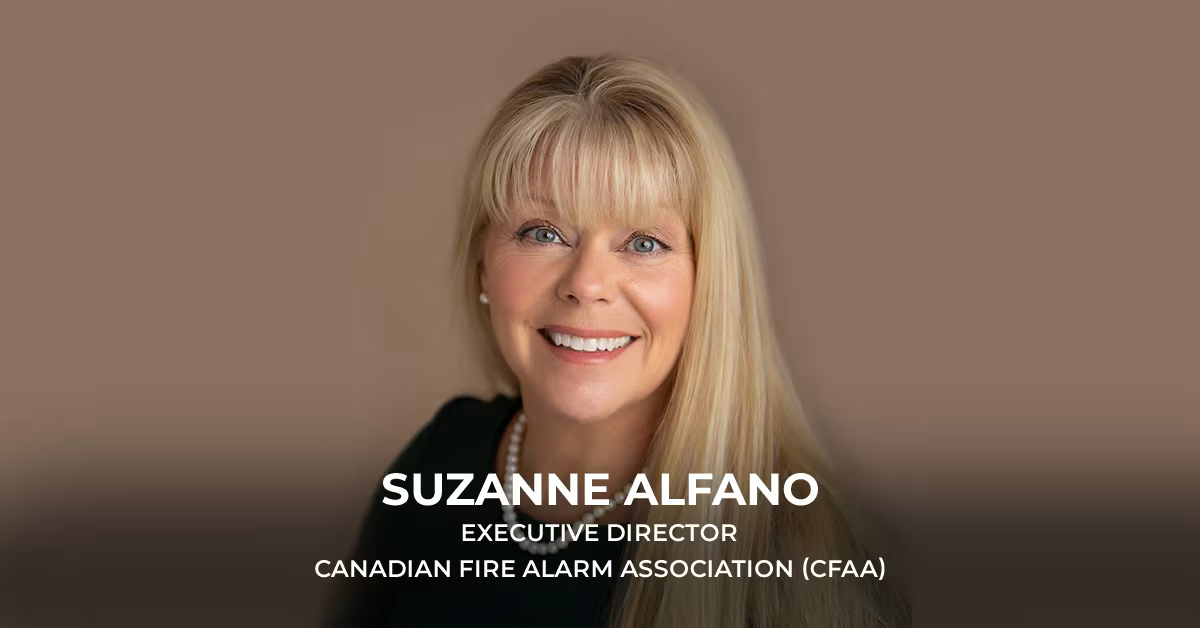
In an industry where precision, preparedness, and public trust are critical, strong leadership can shape not only organizations but the future of safety itself. Fire and life safety is a constantly evolving field, influenced by changing technologies, stricter regulations, and the growing complexity of modern infrastructure.
Behind the systems designed to protect people and property are industry leaders who ensure that professionals remain skilled, standards remain relevant, and innovation continues to move forward responsibly. Among those leaders is Suzanne Alfano, whose decades of experience and forward-thinking approach have made her a respected voice in Canada’s fire alarm and life safety sector.
Suzanne Alfano is an experienced association executive with more than 35 years of leadership experience across Canada and the United States. Her professional journey has been deeply rooted in fire protection, electrical safety, and life safety industries, where she has consistently focused on advancing education, strengthening certification systems, and supporting workforce development.
Alfano currently serves as Executive Director of the Canadian Fire Alarm Association (CFAA), where she leads national efforts to improve training standards, certification programs, and industry collaboration.
Her background in electronics engineering technology, combined with an MBA, allows her to approach the industry with both technical understanding and strategic insight. This combination has shaped her ability to connect operational realities with long-term organizational goals.
Suzanne Alfano Leadership Through Change and Disruption
When Alfano assumed the role of Executive Director in early 2020, she entered the position at a moment of significant global disruption. The COVID-19 pandemic rapidly changed how industries operated, particularly in areas such as technical training and certification that traditionally relied on in-person instruction.
Rather than treating this shift as a setback, Alfano led a rapid transformation of CFAA’s education model. Training programs, certification exams, and continuing education courses were quickly transitioned into digital and hybrid formats. This ensured that professionals across Canada could continue their learning without interruption, even during a period of widespread uncertainty.
What began as an emergency response soon evolved into a long-term structural improvement. The introduction of flexible online learning significantly expanded access, particularly for professionals in remote regions, and strengthened participation across the country.
Evolving Vision for a Modern Industry
As the organization stabilized post-pandemic, Alfano’s leadership focus shifted from immediate adaptation to long-term modernization. Her vision for CFAA is now built around scalability, accessibility, and innovation.
Alfano has worked to ensure that digital learning is not treated as a temporary alternative, but as a permanent and evolving component of professional education. By strengthening online platforms and modernizing course delivery systems, she has helped create a more inclusive and adaptable training environment for fire alarm professionals across Canada.
This modernization reflects the broader evolution of the industry itself. Fire alarm systems today are becoming smarter, more connected, and increasingly integrated into intelligent building infrastructure. Alfano recognizes that education and certification programs must evolve alongside these advancements.
Maintaining High Standards in Certification
One of the most significant aspects of Alfano’s work involves maintaining the quality and relevance of CFAA’s Fire Alarm Technology Program, Canada’s only nationally recognized certification for fire alarm technicians.
As technology continues to reshape the field, certification programs must prepare technicians to work with modern systems that include IoT integration, remote monitoring, predictive analytics, and smart fire detection technologies. Alfano works closely with regulatory authorities, technical experts, and industry stakeholders to ensure the curriculum remains aligned with current industry standards and future needs.
She also supports ongoing continuing education requirements, reinforcing the idea that professional competency must evolve continuously in a rapidly changing technical environment.
Building Collaboration Across the Industry
Collaboration remains central to Alfano’s leadership philosophy. She believes that meaningful progress in fire and life safety can only happen when manufacturers, technicians, educators, regulators, and industry organizations work together toward shared goals.
Her leadership style emphasizes transparency, inclusivity, and open communication. Through participation in national standards and codes committees, she helps contribute to regulations that are practical for industry implementation while maintaining the highest possible level of public safety.
This collaborative approach has strengthened relationships across the sector and reinforced CFAA’s role as a trusted voice within the industry.
Addressing Workforce Challenges
Like many technical sectors, the fire alarm industry faces an ongoing shortage of qualified professionals. Alfano has prioritized initiatives aimed at expanding access to training, increasing awareness of careers in fire protection, and strengthening certification pathways to support long-term professional growth.
By making education more accessible through hybrid and digital learning models, she has helped remove barriers for individuals entering the field while also supporting professionals already working within the industry.
Suzanne Alfano Advocating for Inclusion and Opportunity
Throughout her career, Alfano has also navigated the challenges of working in a traditionally male-dominated industry. While she acknowledges the obstacles related to recognition and opportunity, she credits these experiences with strengthening her commitment to equity and inclusion in professional environments.
She believes diverse perspectives lead to stronger leadership, better collaboration, and more effective problem-solving—particularly in industries where innovation and public safety intersect.
Future-Ready Fire Safety Ecosystem
As fire and life safety systems continue to evolve, Alfano sees technology playing an increasingly important role in shaping the future of the industry. Artificial intelligence, smart monitoring systems, and predictive technologies are expected to transform how fire protection systems are designed, managed, and maintained.
At the same time, she believes that technology alone is not enough. Ongoing education, skilled professionals, and strong industry standards will remain essential to ensuring these advancements are implemented effectively and responsibly.
Through her leadership, Suzanne Alfano continues to help shape a more modern, accessible, and forward-looking future for Canada’s fire and life safety industry—one built on innovation, collaboration, and an unwavering commitment to protecting lives and property.
“I believe that diverse perspectives foster innovation, improve decision-making, and lead to stronger outcomes.”
- Suzanne Alfano, Executive Director
Read About Other Companies Nominated For Thought Leadership Award