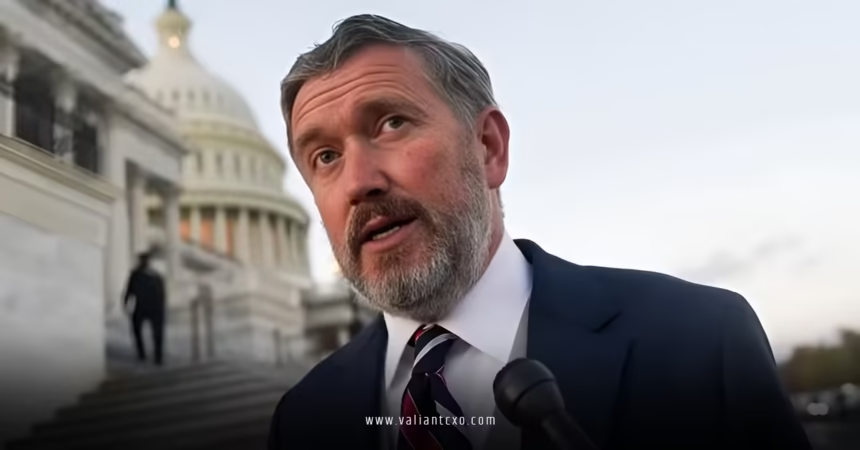
Thomas Massie calls for USS Liberty investigation on the House floor, shining a fresh spotlight on one of the most disputed chapters in U.S. naval history. On June 8, 2026—the 59th anniversary of the attack— the Kentucky Republican stood up, survivors in the gallery, and demanded answers that generations of sailors and their families have waited for.
- What happened: Israeli aircraft and torpedo boats struck the USS Liberty in international waters during the 1967 Six-Day War, killing 34 Americans and wounding 171.
- Official line: Both governments called it a tragic case of mistaken identity amid the fog of war.
- The pushback: Survivors and some officials insist the assault was deliberate. Massie wants a real congressional probe.
- Why it matters now: With survivors aging, this could be the last real shot at closure—and a test of transparency in U.S.-Israel relations.
The speech hit hard. Massie didn’t mince words about the scale of the attack or the questions that never got satisfying answers.
What Exactly Went Down on June 8, 1967?
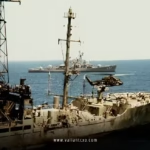
The USS Liberty, a technical research ship packed with intelligence gear, sat about 13 miles off the Sinai coast. Clear day. American flag flying. Israeli forces hit it with jets and then motor torpedo boats in a sustained assault lasting roughly an hour.
Jets strafed the ship. Torpedoes ripped into the hull. Lifeboats were machine-gunned. The crew fought fires, tended the wounded, and somehow kept the ship afloat.
Israel quickly apologized, blaming misidentification. The U.S. accepted that explanation after its own inquiries. End of story, according to the official record.
Here’s the thing: many crew members say the attackers knew exactly who they were hitting. They reported multiple overflights by Israeli reconnaissance planes earlier that day. The ship was clearly marked. Distress signals went out. Yet the attack continued.
Thomas Massie calls for USS Liberty investigation because those inconsistencies never got a full public airing under oath with all parties.
Why Thomas Massie Stepped Up
Massie has built a reputation for bucking party lines on foreign policy and endless aid. On the 59th anniversary, he brought survivors to Washington and used his time on the floor to honor the dead and demand action.
He referenced past statements from U.S. officials who doubted the accident narrative. He called for Congress to pass a resolution honoring the crew and, crucially, to launch a proper investigation while survivors can still testify.
In my experience covering these kinds of long-dormant cases, timing matters. The window is closing. Massie is forcing the issue before it slips away entirely.
Key Facts at a Glance
| Aspect | Details | Official Finding | Survivor Perspective |
|---|---|---|---|
| Date & Location | June 8, 1967, international waters off Egypt | Mistaken identity | Deliberate, prolonged attack |
| Casualties | 34 killed, 171 wounded | Tragic accident | War crime level assault |
| Attack Duration | ~60+ minutes, air then sea | Fog of war confusion | Clear identification ignored |
| U.S. Response | Multiple inquiries, accepted apology | No further action needed | Cover-up to protect alliance |
| Current Push | Massie speech 2026 | Case closed | Full congressional hearing |
This table cuts through the noise. Numbers don’t lie. The debate is over why it happened and what was known.
The Lingering Questions That Won’t Die
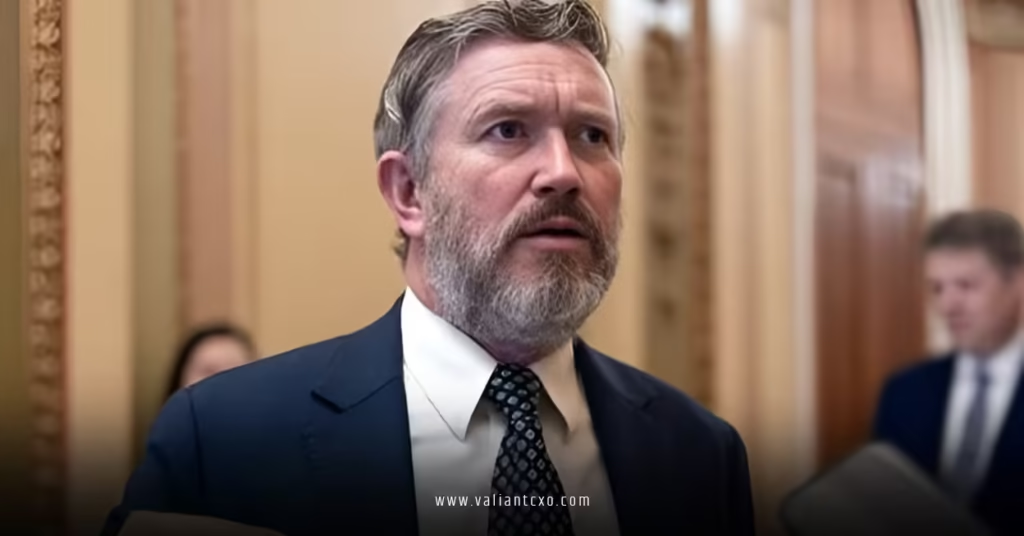
Was it really mistaken identity in the middle of a war Israel was winning decisively? Or was there intent—to silence intelligence gathering, spark a wider conflict, or something else?
Rhetorical question: If the roles were reversed, would the U.S. shrug off an attack that killed dozens of allies’ sailors and just move on?
Declassified documents show communication issues on the American side and identification failures claimed by Israel. Yet survivors describe precision strikes on antennas and the bridge. Israeli torpedo boats allegedly fired on life rafts.
Like a stubborn puzzle missing key pieces, the full picture stays frustratingly out of reach.
Step-by-Step: What Beginners Can Do to Learn More and Support Transparency
Don’t know where to start with this history? Here’s a practical action plan:
- Read the basics: Start with the Navy’s historical summary and declassified NSA materials for primary context.
- Hear the survivors: Visit ussliberty.org for firsthand accounts and documents.
- Watch Massie’s speech: Search C-SPAN or recent clips to see the 2026 remarks in full.
- Contact your reps: Ask where they stand on a new congressional review. Short, specific emails work best.
- Cross-check sources: Compare official reports with veteran testimonies. Look for State Department historical documents on the incident.
- Follow developments: Track any follow-up legislation after Massie’s call.
What I’d do if I were just getting into this: Spend one focused evening on primary docs before diving into commentary. Raw material beats filtered takes every time.
Common Mistakes & How to Fix Them
Newcomers often treat this as pure conspiracy fodder or dismiss it outright as settled history. Both extremes miss the mark.
Mistake 1: Assuming one side has a monopoly on truth.
Fix: Weigh declassified U.S. and Israeli reports against sworn crew statements. Facts exist in the tension.
Mistake 2: Getting lost in endless YouTube rabbit holes.
Fix: Anchor in verifiable sources like Navy histories and court of inquiry records first.
Mistake 3: Ignoring the human cost.
Fix: Remember the 34 names and 171 wounded. This isn’t abstract geopolitics—it’s about American sailors attacked while serving.
Mistake 4: Thinking “investigation” automatically means proving conspiracy.
Fix: A real probe could simply confirm the record or uncover procedural failures. Either outcome serves truth.
Why Thomas Massie Calls for USS Liberty Investigation Resonates in 2026
America’s alliances matter. So does accountability to its own service members. Massie’s move isn’t about rewriting 1967—it’s about refusing to let uncomfortable questions stay buried forever.
In my experience, these kinds of floor speeches rarely change policy overnight. They do plant seeds. They force staffers and colleagues to revisit files. They give survivors a voice in the record.
The kicker? With fewer veterans left to tell their stories, silence now equals a final verdict by default.
Key Takeaways
- Thomas Massie calls for USS Liberty investigation on the 59th anniversary, honoring 34 fallen and 171 wounded.
- The 1967 attack remains the deadliest on a U.S. Navy ship since WWII.
- Official inquiries concluded accident; many survivors maintain it was deliberate.
- Massie urges a resolution and full congressional review while eyewitnesses remain.
- Transparency builds trust—especially with close allies.
- Beginners should prioritize primary documents and survivor sites.
- Public pressure via representatives can keep momentum alive.
- History forgotten becomes precedent ignored.
Thomas Massie calls for USS Liberty investigation at a moment when fewer people remember the event firsthand. That’s exactly why it needed saying out loud. The crew deserved better then. Their legacy deserves straight answers now. Head to ussliberty.org, read the records, and decide for yourself. Then tell your representatives the silence has lasted long enough.
FAQs
What prompted Thomas Massie calls for USS Liberty investigation in 2026?
On the exact 59th anniversary, Massie delivered a House floor speech with survivors present, citing the need for closure and questioning the official mistaken-identity conclusion.
Has the U.S. government ever fully investigated the USS Liberty attack?
Multiple inquiries happened shortly after, but no comprehensive public congressional investigation with subpoena power and open testimony from all sides has addressed all survivor claims.
Does Thomas Massie calls for USS Liberty investigation have bipartisan support?
As of the 2026 speech, it’s primarily driven by Massie and veteran advocates. Broader congressional buy-in remains to be seen, but the call puts the issue back on the radar.