US Military Intervention in Venezuela 2026:In early January 2026, the United States launched a bold and unprecedented military operation in Venezuela, codenamed Operation Absolute Resolve. On January 3, 2026, US forces conducted airstrikes across northern Venezuela, including Caracas, to suppress air defenses before special operations teams captured President Nicolás Maduro and his wife, Cilia Flores, from their compound. The pair was swiftly transported to the United States, where Maduro now faces federal charges related to narcoterrorism, drug trafficking, and weapons offenses.
This intervention marked a sharp escalation in long-standing tensions between Washington and Caracas, driven by accusations of drug trafficking, human rights abuses, and threats to regional stability. President Donald Trump described the raid as a “surgical law-enforcement operation” supported by military assets, emphasizing it targeted alleged narco-terrorists rather than the Venezuelan people. Trump further stated that the US would “run” Venezuela temporarily to ensure a “safe, proper, and judicious transition,” with a focus on reclaiming access to the country’s vast oil reserves—the world’s largest proven deposits.
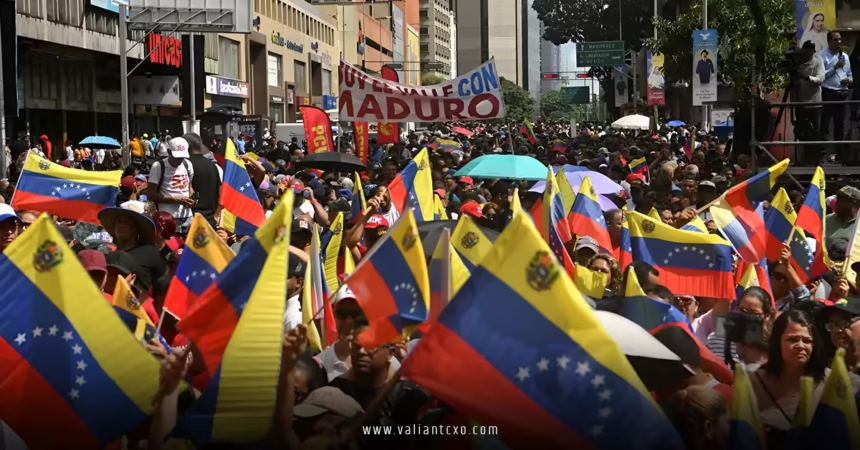
The operation followed months of US military buildup in the Caribbean, including strikes on suspected drug vessels and a blockade of sanctioned oil tankers. International reactions were sharply divided: several Latin American nations (including Brazil, Mexico, and Colombia) condemned the action as a violation of sovereignty and international law, while some Western allies expressed cautious support or remained silent. The United Nations and human rights experts criticized it as a dangerous precedent that undermines global security.
The Aftermath: Delcy Rodríguez Sworn in as Acting President Amid Political Crisis 2026
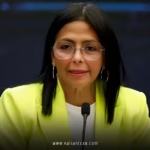
US Military Intervention in Venezuela 2026:In the immediate wake of Maduro’s capture, Venezuela’s Supreme Court ordered Vice President Delcy Rodríguez to assume the role of acting president to ensure “administrative continuity.” She was formally sworn in on January 5, 2026, by her brother, National Assembly President Jorge Rodríguez, in a session at the National Assembly.
Rodríguez, a longtime Chavista loyalist who served as Maduro’s vice president, oil minister, and foreign minister, initially struck a defiant tone, denouncing the US action as a “kidnapping” and reaffirming Maduro as Venezuela’s “only president.” However, she later softened her rhetoric, expressing willingness to cooperate with Washington on shared issues like drug flows, expelling foreign operatives hostile to the US (such as those from Iran and Cuba), and halting oil sales to US adversaries. This shift reflects the tightrope she walks: balancing loyalty to the Bolivarian revolution and military hardliners while accommodating US demands to avoid further escalation.
Trump has conditionally endorsed Rodríguez as a pragmatic partner, describing her as someone “willing to do what we think is necessary to make Venezuela great again.” Yet he has warned of severe consequences—including potential additional strikes or “boots on the ground”—if she fails to comply. Under her interim leadership, Venezuela has released several political prisoners (including foreigners) as a goodwill gesture, and exploratory talks have begun toward restoring formal diplomatic ties with the US.
The military remains a pivotal force, with top commanders recognizing Rodríguez’s authority while still demanding Maduro’s release. This dynamic highlights the regime’s continuity despite Maduro’s removal, sidelining the democratic opposition led by figures like María Corina Machado.
Implications of the US Intervention
The 2026 US military intervention has reshaped Venezuela’s political landscape and raised broader questions about sovereignty, regime change, and resource control in the Americas. Key outcomes include:
- Oil Sector Focus: Trump has prioritized US companies’ involvement in Venezuela’s oil industry, aiming to boost production and redirect revenues.
- Regional Instability Risks: The action has heightened fears of further unrest, with potential for internal fractures or protests.
- Global Precedent: Critics argue it erodes international law, while supporters view it as a necessary blow against narcoterrorism.
As Rodríguez navigates these pressures, the future of Venezuela hangs in the balance—between continued Chavismo under US oversight and the uncertain prospect of genuine democratic transition.
For more on the leadership change that followed the intervention, read about Delcy Rodríguez sworn in as acting president of Venezuela amid political crisis 2026.
The situation remains fluid, with US military assets still positioned in the region and ongoing diplomatic maneuvering. Venezuelans face an uncertain path ahead, marked by economic hopes tied to oil recovery but shadowed by the risks of prolonged external influence.
Frequently Asked Questions (FAQ) about the US Military Intervention in Venezuela and the 2026 Political Crisis
1. What exactly happened in the US military operation in Venezuela?
On January 3, 2026, US forces launched airstrikes across northern Venezuela, including Caracas, to neutralize air defenses. Special operations teams then raided President Nicolás Maduro’s compound, capturing him and his wife, Cilia Flores. They were flown out of the country and transported to the US, where Maduro now faces federal charges including narcoterrorism, drug trafficking, and weapons offenses. President Trump described it as a “surgical law-enforcement action” backed by military force.
2. Who is leading Venezuela now?
Following Maduro’s capture, Venezuela’s Supreme Court ordered Vice President Delcy Rodríguez to assume the role of acting (interim) president for “administrative continuity.” She was formally sworn in on January 5, 2026, by her brother, National Assembly President Jorge Rodríguez.
Rodríguez, a longtime Chavista figure and former foreign and oil minister, initially condemned the US action as a “kidnapping” but has since signaled cooperation on issues like drug trafficking and oil flows. Trump has praised her as pragmatic, while warning of consequences if she doesn’t comply.
3. Why did the US intervene?
The Trump administration justified the action primarily as targeting narcoterrorism, citing Maduro’s alleged links to drug cartels (including the “Cartel of the Suns”). A $50 million bounty had long been placed on Maduro. Broader motivations include securing access to Venezuela’s massive oil reserves (the world’s largest proven) and countering influence from Russia, China, and Iran. Trump has emphasized US companies’ role in rebuilding the oil sector and stated the US would temporarily “run” Venezuela for a transition—though this has been walked back by some officials.
4. What has been the international reaction?
Reactions are deeply divided. Several Latin American countries (Brazil, Mexico, Colombia, Chile), along with Russia, China, South Africa, and others, condemned it as a violation of sovereignty and international law. The UN Secretary-General expressed deep concern, and human rights experts warned of risks to global stability. Some Western allies offered cautious support or silence, while a few (like Somaliland and Kosovo) backed the move. The EU has not recognized Rodríguez’s legitimacy in some statements.
5. What happens next for Venezuela’s political crisis?
The situation remains tense. Rodríguez’s government has released some political prisoners (at least 18 reported) as a goodwill gesture and begun exploratory talks with the US. However, repression has intensified in some areas, with security forces monitoring for dissent. The democratic opposition, led by figures like María Corina Machado, has been largely sidelined. Oil deals are progressing, with reports of Venezuela agreeing to supply millions of barrels to the US. Risks include further instability, migration waves, or additional US actions if demands aren’t met. A genuine democratic transition appears uncertain, with focus on economic recovery amid ongoing geopolitical pressures.