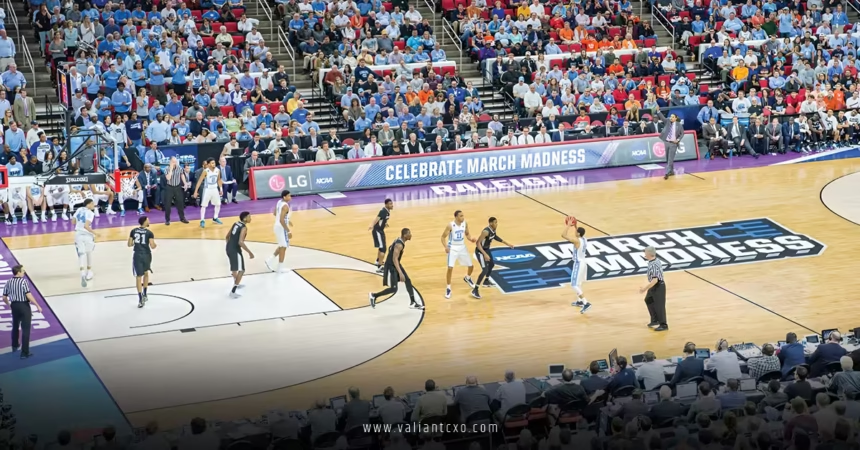
College basketball tournament strategy guide principles separate March legends from first-round exits. The difference between cutting down nets and going home early often comes down to tactical adjustments, roster management, and strategic decisions that casual observers never notice.
Here’s what elite tournament strategy actually involves:
- Adaptive game planning that evolves between rounds
- Roster depth utilization when starters hit foul trouble
- Tempo control to neutralize superior athletic opponents
- Defensive switching systems that confuse elite offenses
- Mental preparation techniques that handle pressure moments
Why Tournament Strategy Differs From Regular Season Basketball
March Madness isn’t just basketball with higher stakes—it’s a completely different sport. Regular season games allow for bad nights and bounce-back opportunities. Tournament basketball? One off-night sends you home.
This fundamental reality changes everything. Coaching staffs prepare differently. Players approach games with different mindsets. Even the officiating tends to be more consistent, which affects how aggressive defenses can be.
Think of regular season basketball as poker with friends. Tournament basketball? That’s Vegas, high-stakes, winner-takes-all poker where every decision could cost you everything.
Pre-Tournament Preparation: Building Championship Systems
Scouting and Game Planning Evolution
Successful tournament teams don’t just scout opponents—they scout tendencies, referee crews, and even arena characteristics. Elite programs start tournament preparation weeks before Selection Sunday.
Advanced scouting focuses on:
- How opponents respond to different defensive looks
- Which players perform best under pressure
- Timeout usage patterns in close games
- Substitution tendencies when starters struggle
- Historical performance in neutral site environments
Roster Management Philosophy
Tournament success requires coaches to think beyond their typical rotation. Players who barely see minutes in conference play suddenly become crucial when your star picks up two quick fouls.
Smart coaches identify their “tournament rotation” early—usually 8-10 players who can contribute meaningful minutes when everything’s on the line.
College Basketball Tournament Strategy Guide: Essential Tactical Elements
Defensive Systems That Survive Pressure
Championship-level tournament defense isn’t about having the best individual defenders—it’s about having systems that function when players are nervous, tired, or in foul trouble.
Pack Line Defense Principles:
- Forces opponents into contested jump shots rather than easy baskets
- Minimizes dribble penetration through disciplined help positioning
- Reduces offensive rebounds through systematic box-out assignments
- Creates consistent defensive looks regardless of personnel
Switching Defense Benefits:
- Eliminates screening advantages that elite offenses rely on
- Simplifies defensive communication under pressure
- Reduces mental errors when players are amped up
- Forces opponents to beat you one-on-one instead of through schemes
Offensive Philosophy for Single-Elimination Format
Tournament offense requires balance between efficiency and explosion. You need systems that generate good shots consistently, but also the ability to create something special when trailing late.
| Offensive System | Tournament Advantage | Risk Factor |
|---|---|---|
| Motion Offense | Creates open looks through movement | Requires timing and chemistry |
| Pick and Roll Heavy | Exploits defensive weaknesses | Predictable in late-game situations |
| Isolation-Based | Puts pressure on best players | Lives and dies with individual performance |
| Balanced Attack | Spreads scoring responsibility | May lack go-to option in crucial moments |
Step-by-Step Tournament Game Management Strategy
Pre-Game Preparation (2 hours before tip)
Elite tournament coaches follow systematic pre-game routines that prepare players mentally and tactically:
- Film Review Session: 15-minute focused review of opponent’s most dangerous plays
- Walkthrough Practice: 30 minutes of situational drills mimicking game scenarios
- Individual Player Meetings: 5-minute conversations addressing specific roles and expectations
- Team Visualization: Collective mental preparation for different game situations
- Final Strategy Reminders: Key points written on locker room boards for constant reinforcement
First Half Tactical Approach
Tournament first halves require different thinking than regular season games. Coaches must gather information while establishing their team’s identity:
- Opening Possessions (0-4 minutes): Test opponent’s defensive priorities and establish tempo preference
- Early Adjustment Period (4-12 minutes): Make tactical tweaks based on what’s working and what isn’t
- Foul Management Phase (12-16 minutes): Protect key players while staying aggressive defensively
- Halftime Setup (16-20 minutes): Position team for specific second-half strategic approach
Second Half Championship Execution
The second half separates tournament survivors from champions. Every possession carries exponentially more weight:
- Opening Statement (20-24 minutes): Come out with adjustments that show opponents you’re ready
- Middle Management (24-32 minutes): Maintain composure through opponent runs while executing game plan
- Winning Time (32-40 minutes): Deploy your best lineups and most trusted plays when it matters most
Advanced Tournament Strategy: Reading and Reacting
Timeout Usage Philosophy
Tournament timeouts are precious resources that can’t be wasted on momentum-stopping alone. Elite coaches use timeouts strategically:
Offensive Timeout Situations:
- When your best scorer is forcing shots instead of finding good ones
- After opponent makes defensive adjustment you haven’t countered
- Before crucial possession where you need your best play call
- To advance the ball in final minute situations
Defensive Timeout Situations:
- When opponent finds consistent success with same action
- Before switching to different defensive scheme
- When your team is fouling too aggressively
- To set up press or trap after made basket
Substitution Patterns That Win Championships
Tournament substitution isn’t about keeping players fresh—it’s about having the right players on the floor for specific situations:
Situational Substitution Guide:
- Defensive Specialists: Insert when opponent’s best scorer gets hot
- Three-Point Shooters: Use when trailing and need quick scoring
- Veteran Leadership: Deploy during opponent runs to steady the ship
- Athletic Advantages: Exploit when opponent goes small or slow
College Basketball Tournament Strategy: Mental Game Mastery
Pressure Management Systems
Tournament basketball creates pressure that regular season games can’t replicate. Smart coaches prepare their teams for these mental challenges:
Pressure Preparation Techniques:
- Practice with crowd noise simulation and distraction training
- Run end-game scenarios repeatedly until they become automatic
- Develop breathing techniques and focus cues for high-stress moments
- Create leadership hierarchies so players know who to look to when things get chaotic
Building Tournament Toughness
Mental toughness isn’t just about handling adversity—it’s about maintaining execution when everything’s on the line. Championship teams develop this throughout the season, but tournament basketball reveals who actually has it.
Tournament Toughness Indicators:
- Making free throws when the gym is silent except for opposing fans
- Executing complex plays when everyone’s nervous and rushed
- Communicating clearly when adrenaline is making everything feel urgent
- Staying disciplined defensively when desperate for a steal
Common Tournament Strategy Mistakes That End Seasons
Over-Coaching in Crucial Moments
The biggest mistake coaches make in tournament games? Trying to out-think opponents instead of trusting what got them there. Extended highlights from games like UCLA South Carolina national championship extended highlights show how the best coaches stick to their systems under pressure rather than getting cute with new wrinkles.
Avoid These Over-Coaching Traps:
- Installing new plays specifically for tournament games
- Dramatically changing rotation patterns because of opponent
- Calling timeouts to stop opponent runs instead of trusting players
- Making defensive adjustments that confuse your own team
Underestimating Role Player Impact
Tournament heroes often come from unexpected places. The reserve guard who makes clutch free throws. The backup big man who provides crucial rebounds when starters are in foul trouble. The defensive specialist who gets a key steal.
Fix: Prepare your entire rotation for moment-defining contributions, not just your stars.
Ignoring Tempo Control
Many tournament games are won and lost based on which team successfully imposes its preferred pace. Faster teams want transition opportunities. Slower teams want to grind possessions and limit opponent’s touches.
Strategic Tempo Considerations:
- How does your depth compare to theirs over 40 minutes?
- Which pace gives your best players more opportunities to impact winning?
- Does your style of play travel well to neutral sites?
- How does tempo affect your defensive rebounding and transition defense?
Tournament Strategy Resources and Film Study
Essential Game Tape Analysis
Serious students of tournament strategy should study championship game footage, paying particular attention to how elite coaches make adjustments between timeouts and halves.
The Naismith Memorial Basketball Hall of Fame provides extensive archives of tournament games with coaching perspectives and strategic breakdowns that reveal decision-making processes during pressure moments.
Statistical Analysis Tools
Modern tournament strategy increasingly relies on advanced analytics to identify opponent tendencies and exploit weaknesses. The NCAA’s official statistics portal offers comprehensive data that serious programs use for preparation.
Professional Development Resources
Coaches looking to improve their tournament strategy can access educational content through the National Association of Basketball Coaches, which provides certification programs and strategy workshops focused specifically on postseason success.
Advanced Concepts: Reading Tournament Context
Seed-Based Strategy Adjustments
Different tournament matchups require different strategic approaches based on seeding and expectations:
Lower Seed Strategy (6-16 seeds):
- Embrace underdog role and play with house money mentality
- Take calculated risks that higher seeds might not expect
- Use pressure defense to speed up tempo and create chaos
- Ride hot shooting and don’t overthink when things are working
Higher Seed Strategy (1-5 seeds):
- Impose your will through superior depth and talent
- Stay disciplined and don’t let opponents dictate style
- Use size and athleticism advantages systematically
- Execute proven systems rather than trying to match opponent’s energy
Regional and Site-Specific Considerations
Tournament success often depends on factors beyond X’s and O’s. Elite coaches account for:
- Travel schedules and how they affect preparation time
- Arena characteristics like rim tightness and depth perception
- Crowd composition and how it might favor certain teams
- Referee crew tendencies and how they call physical play
Key Takeaways from Elite Tournament Strategy
- Tournament strategy requires different thinking than regular season basketball
- Defensive systems must function when players are nervous or in foul trouble
- Offensive balance prevents opponents from focusing on stopping one player
- Timeout usage becomes exponentially more important in single-elimination format
- Mental preparation and pressure training separate champions from pretenders
- Role players often determine tournament outcomes in crucial moments
- Tempo control allows inferior teams to compete with superior talent
- Over-coaching in pressure situations kills more teams than under-coaching
Conclusion
College basketball tournament strategy guide principles reveal why March Madness creates legends and heartbreak in equal measure. Success requires months of preparation, tactical flexibility, and the mental toughness to execute when everything’s on the line.
The best tournament coaches don’t reinvent their systems for March—they perfect them. They trust their players, stick to proven principles, and make subtle adjustments that give their teams every possible advantage.
Whether you’re coaching or simply appreciating elite strategy, understanding these principles will forever change how you watch tournament basketball. The game within the game becomes just as compelling as the dunks and buzzer-beaters.
Study the masters. Trust your preparation. Execute when it matters.
Frequently Asked Questions
Q: What’s the most important difference between regular season and tournament strategy in college basketball?
A: Tournament strategy requires systems that work when players are nervous and tired, with no margin for error since one loss ends your season completely.
Q: How do elite coaches prepare their teams mentally for tournament pressure?
A: Through pressure simulation in practice, end-game scenario repetition, breathing techniques, and establishing clear leadership hierarchies for chaotic moments.
Q: What role do substitutions play in successful tournament strategy?
A: Substitutions become situational tools rather than rest periods—inserting specialists for defense, shooting, or leadership based on game flow and opponent adjustments.
Q: How important is tempo control in tournament games?
A: Tempo control is often decisive, allowing teams to play to their strengths while limiting opponents’ opportunities to use superior talent or depth.
Q: What’s the biggest strategic mistake coaches make in tournament games?
A: Over-coaching by installing new systems or dramatically changing rotations instead of trusting the preparation and systems that earned their tournament bid.