US condemns Russia threats against Latvia NATO UN. The sharp rebuke came fast on May 19, 2026, after Russia’s ambassador to the United Nations issued direct warnings. Moscow claimed Ukraine planned drone launches from Latvian territory. It insisted NATO membership offered zero shield from retaliation.
The exchange lit up the UN Security Council. Here’s what happened and why it matters right now.
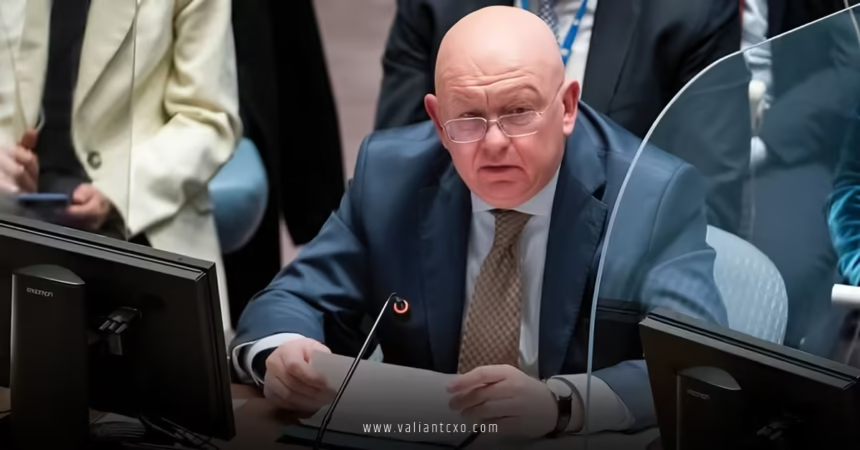
- Russia’s move: Ambassador Vasily Nebenzya accused Latvia of hosting Ukrainian drone operations and warned of consequences, naming specific bases.
- US response: Deputy Ambassador Tammy Bruce declared “no place for threats” against a council member and reaffirmed full NATO commitments.
- Why it escalated: This came amid ongoing drone incidents near Baltic borders and Russia’s broader hybrid pressure campaign.
- Broader stakes: A direct challenge to NATO’s Article 5 collective defense principle during heightened tensions over Ukraine.
- Immediate fallout: Latvia rejected the claims as fiction; allies voiced strong support.
This flare-up underscores the fragile line between proxy conflict and direct confrontation on NATO’s eastern flank.
What triggered the US condemnation at the UN?
Russia dropped the bombshell during a Security Council session. It cited its foreign intelligence service (SVR) claiming Ukrainian forces operated from Latvian sites like Ādaži and Liepāja. Nebenzya made it crystal clear: NATO membership changes nothing.
Latvia pushed back hard. Its representatives called the allegations pure invention. Ukraine insisted all operations stayed on its soil. Yet the threat landed with weight. It wasn’t vague saber-rattling. It named coordinates and implied targeted retaliation.
The kicker? This unfolded while Russia conducted nuclear drills. Timing like that rarely feels accidental.
US condemns Russia threats against Latvia NATO UN in crystal-clear terms. Bruce’s statement cut through the noise. America stands by its allies. Period.
Background: Latvia, NATO, and Russia’s long shadow
Latvia joined NATO in 2004. Like its Baltic neighbors Estonia and Lithuania, it sits right on the Russian border. No strategic depth. Big vulnerability. Small population. Yet fierce determination to support Ukraine.
In my experience covering these flashpoints, the Baltics have always punched above their weight in calling out Moscow. They exceed NATO’s 2% defense spending target. They host allied battlegroups. They push for tougher sanctions.
Russia sees them as a thorn. Hybrid tactics—disinformation, airspace violations, energy pressure—have been routine for years. The 2022 full-scale invasion of Ukraine cranked the volume way up.
Key players in the May 19 clash
| Entity | Action Taken | Key Statement / Position |
|---|---|---|
| Russia (Nebenzya) | Issued threats at UNSC | NATO won’t protect from “retaliation” |
| United States | Strong condemnation | “No place for threats” against council member |
| Latvia | Rejected claims, summoned Russian diplomat | Allegations are “fiction” |
| Ukraine | Denied using Baltic territory | Operations conducted from own soil |
| NATO | Reaffirmed Article 5 readiness | Collective defense remains ironclad |
This table shows the positions in plain view. No gray area here.
Why the US response carries heavy weight
US condemns Russia threats against Latvia NATO UN because the alternative invites testing. Weak response signals hesitation. Strong words reinforce deterrence.
America’s NATO commitments form the backbone of European security. Article 5 treats an attack on one as an attack on all. Russia’s attempt to carve out exceptions gets shut down immediately.
Here’s the thing. Threats like this test more than just Latvia. They probe alliance unity, especially with shifting US politics and questions about long-term commitments. Bruce’s firm stance sends a message to Moscow and reassures nervous allies.
What would happen if the US stayed quiet? Allies might hedge. Russia might push harder. Deterrence works when it’s credible.
How beginners can understand NATO’s eastern flank risks
New to this? Let’s break it down simply.
Step-by-step action plan for grasping the situation:
- Start with geography — Map the Baltic states. Notice how they border Russia and Belarus. Tiny buffer zones.
- Learn Article 5 — Read the NATO treaty text. One sentence changes everything.
- Follow primary sources — Check official readouts from NATO.int, US State Department, and Latvian MFA. Skip the noise.
- Track hybrid threats — Watch for drone incursions, cyber attacks, and migrant weaponization at borders.
- Monitor defense spending — Baltic nations lead here, but capability gaps remain in air defense and munitions.
- Simulate scenarios — Read think-tank wargames from places like the Belfer Center or RAND. Understand escalation ladders.
Do this consistently. You’ll spot patterns fast instead of reacting to headlines.
Common mistakes & how to fix them
Beginners often treat this like a distant news story. Big error. Geopolitics hits wallets and security closer than you think.
Mistake 1: Assuming NATO is automatic. Fix: Recognize political will matters. Public support and rapid reinforcement plans keep it real.
Mistake 2: Believing every Russian claim. Fix: Demand evidence. Moscow’s SVR “intelligence” often serves narrative purposes.
Mistake 3: Ignoring hybrid over kinetic. Fix: Study non-military pressure. Energy blackmail and disinformation erode resolve before tanks roll.
Mistake 4: Over-relying on US alone. Fix: Europe must build credible independent capacity. Burden-sharing isn’t optional anymore.
In my experience, the pros who last longest separate facts from fear. They focus on verifiable moves, not apocalyptic predictions.
Deeper implications for global security
US condemns Russia threats against Latvia NATO UN highlights a core tension. Russia wants to treat NATO members as fair game if they aid Ukraine. The alliance says no exceptions.
This isn’t isolated. Similar warnings have hit Estonia and Lithuania. The Baltic region has become the ultimate stress test for post-Cold War order.
Think of it like a pressure valve on an old boiler. Small releases (hybrid stuff) prevent bigger explosions. But ignore the gauge too long and things go boom. Russia’s strategy bets on Western fatigue. So far, unity has held.
For everyday Americans, this affects energy prices, supply chains, and defense budgets. Stability in Europe keeps costs down at home.
Key lessons from similar past incidents
History offers clues. Russia’s 2014 Crimea grab tested responses. Hybrid campaigns in the Baltics followed. Each time, clear signaling limited escalation.
What I’d do if advising policymakers: Double down on forward-deployed forces, integrated air defense, and rapid reinforcement drills. Transparency builds credibility. Ambiguity invites probes.
Key Takeaways
- US condemns Russia threats against Latvia NATO UN with unambiguous language to deter escalation.
- NATO’s eastern flank remains the most exposed part of the alliance.
- Latvia and Baltic states actively reject Russian narratives while strengthening defenses.
- Hybrid threats require hybrid responses—military, diplomatic, economic.
- Alliance unity matters more than any single statement.
- Public understanding drives sustained support for deterrence.
- Evidence over assertions should guide analysis.
- Long-term peace demands continued investment in collective security.
The main benefit? Clear US leadership here buys time for deterrence to work. It prevents miscalculation.
Next step: Follow reliable updates from official channels. Build your own mental map of the region. Stay informed without panic.
FAQs
What exactly did Russia say in its threats against Latvia?
Russia claimed Ukraine planned drone strikes from Latvian territory and warned that NATO membership would not protect Latvia from retaliation, naming specific bases and decision centers.
How did the US respond to Russia threats against Latvia NATO UN?
US Deputy Ambassador Tammy Bruce strongly condemned the threats at the UN Security Council, stating there is “no place for threats” against a council member and reaffirming unwavering NATO commitments.
Could this lead to direct NATO-Russia conflict?
Possible but not probable in the immediate term. Strong condemnation and deterrence measures aim to keep tensions from spilling over, though risks remain elevated as long as the Ukraine war continues.